



 Chat with AI
Exam 13: Markets and Government

Exam 1: The Wealth of Nations: Ownership and Economic Freedom87 Questions
Exam 2: Scarcity and Opportunity Costs87 Questions
Exam 3: Markets and the Price System96 Questions
Exam 4: The Aggregate Economy61 Questions
Exam 5: Using Economics to Understand the World Around You68 Questions
Exam 6: Elasticity: Demand and Supply133 Questions
Exam 7: Demand: Consumer Choice142 Questions
Exam 8: Supply: the Costs of Doing Business105 Questions
Exam 9: Profit Maximization121 Questions
Exam 10: Perfect Competition135 Questions
Exam 11: Monopoly118 Questions
Exam 12: Monopolistic Competition and Oligopoly114 Questions
Exam 13: Markets and Government113 Questions
Exam 14: Antitrust and Regulation88 Questions
Exam 15: Resource Markets110 Questions
Exam 16: The Labor Market116 Questions
Exam 17: The Capital Market110 Questions
Exam 18: The Land Market and Natural Resources55 Questions
Exam 19: Current Issues: Income, Income Distribution, Poverty, and Government Policy85 Questions
Exam 20: World Trade Equilibrium112 Questions
Exam 21: International Trade Restrictions109 Questions
Exam 22: Exchange Rates and Financial Links Between Countries130 Questions
Select questions type


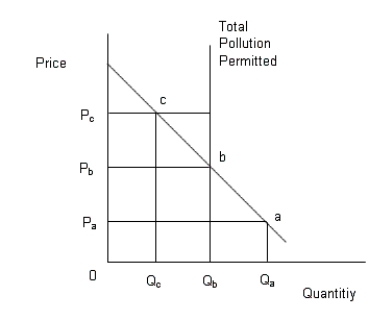 -The "Public Choice" school of economists argue that:
Free
(Multiple Choice)
4.9/5  (89)
(89) Correct Answer: Verified
B
-When consumers have perfect information about the quality of the products they purchase, the problem of adverse selection is likely to arise.
-When consumers have perfect information about the quality of the products they purchase, the problem of adverse selection is likely to arise.Free
(True/False)
4.9/5 (70)
(70) Correct Answer:Verified
VerifiedFalse
The table below shows the payoff (profit) matrix of Firm A and Firm B indicating the profit outcome that corresponds to each firm's pricing strategy (where $500 and $200 are the pricing strategies of two firms).Table 12.2
 -The good for which neither the principle of mutual excludability nor the principle of rivalry applies is referred to as a:
Free
(Multiple Choice)
4.9/5 (88)
(88) Correct Answer:Verified
VerifiedA
The table below shows the payoff (profit) matrix of Firm A and Firm B indicating the profit outcome that corresponds to each firm's pricing strategy (where $500 and $200 are the pricing strategies of two firms).Table 12.2
-Why do market failures arise in case of public goods?
-Why do market failures arise in case of public goods? (Multiple Choice)
4.9/5 (81)
(81)
-One cause of market failure may be the absence of clearly defined property rights.
-One cause of market failure may be the absence of clearly defined property rights. (True/False)
4.8/5 (93)
(93) The table below shows the payoff (profit) matrix of Firm A and Firm B indicating the profit outcome that corresponds to each firm's pricing strategy (where $500 and $200 are the pricing strategies of two firms).Table 12.2
-The existence of positive externalities in the consumption of a good implies that:
-The existence of positive externalities in the consumption of a good implies that: (Multiple Choice)
4.9/5 (79)
(79) The table below shows the payoff (profit) matrix of Firm A and Firm B indicating the profit outcome that corresponds to each firm's pricing strategy (where $500 and $200 are the pricing strategies of two firms).Table 12.2
-The existence of externalities in a market implies that:
-The existence of externalities in a market implies that: (Multiple Choice)
4.9/5 (79)
(79)
-In which of the following markets adverse selection may not occur?
-In which of the following markets adverse selection may not occur? (Multiple Choice)
4.8/5 (79)
(79) The figure given below shows the demand and supply curves of automobiles.Figure 13.3
In the figure,
D: Demand curve of automobiles
S: Supply of automobiles prior to the tax
S+t: Supply of automobiles after the tax
 -Which of the following is an example of the command approach to regulation?
 (Multiple Choice)
4.8/5 (87)
(87) Overfishing along the coastline of Helsking village led the government to impose a fee on the boats used for fishing. The fishermen were charged $50 on each boat they sent out for fishing. The following table shows the total pounds of fish caught per hour and the number of boats used for fishing.Table 13.2
 -One of the reasons that communism failed in the Soviet Union is that, under communism:
 (Multiple Choice)
4.8/5 (77)
(77) Overfishing along the coastline of Helsking village led the government to impose a fee on the boats used for fishing. The fishermen were charged $50 on each boat they sent out for fishing. The following table shows the total pounds of fish caught per hour and the number of boats used for fishing.Table 13.2
-Refer to Table 13.2. Suppose fish sells for $1 per pound. What is the socially optimal number of boats that will maximize the profit earned by the fishermen?
-Refer to Table 13.2. Suppose fish sells for $1 per pound. What is the socially optimal number of boats that will maximize the profit earned by the fishermen? (Multiple Choice)
4.9/5 (62)
(62) The figure given below shows the demand and supply curves of steel. Sp is the private supply curve, and Ss is the social supply curve that includes both private costs and external costs.Figure 13.2
 -In Figure 13.2, external costs are equal to _____.
 (Multiple Choice)
4.9/5 (82)
(82) The table below shows the payoff (profit) matrix of Firm A and Firm B indicating the profit outcome that corresponds to each firm's pricing strategy (where $500 and $200 are the pricing strategies of two firms).Table 12.2
-For which of the following goods will the free rider problem arise?
-For which of the following goods will the free rider problem arise? (Multiple Choice)
4.8/5 (80)
(80)
-Both the principles of rivalry and mutual excludability apply for club goods.
-Both the principles of rivalry and mutual excludability apply for club goods. (True/False)
4.7/5 (71)
(71)
-If a gas station selling gasoline is asked to incorporate the pollution costs, its supply curve will shift to the right.
-If a gas station selling gasoline is asked to incorporate the pollution costs, its supply curve will shift to the right. (True/False)
4.8/5 (78)
(78)
-Laws that require children to be inoculated against certain diseases before they enter kindergarten are examples of the command approach.
-Laws that require children to be inoculated against certain diseases before they enter kindergarten are examples of the command approach. (True/False)
4.7/5 (77)
(77) The figure given below shows the demand and supply curves of automobiles.Figure 13.3
In the figure,
D: Demand curve of automobiles
S: Supply of automobiles prior to the tax
S+t: Supply of automobiles after the tax
-Figure 13.3 represents a situation of:
-Figure 13.3 represents a situation of: (Multiple Choice)
4.9/5 (81)
(81) The table below shows the payoff (profit) matrix of Firm A and Firm B indicating the profit outcome that corresponds to each firm's pricing strategy (where $500 and $200 are the pricing strategies of two firms).Table 12.2
-The free rider problem occurs because:
-The free rider problem occurs because: (Multiple Choice)
4.7/5 (61)
(61) Overfishing along the coastline of Helsking village led the government to impose a fee on the boats used for fishing. The fishermen were charged $50 on each boat they sent out for fishing. The following table shows the total pounds of fish caught per hour and the number of boats used for fishing.Table 13.2
-Refer to Table 13.2. Suppose fish sells for $1 per pound. If each fisherman decides whether or not to fish based on the average catch, what is the profit that each fisherman earns?
-Refer to Table 13.2. Suppose fish sells for $1 per pound. If each fisherman decides whether or not to fish based on the average catch, what is the profit that each fisherman earns? (Multiple Choice)
4.9/5 (84)
(84) Overfishing along the coastline of Helsking village led the government to impose a fee on the boats used for fishing. The fishermen were charged $50 on each boat they sent out for fishing. The following table shows the total pounds of fish caught per hour and the number of boats used for fishing.Table 13.2
-If the government is successful in internalizing the external costs of production in a market, then:
-If the government is successful in internalizing the external costs of production in a market, then: (Multiple Choice)
4.9/5 (72)
(72) 
Filters
- Essay(0)
- Multiple Choice(0)
- Short Answer(0)
- True False(0)
- Matching(0)