



 Chat with AI
Exam 19: Organic Chemistry I

Exam 1: The Quantum World100 Questions
Exam 2: Quantum Mechanics in Action: Atoms100 Questions
Exam 3: Chemical Bonds83 Questions
Exam 4: Molecular Shape and Structure95 Questions
Exam 5: The Properties of Gases94 Questions
Exam 6: Liquids and Solids95 Questions
Exam 7: Inorganic Materials100 Questions
Exam 8: Thermodynamics: The First Law94 Questions
Exam 9: Thermodynamics: The Second and Third Laws95 Questions
Exam 10: Physical Equilibria94 Questions
Exam 11: Chemical Equilibria94 Questions
Exam 12: Acids and Bases94 Questions
Exam 13: Aqueous Equilibria94 Questions
Exam 14: Electrochemistry94 Questions
Exam 15: Chemical Kinetics93 Questions
Exam 16: The Elements: the Main Group Elements189 Questions
Exam 17: The Elements: The D Block94 Questions
Exam 18: Nuclear Chemistry95 Questions
Exam 19: Organic Chemistry I94 Questions
Exam 20: Organic Chemistry II95 Questions
Select questions type


When 2-methyl-1-butene reacts with HBr,the reaction occurs in two steps.The attacking agent in the first step is __________.
(Short Answer)
4.7/5  (87)
(87) A dichlorobenzene reacts with HNO3/H2SO4 and produces three mononitrated products.Identify the initial dichlorobenzene.
(Short Answer)
4.9/5 (80)
(80) What major product(s)is (are)obtained from the following reaction? 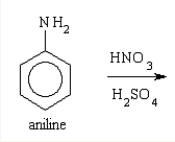
(Multiple Choice)
4.9/5 (76)
(76) A mixture of nitric acid and concentrated sulfuric acid is used to convert benzene to nitrobenzene.The nitrating agent in this reaction is
(Multiple Choice)
4.8/5 (77)
(77) 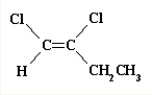
How many products are predicted theoretically from the following reaction? 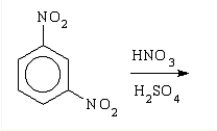
(Multiple Choice)
4.7/5 (78)
(78) Treating benzoic acid with both nitric acid and concentrated sulfuric acid results in what product?
(Multiple Choice)
4.7/5 (76)
(76) What major product(s)is (are)predicted from the following reaction? 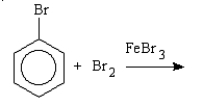
(Multiple Choice)
4.7/5 (83)
(83) How many of the structural isomers of C6H14 have only primary and tertiary hydrogens?
(Multiple Choice)
4.8/5 (86)
(86) What major product(s)is (are)predicted from the following reaction? 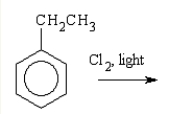
(Multiple Choice)
4.8/5 (91)
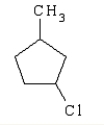
(91) 
Which of the following undergo nitration faster than benzene? 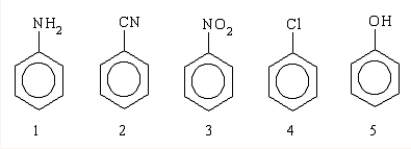
(Multiple Choice)
4.8/5 (84)
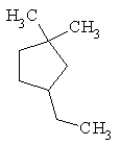
(84) 

Filters
- Essay(0)
- Multiple Choice(0)
- Short Answer(0)
- True False(0)
- Matching(0)