



 Chat with AI
Exam 8: Monopoly Markets

Exam 1: Economics: Foundations and Models142 Questions
Exam 2: Choices and Trade-Offs in the Market192 Questions
Exam 3: Where Prices Come From: the Interaction of Demand and Supply241 Questions
Exam 4: Elasticity: The Responsiveness of Demand and Supply224 Questions
Exam 5: Economic Efficiency,government Price Setting and Taxes169 Questions
Exam 6: Technology,production and Costs255 Questions
Exam 7: Firms in Perfectly Competitive Markets269 Questions
Exam 8: Monopoly Markets187 Questions
Exam 9: Monopolistic Competition and Oligopoly350 Questions
Exam 10: The Markets for Labour and Other Factors of Production250 Questions
Exam 11: Government Intervention in the Market325 Questions
Exam 12: Social Policy and Inequality125 Questions
Exam 13: Gdp: Measuring Total Production, income and Economic Growth202 Questions
Exam 14: Unemployment and Inflation230 Questions
Exam 15: Aggregate Demand and Aggregate Supply Analysis166 Questions
Exam 16: Money,banks and the Reserve Bank of Australia110 Questions
Exam 17: Monetary Policy111 Questions
Exam 18: Fiscal Policy138 Questions
Exam 19: Comparative Advantage and the Gains From International Trade131 Questions
Exam 20: Macroeconomics in an Open Economy276 Questions
Select questions type


How does a network externality serve as a barrier to entry? Is this barrier surmountable? Explain.
__________________________________________________________________________________________________________________________________________________________________________________________
(Essay)
4.8/5  (85)
(85) One reason patent protection is vitally important to pharmaceutical firms is:
(Multiple Choice)
4.9/5 (84)
(84) If the market for a product begins as perfectly competitive and then becomes a monopoly,there will be a reduction in economic efficiency and a deadweight loss.
(True/False)
4.8/5 (73)
(73) Figure 8.8 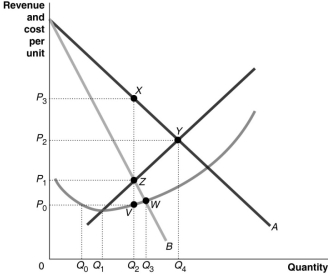 Figure 8.8 reflects the cost and revenue structure for a monopoly that has been in business for a very long time.
-Refer to Figure 8.8.Use the figure above to answer the following questions.
a.Identify the curves labelled A and B.Identify the curve which contains both point Y and point Z.Identify the curve which contains both point V and point W.
b.What is the profit-maximising quantity and what price will the monopolist charge?
c.What area represents total revenue at the profit-maximising output level?
d.What area represents total cost at the profit-maximising output level?
e.What area represents profit?
f.What is the profit per unit (average profit)at the profit-maximising output level?
g.If this industry was organised as a perfectly competitive industry,what would be the profit-maximising price and quantity?
h.What area represents the deadweight loss as a result of a monopoly?
__________________________________________________________________________________________________________________________________________________________________________________________
Figure 8.8 reflects the cost and revenue structure for a monopoly that has been in business for a very long time.
-Refer to Figure 8.8.Use the figure above to answer the following questions.
a.Identify the curves labelled A and B.Identify the curve which contains both point Y and point Z.Identify the curve which contains both point V and point W.
b.What is the profit-maximising quantity and what price will the monopolist charge?
c.What area represents total revenue at the profit-maximising output level?
d.What area represents total cost at the profit-maximising output level?
e.What area represents profit?
f.What is the profit per unit (average profit)at the profit-maximising output level?
g.If this industry was organised as a perfectly competitive industry,what would be the profit-maximising price and quantity?
h.What area represents the deadweight loss as a result of a monopoly?
__________________________________________________________________________________________________________________________________________________________________________________________ (Essay)
4.8/5 (81)
(81) A product's price approaches its marginal cost as market concentration increases.
(True/False)
5.0/5 (84)
(84) Figure 8.3  Figure 8.3 above shows the demand and cost curves facing a monopolist.
-Refer to Figure 8.3.Suppose the monopolist represented in the diagram above produces positive output.The price charged at the profit-maximising/loss-minimising output level is -.
Figure 8.3 above shows the demand and cost curves facing a monopolist.
-Refer to Figure 8.3.Suppose the monopolist represented in the diagram above produces positive output.The price charged at the profit-maximising/loss-minimising output level is -. (Multiple Choice)
4.8/5 (71)
(71) Some economists argue that Microsoft became a monopoly in the market for computer software by developing MS-DOS,an operating system used for the first IBM personal computers.The more people who used MS-DOS-based programs,the greater the usefulness of using a computer with an MS-DOS operating system.The explanation for Microsoft's monopoly is
(Multiple Choice)
4.9/5 (68)
(68) If a monopolist's price is $50 at 63 units of output,and marginal revenue equals marginal cost,and average total cost equals $43,then what is the firm's total profit?
(Multiple Choice)
4.9/5 (82)
(82) A monopolist currently sells 18 units of a good.If marginal revenue on the last unit sold is $117,then the price of the good must be less than $117.
(True/False)
4.8/5 (82)
(82) Figure 8.2  Figure 8.2 above shows the demand and cost curves facing a monopolist.
-Refer to Figure 8.2.What is the firm's profit-maximising price?
Figure 8.2 above shows the demand and cost curves facing a monopolist.
-Refer to Figure 8.2.What is the firm's profit-maximising price? (Multiple Choice)
4.9/5 (69)
(69) Explain whether a monopoly that maximises profit will also be maximising revenue and production.
__________________________________________________________________________________________________________________________________________________________________________________________
(Essay)
4.9/5 (78)
(78) What is a monopoly? Can a firm be a monopoly if close substitutes for its product exists?
__________________________________________________________________________________________________________________________________________________________________________________________
(Essay)
4.8/5 (70)
(70) Unlike a perfect competitor,a monopolist faces the market demand curve.
(True/False)
4.8/5 (91)
(91) Figure 8.6  Figure 8.6 shows the cost and demand curves for a monopolist.
-Refer to Figure 8.6.What is the monopolist's total cost?
Figure 8.6 shows the cost and demand curves for a monopolist.
-Refer to Figure 8.6.What is the monopolist's total cost? (Multiple Choice)
4.8/5 (81)
(81) Figure 8.9  Figure 8.9 shows the demand and cost curves for a monopolist.
-Refer to Figure 8.9.The economically efficient output level is
Figure 8.9 shows the demand and cost curves for a monopolist.
-Refer to Figure 8.9.The economically efficient output level is (Multiple Choice)
4.8/5 (80)
(80) Figure 8.2 Figure 8.2 above shows the demand and cost curves facing a monopolist.
-Refer to Figure 8.2.To maximise profit,the firm will produce -.
Figure 8.2 above shows the demand and cost curves facing a monopolist.
-Refer to Figure 8.2.To maximise profit,the firm will produce -. (Multiple Choice)
4.7/5 (84)
(84) A monopolist's profit-maximising price and output correspond to the point on a graph
(Multiple Choice)
4.9/5 (79)
(79) Equilibrium in a perfectly competitive market results in the greatest amount of economic surplus,or total benefit to society,from the production of a good.Why,then,did Joseph Schumpeter argue that an economy may benefit more from firms that have market power than from firms that are perfectly competitive?
__________________________________________________________________________________________________________________________________________________________________________________________
(Essay)
4.9/5 (74)
(74) 
Filters
- Essay(0)
- Multiple Choice(0)
- Short Answer(0)
- True False(0)
- Matching(0)