



 Chat with AI
Exam 9: Monopolistic Competition and Oligopoly

Exam 1: Economics: Foundations and Models142 Questions
Exam 2: Choices and Trade-Offs in the Market192 Questions
Exam 3: Where Prices Come From: the Interaction of Demand and Supply241 Questions
Exam 4: Elasticity: The Responsiveness of Demand and Supply224 Questions
Exam 5: Economic Efficiency,government Price Setting and Taxes169 Questions
Exam 6: Technology,production and Costs255 Questions
Exam 7: Firms in Perfectly Competitive Markets269 Questions
Exam 8: Monopoly Markets187 Questions
Exam 9: Monopolistic Competition and Oligopoly350 Questions
Exam 10: The Markets for Labour and Other Factors of Production250 Questions
Exam 11: Government Intervention in the Market325 Questions
Exam 12: Social Policy and Inequality125 Questions
Exam 13: Gdp: Measuring Total Production, income and Economic Growth202 Questions
Exam 14: Unemployment and Inflation230 Questions
Exam 15: Aggregate Demand and Aggregate Supply Analysis166 Questions
Exam 16: Money,banks and the Reserve Bank of Australia110 Questions
Exam 17: Monetary Policy111 Questions
Exam 18: Fiscal Policy138 Questions
Exam 19: Comparative Advantage and the Gains From International Trade131 Questions
Exam 20: Macroeconomics in an Open Economy276 Questions
Select questions type


When a firm faces a downward-sloping demand curve,marginal revenue __________.

Free
(Multiple Choice)
4.8/5  (77)
(77) Correct Answer: Verified
B
A patent is an example of ________.
Free
(Multiple Choice)
4.7/5 (77)
(77) Correct Answer:Verified
VerifiedB
For the monopolistically competitive firm,_______.
Free
(Multiple Choice)
4.9/5 (80)
(80) Correct Answer:Verified
VerifiedC
In long-run equilibrium,compared to a perfectly competitive market,a monopolistically competitive industry produces a ________ level of output and charges a ________ price.
(Multiple Choice)
4.9/5 (88)
(88) Table 9.3  Firm A(Alistair's) and Firm B (Baine's) are the only firms selling luggage in the upscale town of Adelaide. Each firm must decide on whether to increase its advertising spending to compete for customers. If one firm increases its advertising budget but the other does not, then the firm with the higher advertising budget will increase its profit. Table 9.3 shows the payoff matrix for this advertising game.
-Refer to Table 9.3.The Nash equilibrium in this game is:
Firm A(Alistair's) and Firm B (Baine's) are the only firms selling luggage in the upscale town of Adelaide. Each firm must decide on whether to increase its advertising spending to compete for customers. If one firm increases its advertising budget but the other does not, then the firm with the higher advertising budget will increase its profit. Table 9.3 shows the payoff matrix for this advertising game.
-Refer to Table 9.3.The Nash equilibrium in this game is: (Multiple Choice)
4.9/5 (69)
(69) Suppose we want to use game theory to analyse how an oligopolist selects its optimal price.The cells of the payoff matrix show ________.
(Multiple Choice)
4.9/5 (91)
(91) Figure 9.8  Figure 9.8 shows cost and demand curves for a monopolistically competitive producer of iced tea.
-Refer to Figure 9.8.Based on the diagram,one can conclude that _______.
Figure 9.8 shows cost and demand curves for a monopolistically competitive producer of iced tea.
-Refer to Figure 9.8.Based on the diagram,one can conclude that _______. (Multiple Choice)
4.8/5 (70)
(70) New firms are able to enter monopolistically competitive markets because there are low barriers to entry.
(True/False)
4.9/5 (88)
(88) One reason why the coffeehouse market is competitive is that _______.
(Multiple Choice)
4.8/5 (71)
(71) Figure 9.8 Figure 9.8 shows cost and demand curves for a monopolistically competitive producer of iced tea.
-Refer to Figure 9.8.The profit-maximising output level is ______.
Figure 9.8 shows cost and demand curves for a monopolistically competitive producer of iced tea.
-Refer to Figure 9.8.The profit-maximising output level is ______. (Multiple Choice)
4.9/5 (77)
(77) What one good thing happens when a monopolistically competitive firm lowers it price?
(Multiple Choice)
4.9/5 (78)
(78) Which of the following is not part of an oligopolist's business strategy?
(Multiple Choice)
4.8/5 (78)
(78) What happens when large firms in oligopoly markets cut their prices?
(Multiple Choice)
4.9/5 (81)
(81) A monopolistically competitive firm can increase its profits beyond the long-run equilibrium break-even level by deliberately lowering its price to force some of its competitors out of the market.
(True/False)
4.7/5 (75)
(75) Figure 9.13 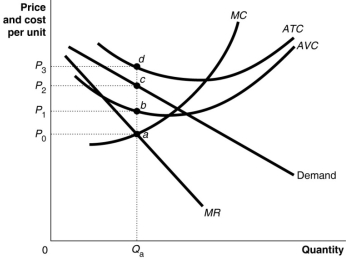 Figure 9.13 shows short-run cost and demand curves for a monopolistically competitive firm in the market for designer watches.
-Refer to Figure 9.13.If the diagram represents a typical firm in the designer watch market,what is likely to happen in the long run?
Figure 9.13 shows short-run cost and demand curves for a monopolistically competitive firm in the market for designer watches.
-Refer to Figure 9.13.If the diagram represents a typical firm in the designer watch market,what is likely to happen in the long run? (Multiple Choice)
4.9/5 (75)
(75) A table that shows the possible payoffs each firm earns from every combination of strategies by all firms is called ____________.
(Multiple Choice)
4.8/5 (69)
(69) Figure 9.17  -Refer to Figure 9.17.The allocatively efficient output for the firm represented in the diagram is _____.
 (Multiple Choice)
4.9/5 (63)
(63) 
Filters
- Essay(0)
- Multiple Choice(0)
- Short Answer(0)
- True False(0)
- Matching(0)