



 Chat with AI
Exam 24: The Chemistry of Life: Organic and Biological Chemistry

Exam 1: Introduction: Matter and Measurement163 Questions
Exam 2: Atoms, Molecules, and Ions250 Questions
Exam 3: Stoichiometry: Calculations With Chemical Formulas and Equations178 Questions
Exam 4: Aqueous Reactions and Solution Stoichiometry180 Questions
Exam 5: Thermochemistry154 Questions
Exam 6: Electronic Structure of Atoms186 Questions
Exam 7: Periodic Properties of the Elements176 Questions
Exam 8: Basic Concepts of Chemical Bonding147 Questions
Exam 9: Molecular Geometry and Bonding Theories183 Questions
Exam 10: Gases175 Questions
Exam 11: Liquids and Intermolecular Forces124 Questions
Exam 12: Solids and Modern Materials84 Questions
Exam 13: Properties of Solutions160 Questions
Exam 14: Chemical Kinetics134 Questions
Exam 15: Chemical Equilibrium97 Questions
Exam 16: Acid-Base Equilibria139 Questions
Exam 17: Additional Aspects of Aqueous Equilibria116 Questions
Exam 18: Chemistry of the Environment126 Questions
Exam 19: Chemical Thermodynamics125 Questions
Exam 20: Electrochemistry114 Questions
Exam 21: Nuclear Chemistry178 Questions
Exam 22: Chemistry of the Nonmetals194 Questions
Exam 23: Transition Metals and Coordination Chemistry165 Questions
Exam 24: The Chemistry of Life: Organic and Biological Chemistry131 Questions
Select questions type


Hydrocarbons containing carbon-carbon triple bonds are called ________.
(Multiple Choice)
5.0/5  (82)
(82) What is the correct name for the compound, CH3CH2CH  CHCH2CH
 CHCH3?
CHCH2CH CHCH3? (Short Answer)
4.9/5 (79)
(79) In the oxidation of ethanol the intermediate formed is ________.
(Short Answer)
4.8/5 (77)
(77) Which one of the following compounds is an isomer of CH3CH2CH2CH2OH?
(Multiple Choice)
4.8/5 (84)
(84) Predict the product of the catalytic hydrogenation of 6-ethyl-3-decene.
(Short Answer)
4.8/5 (72)
(72)  is called a(n)________.
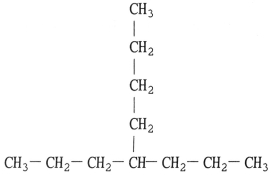
If each of the following represents an alkane, and a carbon atom is located at each vertex with the proper number of hydrogen atoms also bonded to it, which one is the most reactive?
(Multiple Choice)
4.8/5 (68)
(68) Humans digest starch but not cellulose because of differences in the type of linkage between the glucose monomers of these substances.
(True/False)
4.8/5 (77)
(77) 
Filters
- Essay(0)
- Multiple Choice(0)
- Short Answer(0)
- True False(0)
- Matching(0)