



 Chat with AI
Exam 24: The Chemistry of Life: Organic and Biological Chemistry

Exam 1: Introduction: Matter and Measurement163 Questions
Exam 2: Atoms, Molecules, and Ions250 Questions
Exam 3: Stoichiometry: Calculations With Chemical Formulas and Equations178 Questions
Exam 4: Aqueous Reactions and Solution Stoichiometry180 Questions
Exam 5: Thermochemistry154 Questions
Exam 6: Electronic Structure of Atoms186 Questions
Exam 7: Periodic Properties of the Elements176 Questions
Exam 8: Basic Concepts of Chemical Bonding147 Questions
Exam 9: Molecular Geometry and Bonding Theories183 Questions
Exam 10: Gases175 Questions
Exam 11: Liquids and Intermolecular Forces124 Questions
Exam 12: Solids and Modern Materials84 Questions
Exam 13: Properties of Solutions160 Questions
Exam 14: Chemical Kinetics134 Questions
Exam 15: Chemical Equilibrium97 Questions
Exam 16: Acid-Base Equilibria139 Questions
Exam 17: Additional Aspects of Aqueous Equilibria116 Questions
Exam 18: Chemistry of the Environment126 Questions
Exam 19: Chemical Thermodynamics125 Questions
Exam 20: Electrochemistry114 Questions
Exam 21: Nuclear Chemistry178 Questions
Exam 22: Chemistry of the Nonmetals194 Questions
Exam 23: Transition Metals and Coordination Chemistry165 Questions
Exam 24: The Chemistry of Life: Organic and Biological Chemistry131 Questions
Select questions type


Racemic mixtures of enantiomers do not rotate the plane of polarized light.

Free
(True/False)
4.8/5  (78)
(78) Correct Answer: Verified
True
The hybridization of the central carbon atom in an aldehyde is ________.
Free
(Multiple Choice)
4.8/5 (85)
(85) Correct Answer:Verified
VerifiedC
Which one of the following is not an alcohol?
Free
(Multiple Choice)
4.8/5 (71)
(71) Correct Answer:Verified
VerifiedA
Which one of the following could be a straight-chain alkane?
(Multiple Choice)
4.8/5 (95)
(95) The suffix used for organic molecules containing the ketone functional group is ________.
(Multiple Choice)
4.8/5 (86)
(86) The stability of benzene is a major function of delocalized π bonding.
(True/False)
4.8/5 (84)
(84) Hydrocarbons containing only single bonds between the carbon atoms are called ________.
(Multiple Choice)
4.9/5 (89)
(89) Living organisms must expend energy to counter any increase in ________.
(Short Answer)
4.8/5 (90)
(90) The formation of aspirin by reacting salicylic acid with acetic acid is a(n)________ reaction.
(Short Answer)
4.8/5 (82)
(82) The most important acidic and basic functional groups in all amino acids are the ________ and the ________ groups, respectively.
(Short Answer)
4.9/5 (58)
(58) Gas, isolated from petroleum, has a minimum of ________ carbon atoms.
(Multiple Choice)
4.7/5 (75)
(75) Large protein molecules that act as catalysts are called ________.
(Short Answer)
4.7/5 (87)
(87) The resistance of gasoline to engine knocking is referred to as its ________.
(Short Answer)
4.9/5 (71)
(71) Optically active molecules that are mirror images of each other are called ________.
(Multiple Choice)
5.0/5 (86)
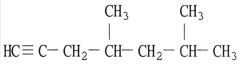
(86) 

Filters
- Essay(0)
- Multiple Choice(0)
- Short Answer(0)
- True False(0)
- Matching(0)