



 Chat with AI
Exam 14: Proteins

Exam 1: Measurements in Science and Medicine77 Questions
Exam 2: Atoms, Elements, and Compounds76 Questions
Exam 3: Chemical Bonds82 Questions
Exam 4: Energy and Physical Properties73 Questions
Exam 5: Solution Concentration76 Questions
Exam 6: Chemical Reactions68 Questions
Exam 7: Acids and Bases82 Questions
Exam 8: Nuclear Chemistry65 Questions
Exam 9: Hydrocarbons: An Introduction to Organic Molecules72 Questions
Exam 10: Hydration, Dehydration, and Alcohols59 Questions
Exam 11: Carbonyl Compounds and Redox Reactions70 Questions
Exam 12: Organic Acids and Bases62 Questions
Exam 13: Condensation and Hydrolysis Reactions70 Questions
Exam 14: Proteins64 Questions
Exam 15: Carbohydrates73 Questions
Exam 16: Lipids and Membranes75 Questions
Exam 17: Nucleic Acids, Protein Synthesis, and Heredity69 Questions
Select questions type


The following represents the nitrogen cycle. Which of the choices correctly pairs the lettered reactions with the type of organism? 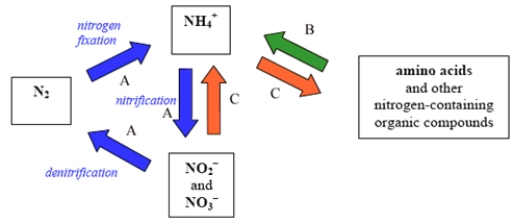
(Multiple Choice)
4.7/5  (84)
(84) The amino acid shown below maybe associated with ALS (Lou Gehrig's disease) and Parkinson's disease. 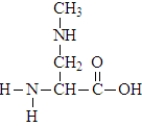 Which of the following is the zwitterion ion form of the uncommon amino acid?
 (Multiple Choice)
4.8/5 (83)
(83) The addition of a 0.10 M solution of Mg(NO3)2 would most likely affect which type of interaction in the tertiary structure of a protein?
(Multiple Choice)
5.0/5 (89)
(89) Enzymes are sensitive to agitation and will be denatured by violent stirring.
(True/False)
4.8/5 (77)
(77) 
Filters
- Essay(0)
- Multiple Choice(0)
- Short Answer(0)
- True False(0)
- Matching(0)