



 Chat with AI
Exam 11: Polyprotic Acid-Base Equilibria

Exam 1: The Analytical Process20 Questions
Exam 2: Chemical Measurements21 Questions
Exam 3: Tools of the Trade19 Questions
Exam 4: Experimental Error20 Questions
Exam 5: Statistics22 Questions
Exam 6: Quality Assurance and Calibration Methods20 Questions
Exam 7: Chemical Equilibrium20 Questions
Exam 8: Let the Titrations Begin20 Questions
Exam 9: Activity and the Systematic Treatment of Equilibrium20 Questions
Exam 10: Monoprotic Acid-Base Equilibria20 Questions
Exam 11: Polyprotic Acid-Base Equilibria20 Questions
Exam 12: Acid-Base Titrations20 Questions
Exam 13: Edta Titrations20 Questions
Exam 14: Advanced Topics in Equilibrium20 Questions
Exam 15: Fundamentals of Electrochemistry20 Questions
Exam 16: Electrodes and Potentiometry20 Questions
Exam 17: Redox Titrations20 Questions
Exam 18: Electroanalytical Techniques20 Questions
Exam 19: Fundamentals of Spectrophotometry23 Questions
Exam 20: Applications of Spectrophotometry20 Questions
Exam 21: Spectrophotometers20 Questions
Exam 22: Atomic Spectroscopy20 Questions
Exam 23: Mass Spectrometry20 Questions
Exam 24: Introduction to Analytical Separations20 Questions
Exam 25: Gas Chromatography20 Questions
Exam 26: High-Performance Liquid Chromatography20 Questions
Exam 27: Chromatographic Methods and Capillary Electrophoresis20 Questions
Exam 28: Gravimetric and Combustion Analysis20 Questions
Exam 29: Sample Preparation19 Questions
Select questions type


Which is NOT true for isoelectric and isoionic pH?

Free
(Multiple Choice)
4.9/5  (81)
(81) Correct Answer: Verified
B
For the polyprotic acid H3A,which of the equilibria below is INCORRECT?
Free
(Multiple Choice)
4.8/5 (73)
(73) Correct Answer:Verified
VerifiedA
Calculate the pH of a solution prepared by mixing 200.0 mL of 0.100 M NaOH with 150.0 mL of 0.200 M o×alic acid.K1 = 5.62 × 10⁻²,K2 = 7.24 × 10⁻⁵
Free
(Short Answer)
4.8/5 (91)
(91) Correct Answer:Verified
VerifiedpH = 1.55
Sodium hydroxide is added to a 0.1 M solution of phenylalanine.Phenylalanine is a diprotic acid with two pKas,2.20 for the carboxylic acid group and 9.31 for the ammonium functional group.When the pH = 5.93,the principal species is____________________ and when the pH = 10.10,the principal species is____________________ .
(Multiple Choice)
4.9/5 (92)
(92) The fractional composition diagram below is representative for diprotic weak acids.Which point INCORRECTLY indicates the principal species?
(Multiple Choice)
4.8/5 (81)
(81) A buffer is prepared by dissolving 70 millimoles of solid NaOH in 500.0 mL of solution with a concentration of 50 mM H2A.Which of the following are NOT true for the buffer?
I After reaction there is 30 mmol HA− and 20 mmol A2− in solution.
II pH is calculated using 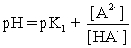 .
III After reaction there is 50 mmol HA− and 20 mmol NaOH in solution.
IV pH is calculated using
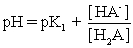 .
V pH = 14 - pOH where pOH is calculated from excess OH−.
.
III After reaction there is 50 mmol HA− and 20 mmol NaOH in solution.
IV pH is calculated using .
V pH = 14 - pOH where pOH is calculated from excess OH−. (Multiple Choice)
5.0/5 (80)
(80) Calculate the pH of a 0.200 M H2A− solution.K1 = 1 × 10⁻⁴,K2 = 1 × 10⁻⁸ and K3 = 1 × 10⁻¹².
(Multiple Choice)
4.9/5 (69)
(69) For a weak acid,the HA____________________ and the A-____________________ with increased pH.
(Multiple Choice)
4.9/5 (83)
(83) Calculate the concentration of each species of oxalic acid in a 0.150 M solution of sodium oxalate,Na2C2O4.K1 = 5.62 × 10⁻²,K2 = 7.24 × 10⁻⁵
(Short Answer)
4.9/5 (88)
(88) Malonic acid is a diprotic acid with pKs of 2.847 and 5.696.Calculate the for each malonic acid species in solution at pH =3.50.
(Short Answer)
4.8/5 (78)
(78) Calculate the pH to which a malonic acid solution must be adjusted to reach the isoelectric point.pK1 = 2.847 and pK2 = 5.696.
(Short Answer)
4.8/5 (71)
(71) Alanine is a diprotic amino acid with a pKa = 2.344 for the carboxylic group and a pKa = 9.868 for the ammonium group.At pH = 6.32,what is the principal species in solution?
(Multiple Choice)
4.7/5 (81)
(81) Calculate the pH at the isoelectric point for a 0.10 M solution of the amino acid threonine.pKa1 = 2.088 and pKa2 = 9.100 for threonine.
(Multiple Choice)
4.9/5 (70)
(70) Calculate the pH for a 0.200 M sodium L−aspartic acid solution in the H2L form.pKa1 = 1.990,pKa2 = 3.900 and pKa3 = 10.002.
(Short Answer)
4.8/5 (77)
(77) Which of the answers below is INCORRECT for diprotic acids and bases?
(Multiple Choice)
4.8/5 (84)
(84) How many millimoles of NaOH or HCl must be added to 500.0 mL of 0.250 M NaO2CCO2H to prepare a pH 3.90 buffer? Assume no change in volume.pK1 = 1.250 and pK2 = 4.266.
(Multiple Choice)
4.9/5 (83)
(83) Which of the following is TRUE for an aqueous solution of the weak acid H3A?
I H3A is acidic
II H2A− is acidic
III HA2− is amphiprotic
IV A3− is basic
(Multiple Choice)
4.8/5 (74)
(74) Sulfurous acid is a diprotic acid with Ka1 = 1.40 × 10⁻² and Ka2 = 6.73 × 10⁻⁸.Which of the statements below are FALSE?
I Kb2 = 7.14 × 10⁻¹³
II Kb1 = 1.49 × 10⁻⁷
III For 0.1 M H2SO3,[H+] = 7.61 × 10⁻² for Ka1.
IV For 0.1 M NaHSO3,pH 4.515.
(Multiple Choice)
4.9/5 (86)
(86) Calculate the pH of a 0.340 M NaO2CCO2H solution.pK1 = 1.250 and pK2 = 4.266.
(Multiple Choice)
4.9/5 (75)
(75) Solid NaOH is added to 1 L of an isoleucine solution,H2L+,i.e,100 mM.When 175 mmol of NaOH is added,the principal species is____________________ .The pKa for the carboxylic acid group is 2.318 and the pKa for the ammonium group is 9.758.Assume the isoleucine solution volume does not change appreciably.
(Multiple Choice)
4.8/5 (85)
(85) 
Filters
- Essay(0)
- Multiple Choice(0)
- Short Answer(0)
- True False(0)
- Matching(0)