



 Chat with AI
Exam 3: Cycles of the Sun and Moon

Exam 1: Here and Now97 Questions
Exam 2: A Users Guide to the Sky116 Questions
Exam 3: Cycles of the Sun and Moon154 Questions
Exam 4: The Origin of Modern Astronomy144 Questions
Exam 5: Light and Telescopes156 Questions
Exam 6: Atoms and Spectra125 Questions
Exam 7: The Sun146 Questions
Exam 8: The Family of Stars190 Questions
Exam 9: The Formation and Structure of Stars136 Questions
Exam 10: The Deaths of Stars127 Questions
Exam 11: Neutron Stars and Black Holes99 Questions
Exam 12: The Milky Way Galaxy117 Questions
Exam 13: Galaxies: Normal and Active151 Questions
Exam 14: Modern Cosmology112 Questions
Exam 15: The Origin of the Solar System108 Questions
Exam 16: Earth and Moon: Bases for Comparative Planetology98 Questions
Exam 17: Mercury, Venus, and Mars83 Questions
Exam 18: The Outer Solar System136 Questions
Exam 19: Meteorites, Asteroids, and Comets91 Questions
Exam 20: Astrobiology: Life on Other Worlds97 Questions
Select questions type


The complete cycle of lunar phases takes 29.53 days, also known as the Moon's ____________________ period.
(Short Answer)
4.7/5  (70)
(70) The Moon's angular diameter at apogee is larger than at perigee.
(True/False)
4.9/5 (88)
(88) In which direction does the daily motion of the Moon occur in the sky, against the background stars, when viewed from the Earth
(Multiple Choice)
4.9/5 (89)
(89) A total solar eclipse will be visible from the same location on Earth one Saros cycle later.
(True/False)
4.9/5 (80)
(80) An eclipse season is the interval during which the Sun crosses a node of the Moon's orbit.
(True/False)
4.8/5 (92)
(92) ____________________ is the point in Earth's orbit when Earth is closest to the Sun.
(Short Answer)
4.9/5 (66)
(66) You are located on Earth and you see the Moon in its third-quarter phase. Draw the Sun, your location on Earth's surface, and the Moon in the sky, correctly shadowing the portions of the Moon's surface not in the Sun's light. Label the time of day you would see this Moon phase.
(Essay)
4.8/5 (78)
(78) You are in the northern hemisphere and the season is winter. The Sun is above a geographic point in the southern hemisphere and below the celestial equator.
(True/False)
4.9/5 (87)
(87) Which season is shown in the picture for the southern hemisphere 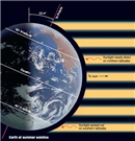
(Multiple Choice)
4.9/5 (70)
(70) ____ is the point in Earth's orbit where Earth is closest to the Sun.
(Multiple Choice)
4.9/5 (79)
(79) The phase of the Moon on a particular night is determined by
(Multiple Choice)
4.8/5 (85)
(85) The path of totality for a solar eclipse is swept out by the tip of the Moon's umbra as the umbra moves over Earth.
(True/False)
4.8/5 (74)
(74) 
Filters
- Essay(0)
- Multiple Choice(0)
- Short Answer(0)
- True False(0)
- Matching(0)