



 Chat with AI
Exam 14: Urinary System and Venipuncture

Exam 1: Terminology, Positioning, and Imaging Principles199 Questions
Exam 2: Chest102 Questions
Exam 3: Abdomen92 Questions
Exam 4: Upper Limb107 Questions
Exam 5: Humerus and Shoulder Girdle80 Questions
Exam 6: Lower Limb110 Questions
Exam 7: Femur and Pelvic Girdle80 Questions
Exam 8: Cervical and Thoracic Spine84 Questions
Exam 9: Lumbar Spine, Sacrum, and Coccyx75 Questions
Exam 10: Bony Thoraxsternum and Ribs67 Questions
Exam 11: Cranium, Facial Bones, and Paranasal Sinuses181 Questions
Exam 12: Biliary Tract and Upper Gastrointestinal System127 Questions
Exam 13: Lower Gi System83 Questions
Exam 14: Urinary System and Venipuncture100 Questions
Exam 15: Trauma, Mobile, and Surgical Radiography108 Questions
Exam 16: Pediatric Radiography72 Questions
Exam 17: Angiography and Interventional Procedures72 Questions
Exam 18: Computed Tomography103 Questions
Exam 19: Special Radiographic Procedures69 Questions
Exam 20: Diagnostic and Therapeutic Modalities208 Questions
Select questions type


It is recommended to inject contrast media through a shunt when one is present in the patient.
(True/False)
4.9/5  (89)
(89) Nonionic contrast agents create a hypertonic condition in the blood plasma as compared with ionic contrast agents.
(True/False)
4.8/5 (83)
(83) 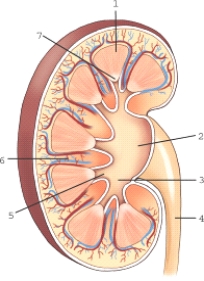
Select the correct pathologic term for each definition.(Use each selection only once.)
-Excretion of diminished amounts of urine
(Multiple Choice)
4.7/5 (84)
(84) Which of the following veins is not normally used during venipuncture?
(Multiple Choice)
4.8/5 (59)
(59) Which of the following conditions is considered to be higher risk (a contraindication) for a contrast media reaction?
(Multiple Choice)
4.9/5 (76)
(76) What is the primary purpose of the premedication procedure before an iodinated contrast media study?
(Multiple Choice)
4.9/5 (92)
(92) What is the correct course of action for the technologist when, during an injection of contrast media, a patient experiences a side effect of mild hot flashes and some metallic taste in his mouth?
(Multiple Choice)
4.8/5 (62)
(62) If both procedures are ordered on the same day, a barium enema must be performed before an IVU.
(True/False)
4.8/5 (81)
(81) Which of the following symptoms is considered a severe reaction to contrast media and is a life-threatening condition requiring life-saving measures?
(Multiple Choice)
4.8/5 (87)
(87) A patient comes to radiology for an IVU.The clinical history states that the patient may have an enlarged prostate gland (benign prostatic hyperplasia).Which of the following positions best demonstrates this condition?
(Multiple Choice)
4.7/5 (71)
(71) A male patient comes to radiology for a voiding cystourethrogram.Which of the following projections and/or positions would be performed for this procedure?
(Multiple Choice)
4.9/5 (91)
(91) One of the three constricted points along each ureter is the pelvic brim.The location of this constricted point is:
(Multiple Choice)
4.8/5 (90)
(90) A patient comes to radiology, after surgery of the abdomen, for an IVU with an order for ureteric compression to enhance pelvicalyceal filling.What should the technologist do?
(Multiple Choice)
5.0/5 (75)
(75) Select the correct pathologic indication for each statement or description.(Select each choice only once.)
-Fusion of the kidneys during development of the fetus
(Multiple Choice)
4.8/5 (79)
(79) The rapid introduction of contrast agents into the vascular system is termed:
(Multiple Choice)
4.8/5 (81)
(81) Ionic contrast agents use a parent compound of a carboxyl group (benzoic acid).
(True/False)
4.8/5 (77)
(77) 
Filters
- Essay(0)
- Multiple Choice(0)
- Short Answer(0)
- True False(0)
- Matching(0)