



 Chat with AI
Exam 12: Biliary Tract and Upper Gastrointestinal System

Exam 1: Terminology, Positioning, and Imaging Principles199 Questions
Exam 2: Chest102 Questions
Exam 3: Abdomen92 Questions
Exam 4: Upper Limb107 Questions
Exam 5: Humerus and Shoulder Girdle80 Questions
Exam 6: Lower Limb110 Questions
Exam 7: Femur and Pelvic Girdle80 Questions
Exam 8: Cervical and Thoracic Spine84 Questions
Exam 9: Lumbar Spine, Sacrum, and Coccyx75 Questions
Exam 10: Bony Thoraxsternum and Ribs67 Questions
Exam 11: Cranium, Facial Bones, and Paranasal Sinuses181 Questions
Exam 12: Biliary Tract and Upper Gastrointestinal System127 Questions
Exam 13: Lower Gi System83 Questions
Exam 14: Urinary System and Venipuncture100 Questions
Exam 15: Trauma, Mobile, and Surgical Radiography108 Questions
Exam 16: Pediatric Radiography72 Questions
Exam 17: Angiography and Interventional Procedures72 Questions
Exam 18: Computed Tomography103 Questions
Exam 19: Special Radiographic Procedures69 Questions
Exam 20: Diagnostic and Therapeutic Modalities208 Questions
Select questions type


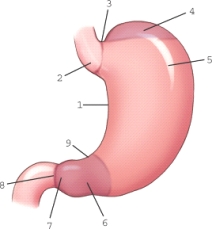

Which one of the following cardinal principles of radiation protection is most effective in reducing the dose to the technologist during fluoroscopy?
(Multiple Choice)
4.9/5  (85)
(85) What is a potential risk associated with the use of water-soluble contrast agents, especially for geriatric patients?
(Multiple Choice)
4.8/5 (69)
(69) Hypertrophic pyloric stenosis (HPS) is the most common form of intestinal obstruction found in infants.
(True/False)
4.7/5 (85)
(85) Match each radiographic appearance or description with the corresponding disease or condition.(Use each selection only once.)
-Irregular filling defect within the stomach
(Multiple Choice)
4.8/5 (74)
(74) 
Filters
- Essay(0)
- Multiple Choice(0)
- Short Answer(0)
- True False(0)
- Matching(0)