



 Chat with AI
Exam 12: Biliary Tract and Upper Gastrointestinal System

Exam 1: Terminology, Positioning, and Imaging Principles199 Questions
Exam 2: Chest102 Questions
Exam 3: Abdomen92 Questions
Exam 4: Upper Limb107 Questions
Exam 5: Humerus and Shoulder Girdle80 Questions
Exam 6: Lower Limb110 Questions
Exam 7: Femur and Pelvic Girdle80 Questions
Exam 8: Cervical and Thoracic Spine84 Questions
Exam 9: Lumbar Spine, Sacrum, and Coccyx75 Questions
Exam 10: Bony Thoraxsternum and Ribs67 Questions
Exam 11: Cranium, Facial Bones, and Paranasal Sinuses181 Questions
Exam 12: Biliary Tract and Upper Gastrointestinal System127 Questions
Exam 13: Lower Gi System83 Questions
Exam 14: Urinary System and Venipuncture100 Questions
Exam 15: Trauma, Mobile, and Surgical Radiography108 Questions
Exam 16: Pediatric Radiography72 Questions
Exam 17: Angiography and Interventional Procedures72 Questions
Exam 18: Computed Tomography103 Questions
Exam 19: Special Radiographic Procedures69 Questions
Exam 20: Diagnostic and Therapeutic Modalities208 Questions
Select questions type


A patient comes to radiology for an upper GI series.Her clinical history indicates that there may be a tumor posterior to the stomach.Which one of the following projections and/or positions will best demonstrate this condition?
(Multiple Choice)
4.8/5  (81)
(81) Once food enters the stomach and is mixed with gastric secretions, it is termed:
(Multiple Choice)
4.9/5 (76)
(76) The dilated portion of the distal esophagus is termed the:
(Multiple Choice)
4.9/5 (81)
(81) How much barium is typically given to a 3- to 10-year-old child during an upper GI series?
(Multiple Choice)
4.9/5 (81)
(81) The liver is located primarily in the ____ of the abdomen.
(Multiple Choice)
4.8/5 (69)
(69) Protective aprons worn during fluoroscopy must possess at least ____ mm lead equivalency (Pb/Eq.).
(Multiple Choice)
4.8/5 (72)
(72) A pediatric patient enters the emergency department (ED) with a small, plastic object stuck in her esophagus.PA and lateral chest radiographs fail to demonstrate the foreign body.Which of the following procedures would be most effective in demonstrating the location of the object?
(Multiple Choice)
4.7/5 (80)
(80) 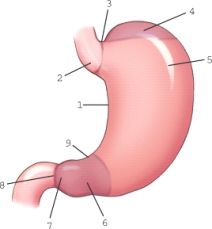
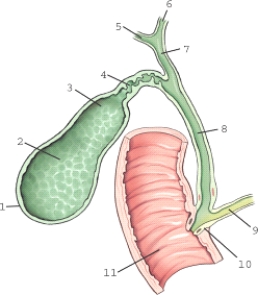
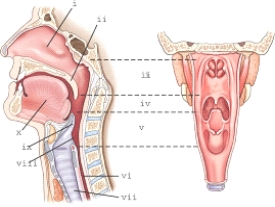
Toward which aspect(s) of the stomach will barium gravitate with the patient in a prone position?
(Multiple Choice)
5.0/5 (74)
(74) Match each radiographic appearance or description with the corresponding disease or condition.(Use each selection only once.)
-Narrowing and wormlike appearance of distal esophagus
(Multiple Choice)
4.9/5 (88)
(88) Which of the following patient care concerns would prevent the use of an oral, water-soluble contrast medium?
(Multiple Choice)
5.0/5 (76)
(76) CR centering for an esophagogram should be to the vertebral level of:
(Multiple Choice)
5.0/5 (83)
(83) A patient comes to radiology for an esophagogram.The radiologist is concerned about the upper portion of the esophagus, near the level of T1, which did not visualize well on the previous routine projection-position esophagogram.Which of the following special projections and/or positions would be most helpful in demonstrating this region?
(Multiple Choice)
4.9/5 (72)
(72) 
Filters
- Essay(0)
- Multiple Choice(0)
- Short Answer(0)
- True False(0)
- Matching(0)