



 Chat with AI
Exam 16: Europe in the Late Nineteenth Century: Modernization, Nationalism, Imperialism

Exam 1: The Ancient Near East: the First Civilizations82 Questions
Exam 2: The Hebrews: a New View of God and the Individual74 Questions
Exam 3: The Greeks: From Myth to Reason95 Questions
Exam 4: Rome: From City-State to World Empire93 Questions
Exam 5: Early Christianity: a World Religion79 Questions
Exam 6: The Rise of Europe: Fusion of Classical, Christian, and Germanic Traditions89 Questions
Exam 7: The Flowering and Dissolution of Medieval Civilization84 Questions
Exam 8: Transition to the Modern Age: Renaissance and Reformation92 Questions
Exam 9: Political and Economic Transformation: National States, Overseas Expansion, Commercial Revolution84 Questions
Exam 10: Intellectual Transformation: the Scientific Revolution and the Age of Enlightenment86 Questions
Exam 11: The Era of the French Revolution: Affirmation of Liberty and Equality92 Questions
Exam 12: The Industrial Revolution: the Transformation of Society79 Questions
Exam 13: Thought and Culture in the Early Nineteenth Century82 Questions
Exam 14: Surge of Liberalism and Nationalism: Revolution, Counterrevolution, and Unification78 Questions
Exam 15: Thought and Culture in the Mid-Nineteenth Century: Realism, Positivism, Darwinism, and Social Criticism86 Questions
Exam 16: Europe in the Late Nineteenth Century: Modernization, Nationalism, Imperialism93 Questions
Exam 17: Modern Consciousness: New Views of Nature, Human Nature, and the Arts78 Questions
Exam 18: World War I: the West in Despair83 Questions
Exam 19: An Era of Totalitarianism87 Questions
Exam 20: World War 2: Western Civilization in the Balance55 Questions
Exam 21: Europe After World War 2: Recovery and Realignment, 1945-198963 Questions
Exam 22: The Troubled Present55 Questions
Select questions type


Please use this outline map of Europe to answer the question(s).
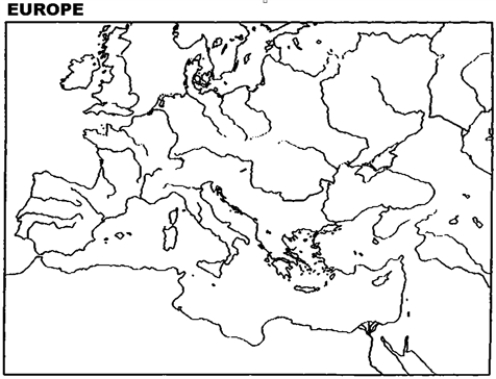 -On a map of Europe, designate those areas that may be associated with the following: home rule, Communards, Easter Rebellion, the Kulturkampf, and the Irish question.
 (Short Answer)
4.8/5  (87)
(87) Although imperialistic in actions, what positive actions resulted from British rule of India?
(Multiple Choice)
4.8/5 (77)
(77) Please use this outline map of the world to answer the question(s).
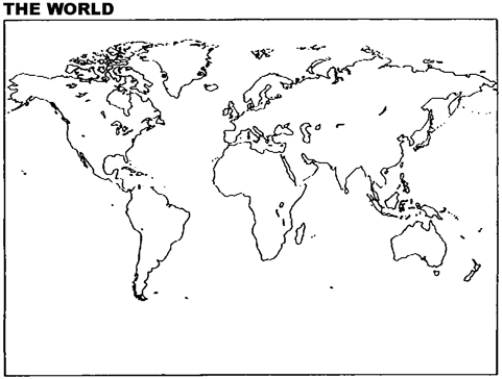 -Discuss the meaning of the following terms: colony, protectorate, spheres of influence, and extraterritoriality.
 (Essay)
4.9/5 (88)
(88) Which of the following did the British Labour government fail to enact between 1906 and 1911?
(Multiple Choice)
4.7/5 (79)
(79) The most extreme ideological expression of nationalism and imperialism could be found in
(Multiple Choice)
4.8/5 (75)
(75) Industrialization created a new, ____ group of clerks, who tried to differentiate themselves from factory workers.
(Multiple Choice)
4.8/5 (75)
(75) What was the end result of the Easter Rebellion and the Irish revolt of 1919-1920?
(Multiple Choice)
4.8/5 (66)
(66) Please use this outline map of the world to answer the question(s).
-What was the Berlin conference? How did it impact on the colonization of Africa?
-What was the Berlin conference? How did it impact on the colonization of Africa? (Essay)
4.7/5 (58)
(58) Please use this outline map of the world to answer the question(s).
-On the map of Africa, designate those areas controlled by Britain, France, Germany, and Italy as well as the African states that were never imperialized by the West.
-On the map of Africa, designate those areas controlled by Britain, France, Germany, and Italy as well as the African states that were never imperialized by the West. (Essay)
4.9/5 (73)
(73) Please define the following key terms. Show Who? What? Where? When? Why Important?
-Mao Zedong
(Essay)
4.8/5 (86)
(86) Please use this outline map of the world to answer the question(s).
-Using arrows, locate on a world map the area with which each of the following should be associated: the Great Trek, the Opium War, the "march to the sea," the Open Door Policy, Matthew Perry's entry into a famous harbor, and at least one of the sites relating to gunboat diplomacy. Label each area by name.
-Using arrows, locate on a world map the area with which each of the following should be associated: the Great Trek, the Opium War, the "march to the sea," the Open Door Policy, Matthew Perry's entry into a famous harbor, and at least one of the sites relating to gunboat diplomacy. Label each area by name. (Essay)
4.8/5 (74)
(74) Please define the following key terms. Show Who? What? Where? When? Why Important?
-Berlin Conference
(Essay)
4.9/5 (94)
(94) Please define the following key terms. Show Who? What? Where? When? Why Important?
-the Sino-Japanese War
(Essay)
4.9/5 (84)
(84) Please define the following key terms. Show Who? What? Where? When? Why Important?
-Bismarck
(Essay)
4.8/5 (58)
(58) As nationalism grew more extreme it evolved into all of the following EXCEPT
(Multiple Choice)
4.7/5 (73)
(73) Please define the following key terms. Show Who? What? Where? When? Why Important?
-Home Rule
(Essay)
5.0/5 (89)
(89) Please define the following key terms. Show Who? What? Where? When? Why Important?
-The Protocols of the Elders of Zion
(Short Answer)
4.8/5 (91)
(91) Please use this outline map of the world to answer the question(s).
-The attitudes of the imperialists illustrated that they thought of themselves as superior to the peoples of other areas of the world. Offer some examples.
-The attitudes of the imperialists illustrated that they thought of themselves as superior to the peoples of other areas of the world. Offer some examples. (Essay)
4.9/5 (96)
(96) 
Filters
- Essay(0)
- Multiple Choice(0)
- Short Answer(0)
- True False(0)
- Matching(0)