



 Chat with AI
Exam 13: Thought and Culture in the Early Nineteenth Century


Please use this outline map of Europe to answer the question(s).
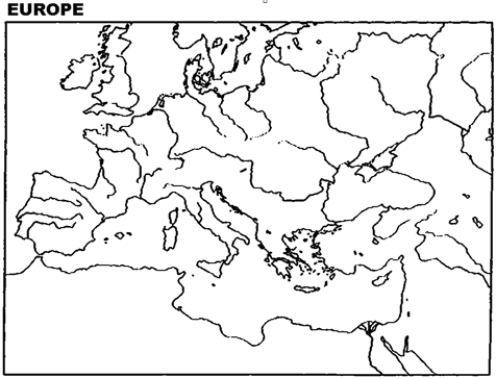 -What was the relationship between nationalism and liberalism in the nineteenth century? Has this relationship necessarily continued into the twentieth century? Discuss.
 (75)
 Answered by Examlex AI Copilot
In the nineteenth century, nationalism and liberalism were closely intertwined. Nationalism, the belief in the importance of a shared national identity and the desire for self-governance, often went hand in hand with liberalism, which emphasized individual rights, representative government, and the rule of law. Both movements sought to challenge the traditional authority of monarchies and aristocracies, and to promote the idea of popular sovereignty.
This relationship between nationalism and liberalism continued into the twentieth century, but it was not without its complexities and contradictions. While both movements continued to advocate for democratic governance and individual freedoms, they also faced challenges and conflicts. In some cases, nationalist movements became more exclusive and ethnocentric, leading to tensions with liberal ideals of equality and inclusivity. Additionally, the rise of authoritarian regimes and the outbreak of two world wars in the twentieth century tested the compatibility of nationalism and liberalism.
Overall, while the relationship between nationalism and liberalism in the nineteenth century was largely cooperative and complementary, the twentieth century saw a more complicated and at times contentious relationship between the two ideologies. Nationalism and liberalism continued to intersect and influence each other, but their relationship was shaped by the changing political and social dynamics of the modern era.
Please use this outline map of Europe to answer the question(s).
-Explain the connection between romantic thought and the growth of nationalism.
-Explain the connection between romantic thought and the growth of nationalism. (82) Answered by Examlex AI CopilotRomantic thought and the growth of nationalism are connected in several ways. Firstly, romanticism emphasized the importance of individual emotions, feelings, and experiences, which led to a focus on the unique cultural identity and history of different nations. This emphasis on national identity and cultural heritage contributed to the growth of nationalism as people began to take pride in their own nation and sought to assert their independence from foreign rule.
Secondly, romanticism also celebrated the idea of the "folk" or the common people, and this focus on the everyday lives and traditions of the common people helped to foster a sense of national unity and solidarity. This sense of shared cultural values and traditions further fueled the growth of nationalism as people sought to preserve and protect their unique national identity.
Additionally, romanticism often portrayed nature as a source of inspiration and spiritual renewal, and this emphasis on the beauty and power of the natural world also played a role in the growth of nationalism. Many nationalist movements drew on the imagery of the natural landscape and the idea of a shared homeland to rally support for their cause.
Overall, romantic thought and the growth of nationalism are closely connected through their emphasis on cultural identity, national pride, and the idea of a shared heritage and destiny. The romantic movement provided the intellectual and emotional foundation for the rise of nationalist movements across Europe in the 19th century.
According to the romantics, abstract and scientific knowledge are insufficient guides to knowledge because of all the following reasons EXCEPT
(79)  Verified
A
Many romantics saw a dark side of the unconsciousness and were often compared to
(73) Which statement is least associated with the work of Immanuel Kant?
(87) Please define the following key terms. Show Who? What? Where? When? Why Important?
-liberalism
(71) Please define the following key terms. Show Who? What? Where? When? Why Important?
-Friedrich Schlegel
(68) Nineteenth Century liberals espoused all of the following except
(72) Which of the following remarked, "over his own body and mind, the individual is sovereign...."?
(71) The book Reflections on the Revolution in France helped to create
(88) Please use this outline map of Europe to answer the question(s).
-What were the political views of Edmund Burke?
-What were the political views of Edmund Burke? (64) Please define the following key terms. Show Who? What? Where? When? Why Important?
-Enquiry Concerning Human Understanding
(90) Please define the following key terms. Show Who? What? Where? When? Why Important?
-William Blake
(76) The bourgeoisie in the nineteenth century usually supported
(72) Please define the following key terms. Show Who? What? Where? When? Why Important?
-Horst von Maltitz
(77) How did Hume cast doubt on scientific certainty and the cause and effect theory?
(84) 
Filters
- Essay(0)
- Multiple Choice(0)
- Short Answer(0)
- True False(0)
- Matching(0)