



 Chat with AI
Exam 13: Thought and Culture in the Early Nineteenth Century

Exam 1: The Ancient Near East: the First Civilizations82 Questions
Exam 2: The Hebrews: a New View of God and the Individual74 Questions
Exam 3: The Greeks: From Myth to Reason95 Questions
Exam 4: Rome: From City-State to World Empire93 Questions
Exam 5: Early Christianity: a World Religion79 Questions
Exam 6: The Rise of Europe: Fusion of Classical, Christian, and Germanic Traditions89 Questions
Exam 7: The Flowering and Dissolution of Medieval Civilization84 Questions
Exam 8: Transition to the Modern Age: Renaissance and Reformation92 Questions
Exam 9: Political and Economic Transformation: National States, Overseas Expansion, Commercial Revolution84 Questions
Exam 10: Intellectual Transformation: the Scientific Revolution and the Age of Enlightenment86 Questions
Exam 11: The Era of the French Revolution: Affirmation of Liberty and Equality92 Questions
Exam 12: The Industrial Revolution: the Transformation of Society79 Questions
Exam 13: Thought and Culture in the Early Nineteenth Century82 Questions
Exam 14: Surge of Liberalism and Nationalism: Revolution, Counterrevolution, and Unification78 Questions
Exam 15: Thought and Culture in the Mid-Nineteenth Century: Realism, Positivism, Darwinism, and Social Criticism86 Questions
Exam 16: Europe in the Late Nineteenth Century: Modernization, Nationalism, Imperialism93 Questions
Exam 17: Modern Consciousness: New Views of Nature, Human Nature, and the Arts78 Questions
Exam 18: World War I: the West in Despair83 Questions
Exam 19: An Era of Totalitarianism87 Questions
Exam 20: World War 2: Western Civilization in the Balance55 Questions
Exam 21: Europe After World War 2: Recovery and Realignment, 1945-198963 Questions
Exam 22: The Troubled Present55 Questions
Select questions type


Please define the following key terms. Show Who? What? Where? When? Why Important?
-Johann Gottfried Herder
(Essay)
4.9/5  (79)
(79) Please define the following key terms. Show Who? What? Where? When? Why Important?
-George Wilhelm Friedrich Hegel
(Essay)
4.8/5 (79)
(79) Please define the following key terms. Show Who? What? Where? When? Why Important?
-Edmund Burke
(Essay)
4.9/5 (78)
(78) Please define the following key terms. Show Who? What? Where? When? Why Important?
-tabula rasa
(Essay)
4.9/5 (81)
(81) Please define the following key terms. Show Who? What? Where? When? Why Important?
-Immanuel Kant
(Short Answer)
4.8/5 (65)
(65) The American and French revolutions were crucial phases in the history of
(Multiple Choice)
4.8/5 (81)
(81) Please use this outline map of Europe to answer the question(s).
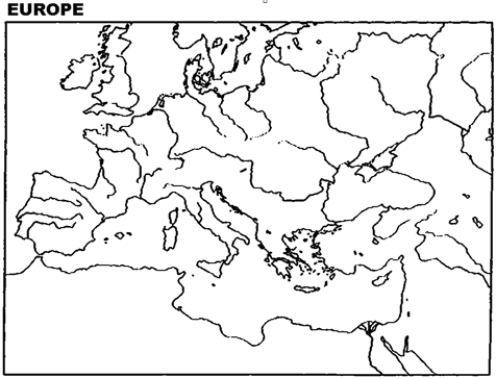 -Why was history a very important part of the work of Hegel? In what way did Hegel's view of freedom actually limit man's freedom of action? How did his ideas contrast with the ideas of the philosophes?
 (Essay)
4.8/5 (80)
(80) Please define the following key terms. Show Who? What? Where? When? Why Important?
-German idealism
(Essay)
4.9/5 (74)
(74) Of the following, ____ chose to utilize Hegel's idea that there is system behind the movement of history.
(Multiple Choice)
4.9/5 (87)
(87) The best characterization of the romantics' attitude towards history is
(Multiple Choice)
4.8/5 (85)
(85) Conservatives were likely to blame which of the following as the root of human malevolence?
(Multiple Choice)
4.8/5 (82)
(82) Please use this outline map of Europe to answer the question(s).
-Compare and contrast liberalism with conservatism.
-Compare and contrast liberalism with conservatism. (Essay)
4.9/5 (72)
(72) Please define the following key terms. Show Who? What? Where? When? Why Important?
-Volksgeist
(Essay)
4.9/5 (77)
(77) Who has been called the dominant figure among French romantics?
(Multiple Choice)
4.9/5 (75)
(75) 
Filters
- Essay(0)
- Multiple Choice(0)
- Short Answer(0)
- True False(0)
- Matching(0)