



 Chat with AI
Exam 7: The Common Catabolic Pathway

Exam 1: The Chemical Foundations of Biochemistry28 Questions
Exam 2: Nucleic Acids32 Questions
Exam 3: Proteins I31 Questions
Exam 4: Proteins Iienzymes41 Questions
Exam 5: Membranes and an Introduction to Signal Transduction33 Questions
Exam 6: Carbohydrates I46 Questions
Exam 7: The Common Catabolic Pathway41 Questions
Exam 8: Carbohydrates II19 Questions
Exam 9: Lipids I37 Questions
Exam 10: Lipids II21 Questions
Exam 11: Amine Metabolism16 Questions
Exam 12: Metabolism Integration19 Questions
Exam 13: Nucleotide Deoxynucleotide Metabolism40 Questions
Exam 14: Dna Replication, Damage and Repair38 Questions
Exam 15: Rna Synthesis40 Questions
Exam 16: Protein45 Questions
Exam 17: Control of Gene45 Questions
Exam 18: Determination of Macromolecular Structure60 Questions
Exam 19: Allosterism and Receptor-Ligand49 Questions
Exam 20: Designer Proteins and Protein Folding59 Questions
Exam 21: Biomolecule Purification57 Questions
Exam 22: Bioinformatics and Omics29 Questions
Exam 23: Signal51 Questions
Exam 24: Protein Trafficking57 Questions
Exam 25: Photosynthesis Nitrogen39 Questions
Select questions type


In the malate aspartate shuttle, _____ is transferred into the mitochondria, and _____ is transferred to the cytosol.
(Multiple Choice)
4.8/5  (74)
(74) Which of the following condenses with oxaloacetate to form citrate?
(Multiple Choice)
4.9/5 (75)
(75) If acetyl-CoA labeled with 14C, as shown in the figure to the right, were used as the substrate for the citric acid cycle, which of the following intermediates would be produced during the first round of the cycle? 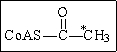
(Multiple Choice)
4.8/5 (62)
(62) Which of the following occurs when the catalytic subunit of ATP synthase is in the loose state?
(Multiple Choice)
4.8/5 (78)
(78) What is the terminal electron acceptor in aerobic organisms?
(Multiple Choice)
4.8/5 (83)
(83) Ubiquinone is found in the inner mitochondrial membrane, and cytochrome c is found in the matrix.
(True/False)
4.7/5 (85)
(85) Which of the following results from the first round of the Q cycle?
(Multiple Choice)
4.7/5 (77)
(77) How many protons are transported from the matrix to the intermembrane space by Complex I?
(Multiple Choice)
4.8/5 (62)
(62) What shuttle mechanism transfers cytosolic NADH into the mitochondria with a loss of reductive power, with the electrons entering the electron transport chain as ubiquinol instead of NADH?
(Multiple Choice)
4.9/5 (90)
(90) For every two electrons transferred from NADH to oxygen, _____ protons are pumped from the matrix to the intermembrane space.
(Multiple Choice)
4.7/5 (76)
(76) Which of the following can cause a large increase in the activity of the citric acid cycle?
(Multiple Choice)
5.0/5 (94)
(94) Which of the following is an anaplerotic reaction that is often used in the cell?
(Multiple Choice)
4.9/5 (74)
(74) If the G for the oxidation of NADH by oxygen is -220 kJ/mol and the G for transport of H+ across the inner membrane is 20 kJ/mol, what is the efficiency for energy captured in the proton gradient versus energy evolved from NADH oxidation?
(Multiple Choice)
4.8/5 (77)
(77) ______ is the first compound that is oxidized in the citric acid cycle.
(Short Answer)
4.8/5 (96)
(96) Complex III accepts electrons from _____ and transfers them to _____.
(Multiple Choice)
5.0/5 (79)
(79) The reduction potentials of all prosthetic groups of Complex I have reduction potentials between _____ and _____.
(Multiple Choice)
4.9/5 (82)
(82) ______ is used in the first reaction of the citric acid cycle and regenerated upon completion of one turn of the citric acid cycle.
(Short Answer)
4.9/5 (75)
(75) 
Filters
- Essay(0)
- Multiple Choice(0)
- Short Answer(0)
- True False(0)
- Matching(0)