



 Chat with AI
Exam 3: Proteins I

Exam 1: The Chemical Foundations of Biochemistry28 Questions
Exam 2: Nucleic Acids32 Questions
Exam 3: Proteins I31 Questions
Exam 4: Proteins Iienzymes41 Questions
Exam 5: Membranes and an Introduction to Signal Transduction33 Questions
Exam 6: Carbohydrates I46 Questions
Exam 7: The Common Catabolic Pathway41 Questions
Exam 8: Carbohydrates II19 Questions
Exam 9: Lipids I37 Questions
Exam 10: Lipids II21 Questions
Exam 11: Amine Metabolism16 Questions
Exam 12: Metabolism Integration19 Questions
Exam 13: Nucleotide Deoxynucleotide Metabolism40 Questions
Exam 14: Dna Replication, Damage and Repair38 Questions
Exam 15: Rna Synthesis40 Questions
Exam 16: Protein45 Questions
Exam 17: Control of Gene45 Questions
Exam 18: Determination of Macromolecular Structure60 Questions
Exam 19: Allosterism and Receptor-Ligand49 Questions
Exam 20: Designer Proteins and Protein Folding59 Questions
Exam 21: Biomolecule Purification57 Questions
Exam 22: Bioinformatics and Omics29 Questions
Exam 23: Signal51 Questions
Exam 24: Protein Trafficking57 Questions
Exam 25: Photosynthesis Nitrogen39 Questions
Select questions type


Which of the following structures shows the prevalent form of histidine at pH 5? 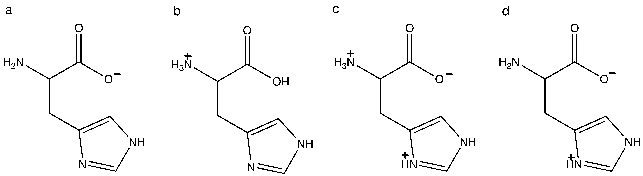

Free
(Multiple Choice)
4.8/5  (64)
(64) Correct Answer: Verified
C
The predominant noncovalent interaction seen in helices and sheets is _____.
Free
(Multiple Choice)
4.8/5 (74)
(74) Correct Answer:Verified
VerifiedB
During the initial synthesis of collagen molecules, _____ and _____ are most often incorporated into the growing protein.
Free
(Multiple Choice)
4.7/5 (86)
(86) Correct Answer:Verified
VerifiedC
Which one of the representations describes the oligopeptide shown below? 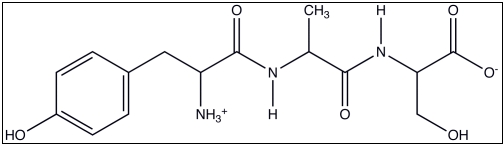
(Multiple Choice)
4.8/5 (73)
(73) Which of the following atoms would be considered a hydrogen-bond donor in an helix? 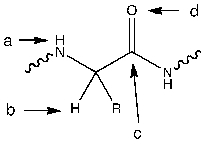
(Multiple Choice)
4.9/5 (69)
(69) At pH 3, how many charged groups are present in the pentapeptide Ala-Asp-His-Ser-Lys?
(Multiple Choice)
4.8/5 (86)
(86) The side chain of serine could interact with the side chain of _____ using a(n) _____.
(Multiple Choice)
4.8/5 (82)
(82) In the following figure, which bond would be unable to rotate? 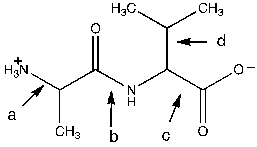
(Multiple Choice)
4.7/5 (83)
(83) At a pH above its pKa, the phenolic group of tyrosine is _____.
(Multiple Choice)
4.9/5 (81)
(81) Which of the following interactions would be involved in quaternary structure?
(Multiple Choice)
4.8/5 (85)
(85) Lysine can form a salt bridge by interacting with the side chain of _____.
(Multiple Choice)
4.9/5 (78)
(78) Leucine has a _____ side chain; glutamate has a _____ side chain.
(Short Answer)
4.8/5 (71)
(71) Proteins such as hemoglobin are known as _____ proteins because binding of a molecule to one site alters binding to other sites.
(Multiple Choice)
4.9/5 (81)
(81) Which of the following amino acids has a positively charged side chain at pH 7.4?
(Multiple Choice)
4.9/5 (84)
(84) Which of the following amino acids is generally absent from an helix?
(Multiple Choice)
4.8/5 (75)
(75) Which of the following structures shows the prevalent form of glutamic acid at pH 3?
A.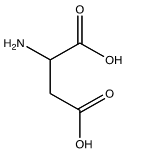 B.
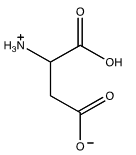 C.
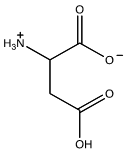 D.
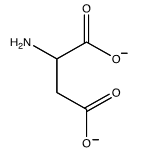
B.
C.
D. (Multiple Choice)
4.8/5 (65)
(65) Which of the following amino acids has a thiol group in its side chain?
(Multiple Choice)
4.9/5 (79)
(79) The only observable regular secondary structures are helices and sheets.
(True/False)
5.0/5 (79)
(79) 
Filters
- Essay(0)
- Multiple Choice(0)
- Short Answer(0)
- True False(0)
- Matching(0)