



 Chat with AI
Exam 22: Neonatal and Pediatric Ventilation

Exam 1: Basic Terms and Concepts of Mechanical Ventilation36 Questions
Exam 2: How Ventilators Work13 Questions
Exam 3: How a Breath Is Delivered30 Questions
Exam 4: Establishing the Need for Mechanical Ventilation27 Questions
Exam 5: Selecting the Ventilator and the Mode32 Questions
Exam 6: Initial Ventilator Settings32 Questions
Exam 7: Final Considerations in Ventilator Setup36 Questions
Exam 8: Initial Patient Assessment37 Questions
Exam 9: Ventilator Graphics32 Questions
Exam 10: Assessment of Respiratory Function55 Questions
Exam 11: Hemodynamic Monitoring56 Questions
Exam 12: Methods to Improve Ventilation in Patient-Ventilator Management32 Questions
Exam 13: Improving Oxygenation and Management of ARDS32 Questions
Exam 14: Ventilator-Associated Pneumonia26 Questions
Exam 15: Sedatives, Analgesics, and Paralytics17 Questions
Exam 16: Extrapulmonary Effects of Mechanical Ventilation17 Questions
Exam 17: Effects of Positive Pressure Ventilation on the Pulmonary System27 Questions
Exam 18: Troubleshooting and Problem Solving26 Questions
Exam 19: Basic Concepts of Noninvasive Positive-Pressure Ventilation27 Questions
Exam 20: Weaning and Discontinuation from Mechanical Ventilation27 Questions
Exam 21: Long-Term Ventilation29 Questions
Exam 22: Neonatal and Pediatric Ventilation40 Questions
Exam 23: Special Techniques in Ventilatory Support21 Questions
Select questions type


Nasal CPAP should be administered to a neonate with _______________.

Free
(Multiple Choice)
4.7/5  (95)
(95) Correct Answer: Verified
C
A neonate is being ventilated with PRVC.The respiratory therapist responds to a low volume alarm.After checking the patient and the ventilator,the respiratory therapist finds no disconnects.The most appropriate action is which of the following?
Free
(Multiple Choice)
4.9/5 (91)
(91) Correct Answer:Verified
VerifiedB
The mode of ventilation that allows a neonate to breathe at a high and a low CPAP setting is which of the following?
Free
(Multiple Choice)
4.8/5 (67)
(67) Correct Answer:Verified
VerifiedA
Neonatal patients are more vulnerable to rapid deterioration because of ________________.
(Multiple Choice)
4.8/5 (78)
(78) The patient with which of the following conditions should be considered for HFV?
(Multiple Choice)
4.8/5 (72)
(72) The pressure manometer should be placed at which point in the following CPAP system?
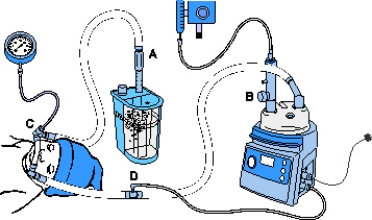
(Multiple Choice)
4.7/5 (65)
(65) A newborn of 32 weeks' gestation is currently receiving nasal CPAP.The respiratory therapist recently increased the CPAP level from 8 to 10 cm H₂O; the FɪO₂ is 0.6.On the new setting,the PₐO₂ is 52 mm Hg and the PₐCO₂ increased from 48 to 55 mm Hg.The most likely cause of this is which of the following?
(Multiple Choice)
4.8/5 (76)
(76) A 5-year-old patient diagnosed with tracheomalacia after a long intubation has had numerous failures to wean and extubate.What should the respiratory therapist recommend to help alleviate spontaneous breathing problems associated with tracheomalacia until a stent can be placed in the airway?
(Multiple Choice)
4.8/5 (76)
(76) NIV can be used successfully in neonates for which of the following?
(Multiple Choice)
4.9/5 (91)
(91) Which type of trigger allows for better synchronization during neonatal ventilation?
(Multiple Choice)
4.9/5 (87)
(87) The inspiratory time setting for an infant with bronchopulmonary dysplasia (BPD),airway resistance of 45 cm H₂O/L/sec,and lung compliance of 0.004 L/cm H₂O should be which of the following?
(Multiple Choice)
4.9/5 (79)
(79) Oxygen delivery and tissue perfusion may be evaluated clinically by which of the following?
(Multiple Choice)
4.9/5 (69)
(69) Infants with which of the following problems would benefit from nasal CPAP?
(Multiple Choice)
4.9/5 (76)
(76) Potential harmful effects of nasal CPAP include which of the following?
(Multiple Choice)
4.9/5 (72)
(72) Respiratory failure is imminent in infants who demonstrate which of the following?
(Multiple Choice)
4.8/5 (86)
(86) A pediatric patient with a 5-mm ET tube is ready to be switched to PSV.What minimum PS level should be used for this patient?
(Multiple Choice)
4.9/5 (88)
(88) A newborn with which of the following clinical manifestations should receive nasal CPAP?
(Multiple Choice)
4.8/5 (74)
(74) A full-term neonate shows signs of respiratory distress after delivery by cesarean section.The baby is placed on nasal CPAP at 4 cm H₂O with an FɪO₂ of 0.6.The ABG results on these settings are: pH = 7.32,PₐCO₂ = 45 mm Hg,PₐO₂ = 48 mm Hg,SₐO₂ = 70%,HCO₃⁻ = 22 mEq/L.The respiratory therapist should recommend which of the following?
(Multiple Choice)
4.9/5 (82)
(82) The inspiratory time setting for an infant with RDS,airway resistance of 30 cm H₂O/L/sec,and lung compliance of 0.002 L/cm H₂O should be which of the following?
(Multiple Choice)
4.8/5 (84)
(84) 
Filters
- Essay(0)
- Multiple Choice(0)
- Short Answer(0)
- True False(0)
- Matching(0)