



 Chat with AI
Exam 15: Animal Evolution

Exam 1: Invitation to Biology100 Questions
Exam 2: Molecules of Life100 Questions
Exam 3: Cell Structure101 Questions
Exam 4: Energy and Metabolism100 Questions
Exam 5: Capturing and Releasing Energy100 Questions
Exam 6: Dna Structure and Function100 Questions
Exam 7: Gene Expression and Control100 Questions
Exam 8: How Cells Reproduce100 Questions
Exam 9: Patterns of Inheritance96 Questions
Exam 10: Biotechnology100 Questions
Exam 11: Evidence of Evolution85 Questions
Exam 12: Processes of Evolution99 Questions
Exam 13: Early Life Forms and the Viruses99 Questions
Exam 14: Plants and Fungi100 Questions
Exam 15: Animal Evolution100 Questions
Exam 16: Population Ecology100 Questions
Exam 17: Communities and Ecosystems100 Questions
Exam 18: The Biosphere and Human Effects99 Questions
Exam 19: Animal Tissues and Organs100 Questions
Exam 20: How Animals Move100 Questions
Exam 21: Circulation and Respiration100 Questions
Exam 22: Immunity100 Questions
Exam 23: Digestion and Excretion100 Questions
Exam 24: Neural Control and the Senses100 Questions
Exam 25: Endocrine Control100 Questions
Exam 26: Reproduction and Development100 Questions
Exam 27: Plant Form and Function100 Questions
Exam 28: Plant Reproduction and Development100 Questions
Select questions type


Which trait allowed for evolutionary innovations in body form?
(Multiple Choice)
4.7/5  (84)
(84) Examine the figure below and match each term with the letter to which it best corresponds.
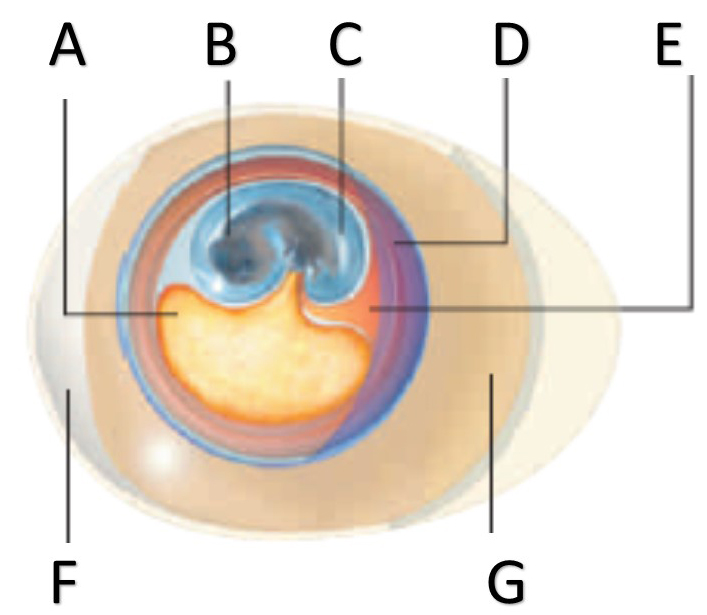
Premises:
yolk sac
Responses:
G
F
B
Correct Answer: Verified
Premises:
Responses:
(Matching)
4.8/5 (63)
(63) Examine the figure below and match each term with the letter to which it best corresponds.
Not all choices will be used.
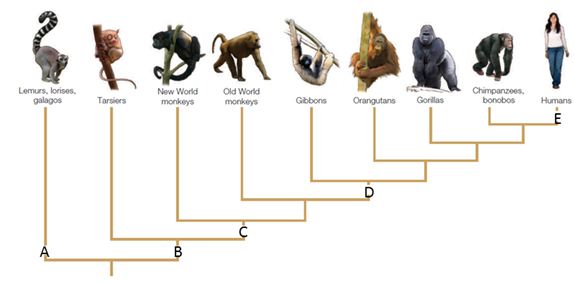
Not all choices will be used.
Premises:
hominoids
Responses:
B
C
A
Correct Answer:Verified
VerifiedPremises:
Responses:
(Matching)
4.9/5 (79)
(79) Which of the organisms below give support for the colonial theory of animal origins?
(Multiple Choice)
4.9/5 (90)
(90) Reef-building polyps get their sugars from mutualistic ____.
(Multiple Choice)
4.8/5 (81)
(81) Which vertebrate is a fish, has a cartilaginous skeleton, no jaws, and a tooth-covered tongue?
(Multiple Choice)
4.8/5 (75)
(75) Examine the figure below and match each term with the letter to which it best corresponds.
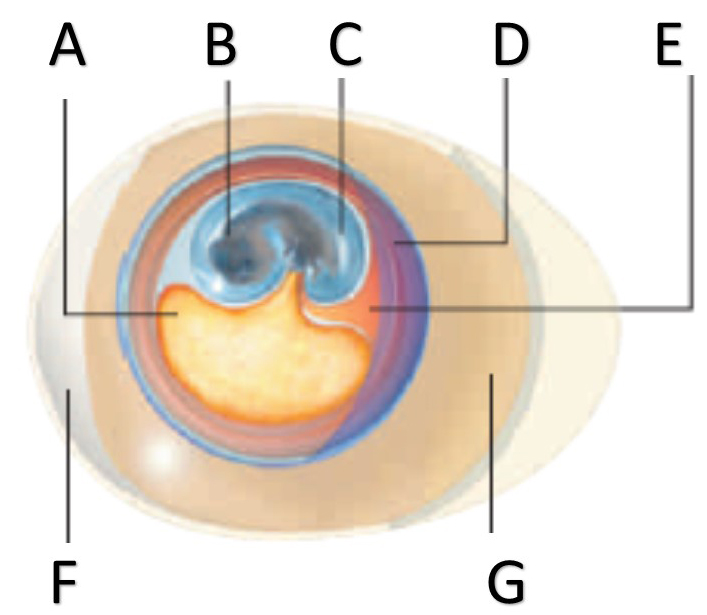
Premises:
embryo
Responses:
C
B
F
Correct Answer:Verified
VerifiedPremises:
Responses:
(Matching)
4.7/5 (89)
(89) Drugs used to treat AIDS and herpes virus infections are synthetic versions of compounds found in ____.
(Multiple Choice)
4.8/5 (86)
(86) Examine the figure below and match each term with the letter to which it best corresponds.
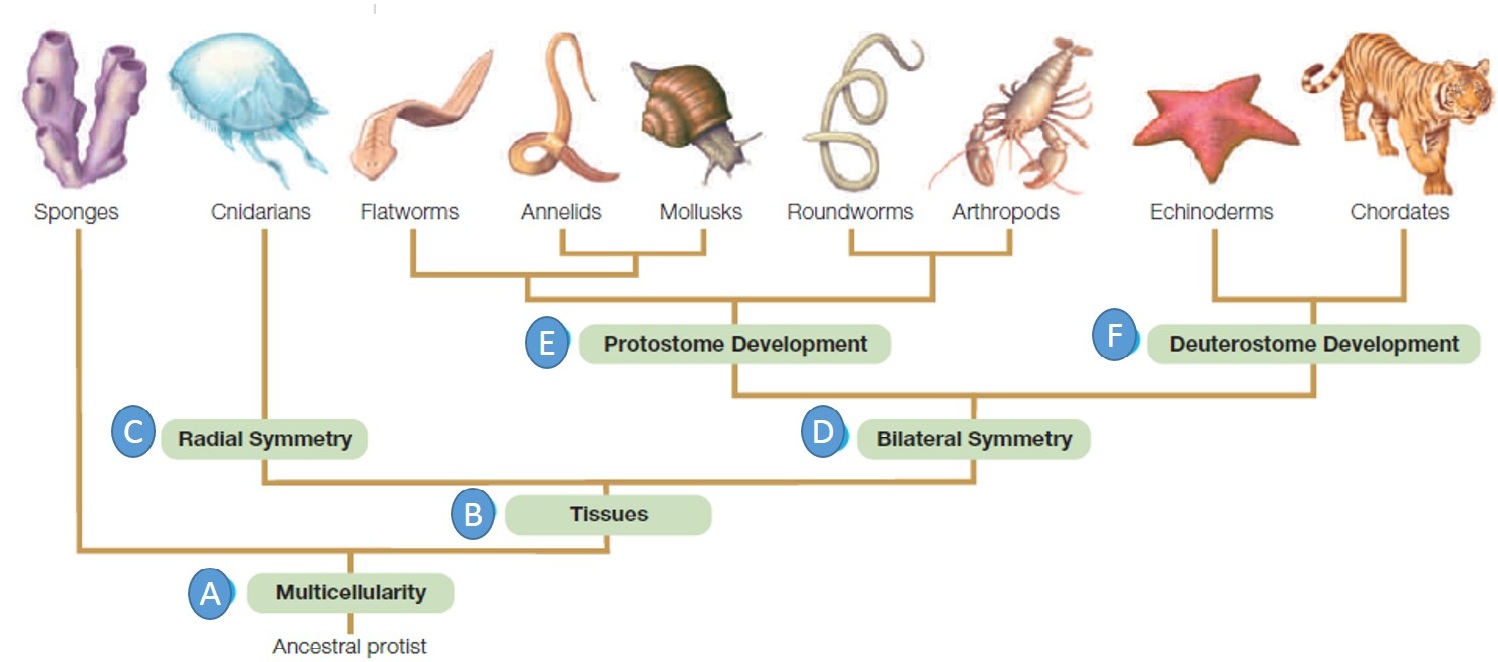
Premises:
first opening of the embryo becomes a mouth, and the second becomes an anus.
Responses:
C
F
D
Correct Answer:Verified
VerifiedPremises:
Responses:
(Matching)
4.9/5 (84)
(84) The wet-nose and cleft upper lip of the _____ does not allow these primates the range of facial expressions and vocalizations observed in the anthropoids.
(Multiple Choice)
4.9/5 (94)
(94) Which animal has radial symmetry, a gastrovascular cavity, and the same opening for the entry of food and expulsion of waste?
(Multiple Choice)
4.9/5 (70)
(70) Examine the figure below and match each term with the letter to which it best corresponds.
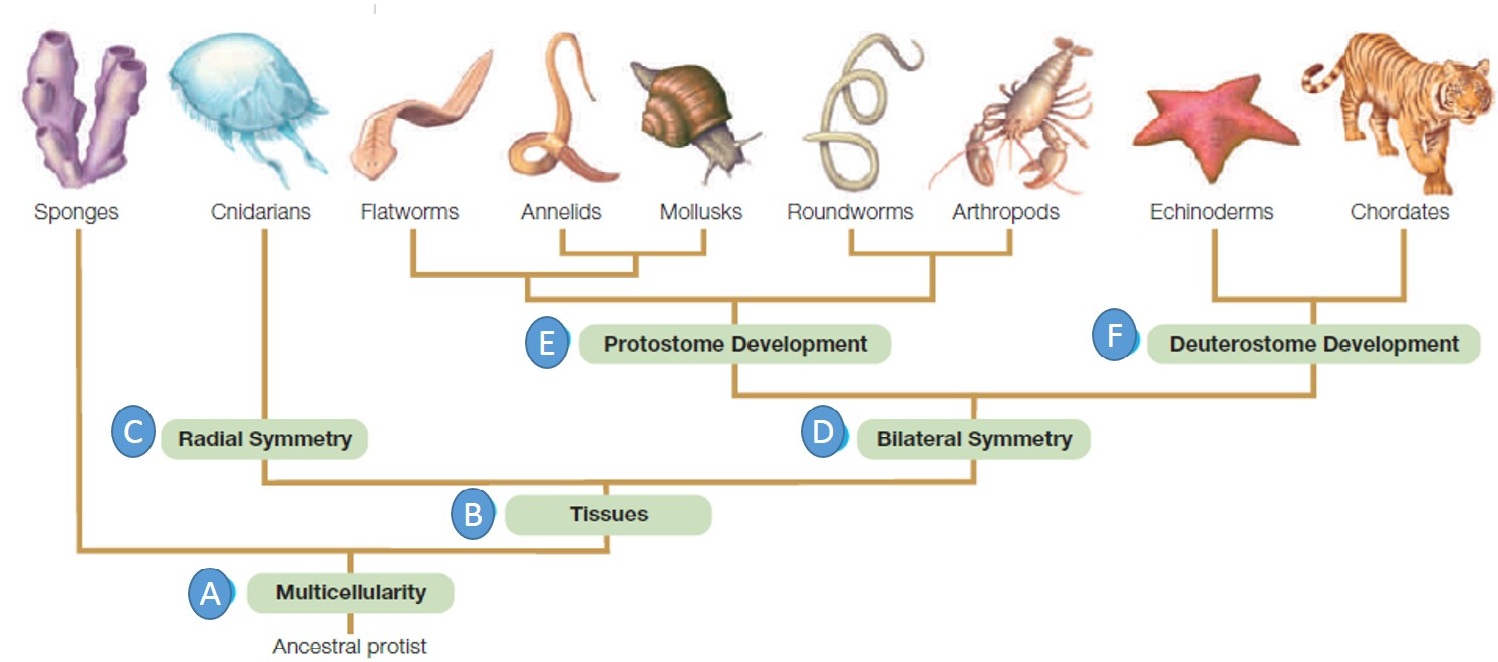
Premises:
having parts arranged around a central axis
Responses:
D
F
C
Correct Answer:Verified
VerifiedPremises:
Responses:
(Matching)
4.9/5 (88)
(88) 
Filters
- Essay(0)
- Multiple Choice(0)
- Short Answer(0)
- True False(0)
- Matching(0)