



 Chat with AI
Exam 15: Animal Evolution

Exam 1: Invitation to Biology100 Questions
Exam 2: Molecules of Life100 Questions
Exam 3: Cell Structure101 Questions
Exam 4: Energy and Metabolism100 Questions
Exam 5: Capturing and Releasing Energy100 Questions
Exam 6: Dna Structure and Function100 Questions
Exam 7: Gene Expression and Control100 Questions
Exam 8: How Cells Reproduce100 Questions
Exam 9: Patterns of Inheritance96 Questions
Exam 10: Biotechnology100 Questions
Exam 11: Evidence of Evolution85 Questions
Exam 12: Processes of Evolution99 Questions
Exam 13: Early Life Forms and the Viruses99 Questions
Exam 14: Plants and Fungi100 Questions
Exam 15: Animal Evolution100 Questions
Exam 16: Population Ecology100 Questions
Exam 17: Communities and Ecosystems100 Questions
Exam 18: The Biosphere and Human Effects99 Questions
Exam 19: Animal Tissues and Organs100 Questions
Exam 20: How Animals Move100 Questions
Exam 21: Circulation and Respiration100 Questions
Exam 22: Immunity100 Questions
Exam 23: Digestion and Excretion100 Questions
Exam 24: Neural Control and the Senses100 Questions
Exam 25: Endocrine Control100 Questions
Exam 26: Reproduction and Development100 Questions
Exam 27: Plant Form and Function100 Questions
Exam 28: Plant Reproduction and Development100 Questions
Select questions type


Which chordate has a four-chambered heart, no bladder, no teeth, and lack of a penis in the males?
(Multiple Choice)
4.9/5  (83)
(83) Which is the most recently evolved embryonic tissue in animals?
(Multiple Choice)
4.9/5 (77)
(77) Which was the most likely food source for the first terrestrial tetrapods?
(Multiple Choice)
4.9/5 (74)
(74) Examine the figure below and match each term with the letter to which it best corresponds.
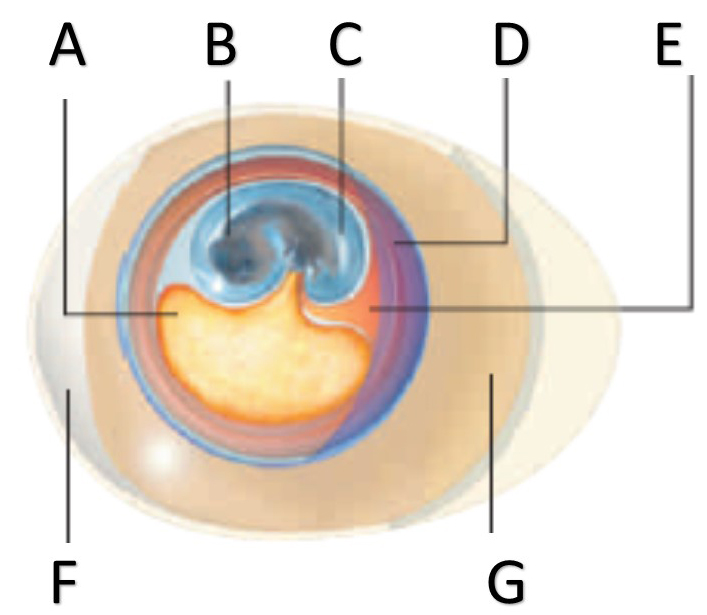
Premises:
chorion
Responses:
G
C
D
Correct Answer: Verified
Premises:
Responses:
(Matching)
4.9/5 (93)
(93) Examine the figure below and match each term with the letter to which it best corresponds.
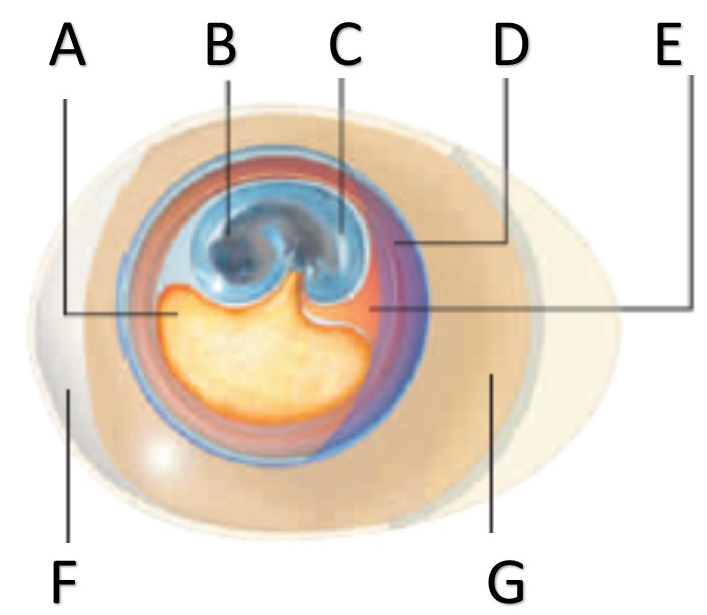
Premises:
egg white (albumen)
Responses:
D
F
B
Correct Answer:Verified
VerifiedPremises:
Responses:
(Matching)
4.9/5 (63)
(63) Which animal lacks symmetry, has no embryonic tissues, and has intracellular digestion?
(Multiple Choice)
4.9/5 (72)
(72) Of the following invertebrate groups, the group most closely related to the chordates is the _____.
(Multiple Choice)
4.8/5 (68)
(68) Examine the figure below and match each term with the letter to which it best corresponds.
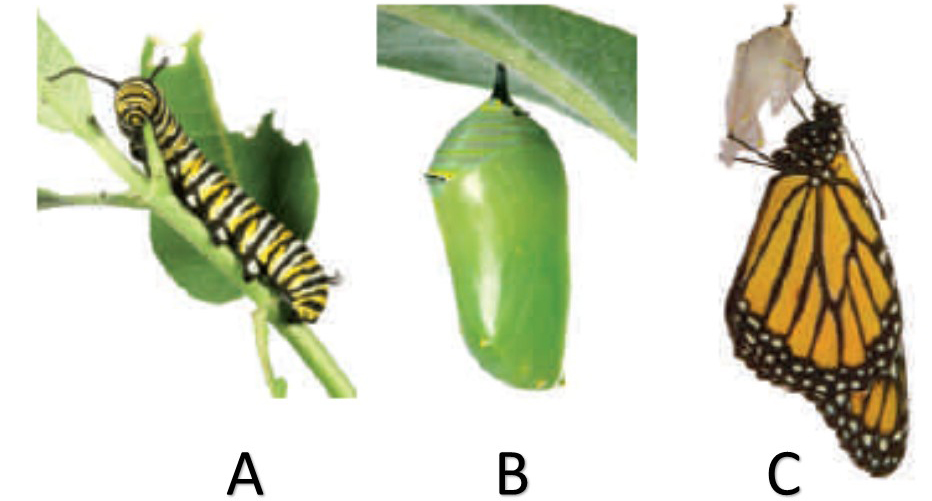
Premises:
larval stage
Responses:
C
B
A
Correct Answer:Verified
VerifiedPremises:
Responses:
(Matching)
4.8/5 (82)
(82) Which of the following is a defining trait found in chordate embryos?
(Multiple Choice)
4.7/5 (71)
(71) Examine the figure below and match each term with the letter to which it best corresponds.
Not all choices will be used.
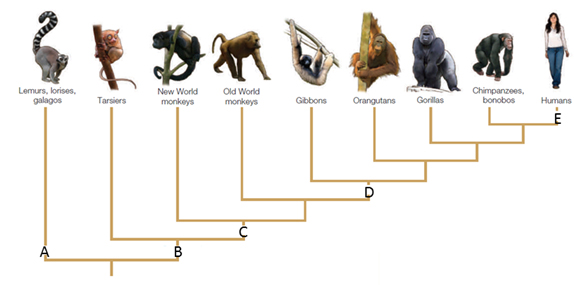
Not all choices will be used.
Premises:
hominins
Responses:
A
B
D
Correct Answer:Verified
VerifiedPremises:
Responses:
(Matching)
4.8/5 (76)
(76) 
Filters
- Essay(0)
- Multiple Choice(0)
- Short Answer(0)
- True False(0)
- Matching(0)