



 Chat with AI
Exam 21: DNA, Genes, and Biotechnology

Exam 1: Learning About Human Biology51 Questions
Exam 2: Chemistry of Life158 Questions
Exam 3: Cells and How They Work153 Questions
Exam 4: Tissues, Organs, and Organ Systems120 Questions
Exam 5: The Skeletal System90 Questions
Exam 6: The Muscular System61 Questions
Exam 7: Circulation: the Heart and Blood Vessels82 Questions
Exam 8: Blood70 Questions
Exam 9: Immunity and Disease111 Questions
Exam 10: The Respiratory System91 Questions
Exam 11: Digestion and Nutrition141 Questions
Exam 12: The Urinary System88 Questions
Exam 13: The Nervous System180 Questions
Exam 14: Sensory Systems142 Questions
Exam 15: The Endocrine System131 Questions
Exam 16: Reproductive Systems152 Questions
Exam 17: Development and Aging152 Questions
Exam 18: Cell Reproduction108 Questions
Exam 19: Introduction to Genetics157 Questions
Exam 20: Chromosomes and Human Genetics149 Questions
Exam 21: DNA, Genes, and Biotechnology152 Questions
Exam 22: Genes and Disease: Cancer65 Questions
Exam 23: Principles of Evolution130 Questions
Exam 24: Principles of Ecology92 Questions
Exam 25: Human Impacts on the Biosphere113 Questions
Select questions type


Selecting the Exception Four of the five answers listed below are bases used to construct nucleic acids. Select the exception.
(Multiple Choice)
4.8/5  (66)
(66) The genetic code is made up of units (codons), each of which consists of how many nucleotides?
(Multiple Choice)
4.8/5 (79)
(79) Selecting the Exception Four of the five answers listed below are aspects of the process known as gene splicing. Select the exception.
(Multiple Choice)
4.9/5 (77)
(77) 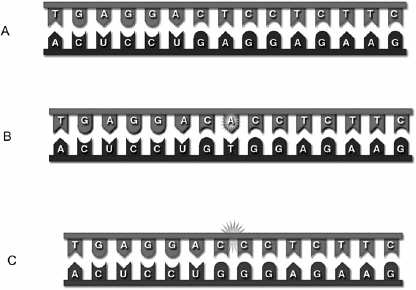 Figure C represents
In what stage of translation does the peptide bond join two amino acids?
(Multiple Choice)
4.8/5 (68)
(68) 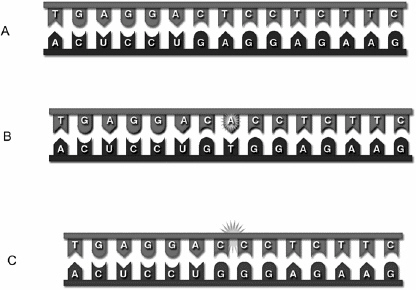 Figure B represents
Which process employs exposing cells cultured in the laboratory to DNA with a gene of interest?
(Multiple Choice)
4.9/5 (81)
(81) Each DNA strand has a "backbone" that consists of alternating
(Multiple Choice)
4.8/5 (70)
(70) Classification. Answer the questions in reference to the three items listed below:
Correct Answer: Verified
Premises:
Responses:
(Matching)
4.9/5 (85)
(85) All the DNA in a haploid set of a species' chromosomes is called a
(Multiple Choice)
4.8/5 (75)
(75) 
Filters
- Essay(0)
- Multiple Choice(0)
- Short Answer(0)
- True False(0)
- Matching(0)