



 Chat with AI
Exam 2: Lifes Chemical Basis

Exam 1: Invitation to Biology80 Questions
Exam 2: Lifes Chemical Basis53 Questions
Exam 3: Molecules of Life62 Questions
Exam 4: Cell Structure and Function80 Questions
Exam 5: Ground Rules of Metabolism58 Questions
Exam 6: Where It Startsphotosynthesis57 Questions
Exam 7: How Cells Release Chemical Energy60 Questions
Exam 8: Dna Structure and Function60 Questions
Exam 9: From Dna to Protein64 Questions
Exam 10: Gene Control64 Questions
Exam 11: How Cells Reproduce77 Questions
Exam 12: Meiosis and Sexual Reproduction58 Questions
Exam 13: Observing Patterns in Inherited Traits97 Questions
Exam 14: Chromosomes and Human Inheritance74 Questions
Exam 15: Studying and Manipulating Genomes57 Questions
Exam 16: Evidence of Evolution53 Questions
Exam 17: Processes of Evolution72 Questions
Exam 18: Organizing Information About Species46 Questions
Exam 19: Lifes Origin and Early Evolution60 Questions
Exam 20: Viruses and Prokaryotes56 Questions
Exam 21: Protiststhe Simplest Eukaryotes61 Questions
Exam 22: The Land Plants66 Questions
Exam 23: Fungi52 Questions
Exam 24: Animal Evolutionthe Invertebrates74 Questions
Exam 25: Animal Evolutionthe Chordates71 Questions
Exam 26: Animal Evolutionhuman Evolution51 Questions
Exam 27: Plant Tissues79 Questions
Exam 28: Plant Nutrition and Transport68 Questions
Exam 29: Life Cycles of Flowering Plants88 Questions
Exam 30: Communication Strategies in Plants72 Questions
Exam 31: Animal Tissues and Organ Systems77 Questions
Exam 32: Neural Control96 Questions
Exam 33: Sensory Perception71 Questions
Exam 34: Endocrine Control91 Questions
Exam 35: Structural Support and Movement72 Questions
Exam 36: Circulation58 Questions
Exam 37: Immunity73 Questions
Exam 38: Respiration78 Questions
Exam 39: Digestion and Nutrition98 Questions
Exam 40: Maintaining the Internal Environment73 Questions
Exam 41: Animal Reproductive Systems105 Questions
Exam 42: Animal Development69 Questions
Exam 43: Animal Behavior74 Questions
Exam 44: Population Ecology59 Questions
Exam 45: Community Ecology71 Questions
Exam 46: Ecosystems63 Questions
Exam 47: The Biosphere72 Questions
Exam 48: Human Impacts on the Biosphere62 Questions
Select questions type


In the chemical shorthand 14C, the 14 represents the number of
(Multiple Choice)
4.9/5  (78)
(78) 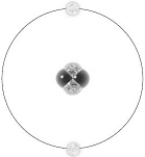 -Which of the following statements is NOT true?
Classification.The following are types of chemical bonds.Answer the questions below by matching the descriptions with the most appropriate bond type.
a.hydrogen
b.ionic
c.covalent
d.polar covalent
e.double bond
-Water surface tension is caused by __________ bonds.
(Essay)
4.8/5 (81)
(81) Classification.The following are types of chemical bonds.Answer the questions below by matching the descriptions with the most appropriate bond type.
a.hydrogen
b.ionic
c.covalent
d.polar covalent
e.double bond
-a bond in which connected atoms share electrons
(Essay)
4.8/5 (89)
(89) Classification.The following are types of chemical bonds.Answer the questions below by matching the descriptions with the most appropriate bond type.
a.hydrogen
b.ionic
c.covalent
d.polar covalent
e.double bond
-the bond type holding several molecules of water together
(Essay)
4.9/5 (78)
(78) MATCHING
Classification.The various energy levels in an atom of magnesium (  ) have different numbers of electrons.Use the numbers below to answer the following questions.
a.1
b.2
c.3
d.6
e.8
-number of electrons in the second energy level
) have different numbers of electrons.Use the numbers below to answer the following questions.
a.1
b.2
c.3
d.6
e.8
-number of electrons in the second energy level (Short Answer)
4.8/5 (63)
(63) How much mercury can the average human safely consume per day?
(Multiple Choice)
4.9/5 (68)
(68) The atomic mass (mass number) of an atom is determined by the combined masses of its
(Multiple Choice)
4.9/5 (92)
(92) A solution with a pH of 9 has how many times fewer hydrogen ions than a solution with a pH of 6?
(Multiple Choice)
4.9/5 (79)
(79) Nitrogen, with an atomic number of 7, has ____ electrons in the first energy level and ____ electrons in the second energy level.
(Multiple Choice)
4.8/5 (82)
(82) 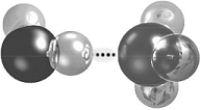 -The dots in the figure represent a(n)
Classification.The following are types of chemical bonds.Answer the questions below by matching the descriptions with the most appropriate bond type.
a.hydrogen
b.ionic
c.covalent
d.polar covalent
e.double bond
-the bond that breaks when salts dissolve in water
(Essay)
4.8/5 (78)
(78) "Acidic" is an appropriate description for all EXCEPT which one of the following?
(Multiple Choice)
5.0/5 (87)
(87) Sodium chloride (KCl) in water can be described by any EXCEPT which of the following?
(Multiple Choice)
4.9/5 (64)
(64) The column of water extending in tubes from plant roots to leaves is maintained by
(Multiple Choice)
4.8/5 (79)
(79) 
Filters
- Essay(0)
- Multiple Choice(0)
- Short Answer(0)
- True False(0)
- Matching(0)