



 Chat with AI
Exam 31: Animal Tissues and Organ Systems

Exam 1: Invitation to Biology80 Questions
Exam 2: Lifes Chemical Basis53 Questions
Exam 3: Molecules of Life62 Questions
Exam 4: Cell Structure and Function80 Questions
Exam 5: Ground Rules of Metabolism58 Questions
Exam 6: Where It Startsphotosynthesis57 Questions
Exam 7: How Cells Release Chemical Energy60 Questions
Exam 8: Dna Structure and Function60 Questions
Exam 9: From Dna to Protein64 Questions
Exam 10: Gene Control64 Questions
Exam 11: How Cells Reproduce77 Questions
Exam 12: Meiosis and Sexual Reproduction58 Questions
Exam 13: Observing Patterns in Inherited Traits97 Questions
Exam 14: Chromosomes and Human Inheritance74 Questions
Exam 15: Studying and Manipulating Genomes57 Questions
Exam 16: Evidence of Evolution53 Questions
Exam 17: Processes of Evolution72 Questions
Exam 18: Organizing Information About Species46 Questions
Exam 19: Lifes Origin and Early Evolution60 Questions
Exam 20: Viruses and Prokaryotes56 Questions
Exam 21: Protiststhe Simplest Eukaryotes61 Questions
Exam 22: The Land Plants66 Questions
Exam 23: Fungi52 Questions
Exam 24: Animal Evolutionthe Invertebrates74 Questions
Exam 25: Animal Evolutionthe Chordates71 Questions
Exam 26: Animal Evolutionhuman Evolution51 Questions
Exam 27: Plant Tissues79 Questions
Exam 28: Plant Nutrition and Transport68 Questions
Exam 29: Life Cycles of Flowering Plants88 Questions
Exam 30: Communication Strategies in Plants72 Questions
Exam 31: Animal Tissues and Organ Systems77 Questions
Exam 32: Neural Control96 Questions
Exam 33: Sensory Perception71 Questions
Exam 34: Endocrine Control91 Questions
Exam 35: Structural Support and Movement72 Questions
Exam 36: Circulation58 Questions
Exam 37: Immunity73 Questions
Exam 38: Respiration78 Questions
Exam 39: Digestion and Nutrition98 Questions
Exam 40: Maintaining the Internal Environment73 Questions
Exam 41: Animal Reproductive Systems105 Questions
Exam 42: Animal Development69 Questions
Exam 43: Animal Behavior74 Questions
Exam 44: Population Ecology59 Questions
Exam 45: Community Ecology71 Questions
Exam 46: Ecosystems63 Questions
Exam 47: The Biosphere72 Questions
Exam 48: Human Impacts on the Biosphere62 Questions
Select questions type


Classification.Respond to the following statements in reference to the five regions of the vertebrate brain listed below.
a.cerebrum
b.hypothalamus
c.pons
d.cerebellum
e.medulla oblongata
-The tissue that lines all internal surfaces is
(Multiple Choice)
4.9/5  (84)
(84) 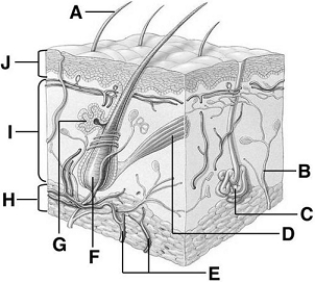 -dermis
Classification.Respond to the following statements in reference to the five regions of the vertebrate brain listed below.
a.cerebrum
b.hypothalamus
c.pons
d.cerebellum
e.medulla oblongata
-____ is the process of maintaining a constant internal environment.
(Multiple Choice)
4.7/5 (81)
(81) Classification.Respond to the following statements in reference to the five regions of the vertebrate brain listed below.
a.cerebrum
b.hypothalamus
c.pons
d.cerebellum
e.medulla oblongata
-Exocrine glands secrete all of the following EXCEPT
(Multiple Choice)
4.8/5 (94)
(94) 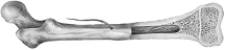 -Cardiac muscle cells are
The maintenance of the volume and composition of body fluids is the primary responsibility of which system?
(Multiple Choice)
4.8/5 (78)
(78) __________ increase the free surface area of epithelia that absorb substances.
(Essay)
4.8/5 (84)
(84) How does bipedalism relate to sweat glands, skin color and hair density?
(Essay)
4.9/5 (83)
(83) 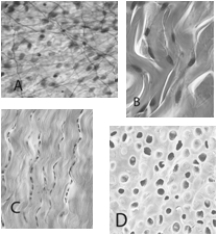 -People with a large amount of which tissue are least likely to be sensitive to cold?
 (Multiple Choice)
4.7/5 (90)
(90) MATCHING
Matching.Choose the one most appropriate response for each.
a.ligaments and tendons are made of this
b.contains collagen and elastin; acts as a packing material that supports internal organs
c.receives, conducts, and initiates signals in response to environmental changes
d.stores fat
e.offers resistance to mechanical injury and loss of internal fluids; also a barrier against microorganisms
f.secretes extracellular products such as sweat, mucus, tears, and saliva
g.fluid ground substance plus free cells; involved in transport, pH, and temperature stability
h.extracellular fluid that bathes cells and tissues
-blood
(Essay)
4.8/5 (83)
(83) Classification.Respond to the following statements in reference to the five regions of the vertebrate brain listed below.
a.cerebrum
b.hypothalamus
c.pons
d.cerebellum
e.medulla oblongata
-An organ is made up of
(Multiple Choice)
4.8/5 (72)
(72) 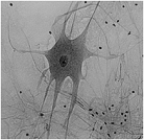 -The endocrine system functions in
MATCHING
Matching.Choose the one most appropriate response for each.
a.ligaments and tendons are made of this
b.contains collagen and elastin; acts as a packing material that supports internal organs
c.receives, conducts, and initiates signals in response to environmental changes
d.stores fat
e.offers resistance to mechanical injury and loss of internal fluids; also a barrier against microorganisms
f.secretes extracellular products such as sweat, mucus, tears, and saliva
g.fluid ground substance plus free cells; involved in transport, pH, and temperature stability
h.extracellular fluid that bathes cells and tissues
-loose connective tissue
(Essay)
4.8/5 (81)
(81) MATCHING
Matching.Choose the one most appropriate response for each.
a.ligaments and tendons are made of this
b.contains collagen and elastin; acts as a packing material that supports internal organs
c.receives, conducts, and initiates signals in response to environmental changes
d.stores fat
e.offers resistance to mechanical injury and loss of internal fluids; also a barrier against microorganisms
f.secretes extracellular products such as sweat, mucus, tears, and saliva
g.fluid ground substance plus free cells; involved in transport, pH, and temperature stability
h.extracellular fluid that bathes cells and tissues
-dense connective tissue
(Essay)
4.8/5 (83)
(83) Classification.Respond to the following statements in reference to the five regions of the vertebrate brain listed below.
a.cerebrum
b.hypothalamus
c.pons
d.cerebellum
e.medulla oblongata
-The secretion of tears, milk, saliva, and earwax is a function of what tissue?
(Multiple Choice)
4.9/5 (75)
(75) MATCHING
Matching.Choose the one most appropriate response for each.
a.ligaments and tendons are made of this
b.contains collagen and elastin; acts as a packing material that supports internal organs
c.receives, conducts, and initiates signals in response to environmental changes
d.stores fat
e.offers resistance to mechanical injury and loss of internal fluids; also a barrier against microorganisms
f.secretes extracellular products such as sweat, mucus, tears, and saliva
g.fluid ground substance plus free cells; involved in transport, pH, and temperature stability
h.extracellular fluid that bathes cells and tissues
-epidermis
(Essay)
4.9/5 (64)
(64) 
Filters
- Essay(0)
- Multiple Choice(0)
- Short Answer(0)
- True False(0)
- Matching(0)