



 Chat with AI
Exam 38: Respiration

Exam 1: Invitation to Biology80 Questions
Exam 2: Lifes Chemical Basis53 Questions
Exam 3: Molecules of Life62 Questions
Exam 4: Cell Structure and Function80 Questions
Exam 5: Ground Rules of Metabolism58 Questions
Exam 6: Where It Startsphotosynthesis57 Questions
Exam 7: How Cells Release Chemical Energy60 Questions
Exam 8: Dna Structure and Function60 Questions
Exam 9: From Dna to Protein64 Questions
Exam 10: Gene Control64 Questions
Exam 11: How Cells Reproduce77 Questions
Exam 12: Meiosis and Sexual Reproduction58 Questions
Exam 13: Observing Patterns in Inherited Traits97 Questions
Exam 14: Chromosomes and Human Inheritance74 Questions
Exam 15: Studying and Manipulating Genomes57 Questions
Exam 16: Evidence of Evolution53 Questions
Exam 17: Processes of Evolution72 Questions
Exam 18: Organizing Information About Species46 Questions
Exam 19: Lifes Origin and Early Evolution60 Questions
Exam 20: Viruses and Prokaryotes56 Questions
Exam 21: Protiststhe Simplest Eukaryotes61 Questions
Exam 22: The Land Plants66 Questions
Exam 23: Fungi52 Questions
Exam 24: Animal Evolutionthe Invertebrates74 Questions
Exam 25: Animal Evolutionthe Chordates71 Questions
Exam 26: Animal Evolutionhuman Evolution51 Questions
Exam 27: Plant Tissues79 Questions
Exam 28: Plant Nutrition and Transport68 Questions
Exam 29: Life Cycles of Flowering Plants88 Questions
Exam 30: Communication Strategies in Plants72 Questions
Exam 31: Animal Tissues and Organ Systems77 Questions
Exam 32: Neural Control96 Questions
Exam 33: Sensory Perception71 Questions
Exam 34: Endocrine Control91 Questions
Exam 35: Structural Support and Movement72 Questions
Exam 36: Circulation58 Questions
Exam 37: Immunity73 Questions
Exam 38: Respiration78 Questions
Exam 39: Digestion and Nutrition98 Questions
Exam 40: Maintaining the Internal Environment73 Questions
Exam 41: Animal Reproductive Systems105 Questions
Exam 42: Animal Development69 Questions
Exam 43: Animal Behavior74 Questions
Exam 44: Population Ecology59 Questions
Exam 45: Community Ecology71 Questions
Exam 46: Ecosystems63 Questions
Exam 47: The Biosphere72 Questions
Exam 48: Human Impacts on the Biosphere62 Questions
Select questions type


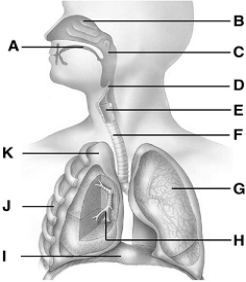 -bronchial tree

Classification.Respond to the following statements with reference to the five components of respiratory systems listed below.
a.pharynx
b.larynx
c.trachea
d.bronchiole
e.alveolus
-Air moves from the nasal cavity into this passageway.
(Essay)
4.8/5  (91)
(91) MATCHING
Matching.Choose the one most appropriate answer for each.
a.flexible windpipe reinforced with cartilage
b.surrounds each lung
c.oxygen-rich form of a respiratory protein
d.contains two true vocal cords
e.alter chest cavity volume
f.part of the brainstem; controls breathing
g.throat passage behind the mouth
h.inhalation and exhalation
i.connect trachea to lungs
j.
flaplike structure that points upward allowing air to enter trachea, but blocks the larynx during swallowing
k.contraction increases thoracic volume
l.
microscopically small pockets lined with moist epithelium
-epiglottis
(Essay)
4.8/5 (69)
(69) 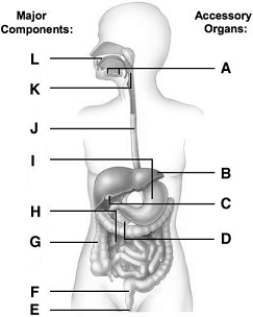 -The movement of both oxygen and carbon dioxide in the body is accomplished by
 (Multiple Choice)
4.8/5 (69)
(69) MATCHING
Matching.Choose the one most appropriate answer for each.
a.flexible windpipe reinforced with cartilage
b.surrounds each lung
c.oxygen-rich form of a respiratory protein
d.contains two true vocal cords
e.alter chest cavity volume
f.part of the brainstem; controls breathing
g.throat passage behind the mouth
h.inhalation and exhalation
i.connect trachea to lungs
j.
flaplike structure that points upward allowing air to enter trachea, but blocks the larynx during swallowing
k.contraction increases thoracic volume
l.
microscopically small pockets lined with moist epithelium
-pleural sac
(Essay)
4.8/5 (83)
(83) 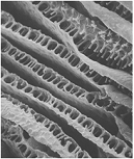 -Which of the following is true regarding insect tracheal systems?
 (Multiple Choice)
4.8/5 (87)
(87) Why would athletes in aerobic sports benefit by training at high altitude?
(Essay)
4.9/5 (81)
(81) Which of the following have the most efficient lungs: amphibians, mammals or birds? Explain your answer.
(Essay)
4.7/5 (85)
(85) Most of the carbon dioxide produced by the body is transported to the lungs
(Multiple Choice)
4.9/5 (88)
(88) Deep-diving animals accomplish their dives through all of the following means EXCEPT by
(Multiple Choice)
4.8/5 (99)
(99) Classification.Respond to the following statements with reference to the five components of respiratory systems listed below.
a.pharynx
b.larynx
c.trachea
d.bronchiole
e.alveolus
-Spent air moves from the bronchial tubes to this component.
(Essay)
5.0/5 (95)
(95) Respiratory proteins such as __________ in red blood cells and __________ in muscle bind oxygen and help maintain gradients that favor gas exchange.
(Essay)
4.9/5 (63)
(63) 
Filters
- Essay(0)
- Multiple Choice(0)
- Short Answer(0)
- True False(0)
- Matching(0)