



 Chat with AI
Exam 15: The Origin of the Solar System


The diagram below shows the radioactive decay of cesium (135Cs). What is the half-life of 135Cs? 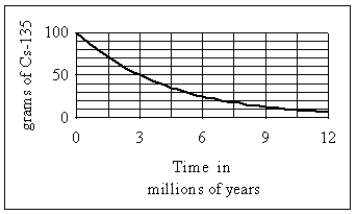

 (89)
 Verified
3 million years
How do the motions of the sun and planets reflect the disk shape of the solar nebula?
(84)  Answered by Examlex AI Copilot
The motions of the sun and planets within our solar system are a direct consequence of the solar system's origins from a rotating disk-shaped cloud of gas and dust known as the solar nebula. This nebula collapsed under its own gravity, which led to the formation of the sun and the planets. The disk shape of the solar nebula and the motions of the bodies within the solar system are closely related through the following aspects:
1. Conservation of Angular Momentum: As the solar nebula contracted, it spun faster due to the conservation of angular momentum. This is similar to how a figure skater spins faster when they pull their arms in. The rotation caused the nebula to flatten into a disk shape, with most of the material moving in the same direction around the center where the sun would eventually form.
2. Formation of the Sun and Planets: The sun formed at the center of the disk, where the density of material was highest and gravitational forces caused the hydrogen and helium to fuse, initiating nuclear fusion. Around the sun, the remaining material in the disk began to coalesce into planetesimals, which eventually formed the planets, moons, asteroids, and other bodies.
3. Coplanar Orbits: Because the planets formed within this rotating disk, they naturally ended up orbiting in the same plane, known as the ecliptic plane. This is why the planets of the solar system generally have orbits that are relatively flat and aligned with one another, reflecting the original disk shape of the solar nebula.
4. Prograde Motion: The direction of the rotation of the solar nebula also determined the direction of the rotation of the planets and their orbits around the sun. Most planets in the solar system rotate on their axes and revolve around the sun in the same direction that the solar nebula was spinning, which is counterclockwise when viewed from above the north pole of the sun. This common direction of motion is known as prograde motion.
5. Angular Momentum Distribution: The sun contains the majority of the mass of the solar system but only a small fraction of its angular momentum. The planets, being spread out over a larger area and moving at significant velocities, carry most of the solar system's angular momentum. This distribution reflects the initial conditions of the spinning solar nebula and the process of angular momentum transfer during the formation of the solar system.
In summary, the disk shape of the solar nebula is reflected in the coplanar orbits of the planets, their prograde motion, and the overall distribution of angular momentum within the solar system. These characteristics are a result of the physical laws governing the collapse and rotation of the solar nebula, leading to the structured and organized system we observe today.
The asteroid belt is found between which two planets' orbits?
(87) VerifiedB
The hydrogen and helium in our solar system were created from subatomic particles about ______ years ago.
(94) The present motions of the planets were inherited from the rotation of the solar nebula.
(84) Which one of the following IS a characteristic of Jovian planets?
(81) Why are more massive planets circling stars easier to detect than low-mass planets?
Massive planets create ____________________ Doppler shifts of their stars than lower-mass planets.
(80) Which one of the following IS NOT a characteristic of terrestrial planets?
(79) One common technique used to discover the presence of an extrasolar planet around a star is to detect how they tug their stars about, creating small Doppler shifts in the stars' spectra.
(82) A newly formed planet or large asteroid becomes molten due to
(92) ____ pushed gas and dust particles out of the solar nebula by the light from the sun.
(70) If a star is found with five planets orbiting it, and a process like that described in the solar nebula theory formed the planets, which of the planets would be expected to have the greatest uncompressed density?
(68) Venus is often called Earth's sister planet because it is similar to the Earth in terms of
(83) A(n) ____ is a solar-system object that enters Earth's atmosphere and becomes very hot due to friction between the object and Earth's atmosphere and does not survive to reach the surface.
(82) How is the presence of space debris accounted for by solar system models?
(74) What observation made of other stars seems to suggest the solar nebula theory is correct?
(77) 
Filters
- Essay(0)
- Multiple Choice(0)
- Short Answer(0)
- True False(0)
- Matching(0)