



 Chat with AI
Exam 25: Electric Potential

Exam 1: Physics and Measurement25 Questions
Exam 2: Motion in One Dimension66 Questions
Exam 3: Vectors47 Questions
Exam 4: Motion in Two Dimensions79 Questions
Exam 5: The Laws of Motion113 Questions
Exam 6: Circular Motion and Other Applications of Newtons Laws55 Questions
Exam 7: Energy of a System74 Questions
Exam 8: Conservation of Energy84 Questions
Exam 9: Linear Momentum and Collisions89 Questions
Exam 10: Rotation of a Rigid Object About a Fixed Axis82 Questions
Exam 11: Angular Momentum46 Questions
Exam 12: Static Equilibrium and Elasticity34 Questions
Exam 13: Universal Gravitation47 Questions
Exam 14: Fluid Mechanics53 Questions
Exam 15: Oscillatory Motion41 Questions
Exam 16: Wave Motion82 Questions
Exam 18: Superposition and Standing Waves72 Questions
Exam 19: Temperature47 Questions
Exam 20: The First Law of Thermodynamics61 Questions
Exam 21: The Kinetic Theory of Gases38 Questions
Exam 22: Heat Engines, Entropy, and the Second Law of Thermodynamics55 Questions
Exam 23: Electric Fields67 Questions
Exam 24: Gausss Law82 Questions
Exam 25: Electric Potential111 Questions
Exam 26: Capacitance and Dielectrics63 Questions
Exam 27: Current and Resistance34 Questions
Exam 28: Direct-Current Circuits84 Questions
Exam 29: Magnetic Fields80 Questions
Exam 30: Sources of the Magnetic Field95 Questions
Exam 31: Faradays Law62 Questions
Exam 32: Inductance23 Questions
Exam 33: Alternating-Current Circuits65 Questions
Exam 34: Electromagnetic Waves40 Questions
Exam 35: The Nature of Light and the Principles of Ray Optics37 Questions
Exam 36: Image Formation43 Questions
Exam 37: Wave Optics48 Questions
Exam 38: Diffraction Patterns and Polarization47 Questions
Exam 39: Relativity34 Questions
Exam 40: Introduction to Quantum Physics48 Questions
Exam 41: Quantum Mechanics33 Questions
Exam 42: Atomic Physics59 Questions
Exam 43: Molecules and Solids46 Questions
Exam 44: Nuclear Structure89 Questions
Exam 46: Particle Physics and Cosmology34 Questions
Select questions type


The electric field just outside the surface of a hollow conducting sphere of radius 20 cm has a magnitude of 500 N/C and is directed outward. An unknown charge Q is introduced into the center of the sphere and it is noted that the electric field is still directed outward but has decreased to 100 N/C. What is the magnitude of the charge Q?
(Multiple Choice)
4.8/5  (57)
(57) Two identical particles, each with a mass of 4.5 μg and a charge of 30 nC, are moving directly toward each other with equal speeds of 4.0 m/s at an instant when the distance separating the two is equal to 25 cm. How far apart will they be when closest to one another?
(Multiple Choice)
4.9/5 (79)
(79) An infinite plane of charge with 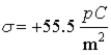 is tilted at a 45° angle to the vertical direction as shown below. The potential difference, VB − VA, in volts, between points A and B, a 4.50 m distance apart, is

is tilted at a 45° angle to the vertical direction as shown below. The potential difference, VB − VA, in volts, between points A and B, a 4.50 m distance apart, is (Multiple Choice)
4.9/5 (86)
(86) A charge of 10 nC is distributed uniformly along the x axis from x = −2 m to x = +3 m. Which of the following integrals is correct for the electric potential (relative to zero at infinity) at the point x = +5 m on the x axis?
(Multiple Choice)
4.7/5 (78)
(78) A +4.0-μC charge is placed on the x axis at x = +3.0 m, and a −2.0-μC charge is located on the y axis at y = −1.0 m. Point A is on the y axis at y = +4.0 m. Determine the electric potential at point A (relative to zero at the origin).
(Multiple Choice)
4.8/5 (67)
(67) An electron (m = 9.1 × 10⁻³¹ kg, q = −1.6 × 10⁻¹⁹ C) starts from rest at point A and has a speed of 5.0 × 10⁶ m/s at point B. Only electric forces act on it during this motion. Determine the electric potential difference VA − VB.
(Multiple Choice)
4.8/5 (87)
(87) Identical point charges (+30 μC) are placed at the corners of a rectangle (4.0 m × 6.0 m). How much external energy is required to bring a charge of 55 μC from infinity to the midpoint of one of the 6.0-m long sides of the rectangle?
(Multiple Choice)
4.9/5 (74)
(74) The electric field in the region defined by the y-z plane and the positive x axis is given by E = ax, where a is a constant. (There is no field for negative values of x.) As x increases in magnitude, relative to V = 0 at the origin, the electric potential in the region defined above is
(Multiple Choice)
5.0/5 (84)
(84) A particle (q = +5.0 μC) is released from rest when it is 2.0 m from a charged particle which is held at rest. After the positively charged particle has moved 1.0 m toward the fixed particle, it has a kinetic energy of 50 mJ. What is the charge on the fixed particle?
(Multiple Choice)
4.8/5 (84)
(84) Two flat conductors are placed with their inner faces separated by 6.0 mm. If the surface charge density on one of the inner faces is 40 pC/m2, what is the magnitude of the electric potential differences between the two conductors?
(Multiple Choice)
4.8/5 (82)
(82) 
Filters
- Essay(0)
- Multiple Choice(0)
- Short Answer(0)
- True False(0)
- Matching(0)