



 Chat with AI
Exam 3: Vectors

Exam 1: Physics and Measurement25 Questions
Exam 2: Motion in One Dimension66 Questions
Exam 3: Vectors47 Questions
Exam 4: Motion in Two Dimensions79 Questions
Exam 5: The Laws of Motion113 Questions
Exam 6: Circular Motion and Other Applications of Newtons Laws55 Questions
Exam 7: Energy of a System74 Questions
Exam 8: Conservation of Energy84 Questions
Exam 9: Linear Momentum and Collisions89 Questions
Exam 10: Rotation of a Rigid Object About a Fixed Axis82 Questions
Exam 11: Angular Momentum46 Questions
Exam 12: Static Equilibrium and Elasticity34 Questions
Exam 13: Universal Gravitation47 Questions
Exam 14: Fluid Mechanics53 Questions
Exam 15: Oscillatory Motion41 Questions
Exam 16: Wave Motion82 Questions
Exam 18: Superposition and Standing Waves72 Questions
Exam 19: Temperature47 Questions
Exam 20: The First Law of Thermodynamics61 Questions
Exam 21: The Kinetic Theory of Gases38 Questions
Exam 22: Heat Engines, Entropy, and the Second Law of Thermodynamics55 Questions
Exam 23: Electric Fields67 Questions
Exam 24: Gausss Law82 Questions
Exam 25: Electric Potential111 Questions
Exam 26: Capacitance and Dielectrics63 Questions
Exam 27: Current and Resistance34 Questions
Exam 28: Direct-Current Circuits84 Questions
Exam 29: Magnetic Fields80 Questions
Exam 30: Sources of the Magnetic Field95 Questions
Exam 31: Faradays Law62 Questions
Exam 32: Inductance23 Questions
Exam 33: Alternating-Current Circuits65 Questions
Exam 34: Electromagnetic Waves40 Questions
Exam 35: The Nature of Light and the Principles of Ray Optics37 Questions
Exam 36: Image Formation43 Questions
Exam 37: Wave Optics48 Questions
Exam 38: Diffraction Patterns and Polarization47 Questions
Exam 39: Relativity34 Questions
Exam 40: Introduction to Quantum Physics48 Questions
Exam 41: Quantum Mechanics33 Questions
Exam 42: Atomic Physics59 Questions
Exam 43: Molecules and Solids46 Questions
Exam 44: Nuclear Structure89 Questions
Exam 46: Particle Physics and Cosmology34 Questions
Select questions type


Vectors  and
 are shown. What is the magnitude of a vector
 if
 ?

and are shown. What is the magnitude of a vector if ? 
Free
(Multiple Choice)
4.7/5  (80)
(80) Correct Answer: Verified
A
Anthony has added the vectors listed below and gotten the result 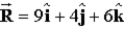 . What errors has he made?
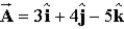
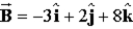
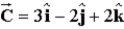
. What errors has he made? Free
(Multiple Choice)
4.9/5 (69)
(69) Correct Answer:Verified
VerifiedE
The rectangular coordinates of a point are (5.00, y) and the polar coordinates of this point are (r, 67.4°). What is the value of the polar coordinate r in this case?
Free
(Multiple Choice)
5.0/5 (82)
(82) Correct Answer:Verified
VerifiedD
If vector  is added to vector
 , the result is
 . If
 is subtracted from
 , the result is
 . What is the magnitude of
 ?
is added to vector , the result is . If is subtracted from , the result is . What is the magnitude of ? (Multiple Choice)
4.8/5 (69)
(69) A vector  is added to
 . The resultant vector is in the positive x direction and has a magnitude equal to
 . What is the magnitude of
 ?
is added to . The resultant vector is in the positive x direction and has a magnitude equal to . What is the magnitude of ? (Multiple Choice)
4.9/5 (80)
(80) Instructions: On occasion, the notation  = [A, θ] will be a shorthand notation for
 .
-The displacement of the tip of the 10 cm long minute hand of a clock between 12:15 A.M. and 12:45 P.M. is:
= [A, θ] will be a shorthand notation for .
-The displacement of the tip of the 10 cm long minute hand of a clock between 12:15 A.M. and 12:45 P.M. is: (Multiple Choice)
4.9/5 (71)
(71) The diagram below shows 3 vectors which sum to zero, all of equal length. Which statement below is true? 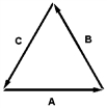
(Multiple Choice)
4.7/5 (91)
(91) Instructions: On occasion, the notation  = [A, θ] will be a shorthand notation for
 .
-Dana says any vector
 can be represented as the sum of two vectors:
 . Ardis says any vector
 can be represented as the difference of two vectors:
 . Which one, if either, is correct?
= [A, θ] will be a shorthand notation for .
-Dana says any vector can be represented as the sum of two vectors: . Ardis says any vector can be represented as the difference of two vectors: . Which one, if either, is correct? (Multiple Choice)
4.7/5 (85)
(85) Instructions: On occasion, the notation  = [A, θ] will be a shorthand notation for
 .
Exhibit 3-3
The vectors
 ,
 , and
 are shown below.
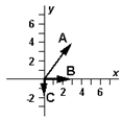 Use this exhibit to answer the following question(s).
-Refer to Exhibit 3-3. Which diagram below correctly represents
 ?
= [A, θ] will be a shorthand notation for .
Exhibit 3-3
The vectors , , and are shown below. Use this exhibit to answer the following question(s).
-Refer to Exhibit 3-3. Which diagram below correctly represents ? (Multiple Choice)
4.8/5 (85)
(85) If two collinear vectors  and
 are added, the resultant has a magnitude equal to 4.0. If
 is subtracted from
 , the resultant has a magnitude equal to 8.0. What is the magnitude of
 ?
and are added, the resultant has a magnitude equal to 4.0. If is subtracted from , the resultant has a magnitude equal to 8.0. What is the magnitude of ? (Multiple Choice)
4.8/5 (88)
(88) 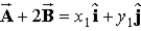 and
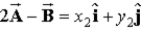 , what is
 ?
The vector  has components +5 and +7 along the x and y axes respectively. Along a set of axes rotated 90 degrees counterclockwise relative to the original axes, the vector's components are
 (Multiple Choice)
4.8/5 (71)
(71) 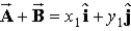 and
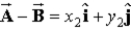 , what is
 ?
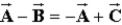 , what can we conclude?
Instructions: On occasion, the notation  = [A, θ] will be a shorthand notation for
 .
Exhibit 3-1
The three forces shown act on a particle.
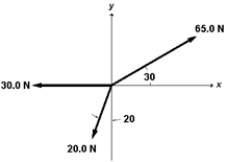 Use this exhibit to answer the following question(s).
-Refer to Exhibit 3-1. What is the direction of the resultant of these three forces?
= [A, θ] will be a shorthand notation for .
Exhibit 3-1
The three forces shown act on a particle. Use this exhibit to answer the following question(s).
-Refer to Exhibit 3-1. What is the direction of the resultant of these three forces? (Multiple Choice)
4.8/5 (70)
(70) Instructions: On occasion, the notation  = [A, θ] will be a shorthand notation for
 .
Exhibit 3-2
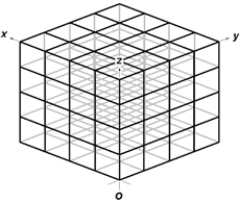
A child starts at one corner of a cubical jungle gym in a playground and climbs up to the diagonally opposite corner. The original corner is the coordinate origin, and the x, y and z axes are oriented along the jungle gym edges. The length of each side is 2 m.
 Use this exhibit to answer the following question(s).
-Refer to Exhibit 3-2. The child's displacement is:
= [A, θ] will be a shorthand notation for .
Exhibit 3-2
A child starts at one corner of a cubical jungle gym in a playground and climbs up to the diagonally opposite corner. The original corner is the coordinate origin, and the x, y and z axes are oriented along the jungle gym edges. The length of each side is 2 m. Use this exhibit to answer the following question(s).
-Refer to Exhibit 3-2. The child's displacement is: (Multiple Choice)
4.8/5 (86)
(86) The vector  has components +5 and +7 along the x and y axes respectively. If the vector is now rotated 90 degrees counterclockwise relative to the original axes, the vector's components are now
 (Multiple Choice)
4.9/5 (95)
(95)  ,
 and
 ?
Vectors  and
 have equal magnitudes. Which statement is always true?
and have equal magnitudes. Which statement is always true? (Multiple Choice)
4.7/5 (79)
(79) Instructions: On occasion, the notation  = [A, θ] will be a shorthand notation for
 .
-If vector
 is added to vector
 , the result is a third vector that is perpendicular to
 and has a magnitude equal to 3
 . What is the ratio of the magnitude of
 to that of
 ?
= [A, θ] will be a shorthand notation for .
-If vector is added to vector , the result is a third vector that is perpendicular to and has a magnitude equal to 3 . What is the ratio of the magnitude of to that of ? (Multiple Choice)
4.8/5 (82)
(82) 
Filters
- Essay(0)
- Multiple Choice(0)
- Short Answer(0)
- True False(0)
- Matching(0)