



 Chat with AI
Exam 18: Renewing the Sectional Struggle, 1848-1854

Exam 1: New World Beginnings, 33,000 Bce-1769 Ce125 Questions
Exam 2: The Planting of English America, 1500-1733146 Questions
Exam 3: Settling the Northern Colonies, 1619-1700150 Questions
Exam 4: American Life in the Seventeenth Century, 1607-169286 Questions
Exam 5: Colonial Society on the Eve of Revolution, 1700-1775123 Questions
Exam 6: The Duel for North America, 1608-176394 Questions
Exam 7: The Road to Revolution, 1763-1775119 Questions
Exam 8: America Secedes From the Empire, 1775-1783112 Questions
Exam 9: The Confederation and the Constitution, 1776-1790118 Questions
Exam 10: Launching the New Ship of State, 1789-1800135 Questions
Exam 11: The Triumphs and Travails of the Jeffersonian Republic, 1800-1812103 Questions
Exam 12: The Second War for Independence and the Upsurge of Nationalism, 1812-1824149 Questions
Exam 13: The Rise of a Mass Democracy, 1824-1840145 Questions
Exam 14: Forging the National Economy, 1790-1860137 Questions
Exam 15: The Ferment of Reform and Culture, 1790-1860139 Questions
Exam 16: The South and the Slavery Controversy, 1793-1860103 Questions
Exam 17: Manifest Destiny and Its Legacy, 1841-184888 Questions
Exam 18: Renewing the Sectional Struggle, 1848-1854107 Questions
Exam 19: Drifting Toward Disunion, 1854-186193 Questions
Exam 20: Girding for War: the North and the South, 1861-186589 Questions
Exam 21: The Furnace of Civil War, 1861-186599 Questions
Exam 22: The Ordeal of Reconstruction, 1865-1877105 Questions
Exam 23: Political Paralysis in the Gilded Age, 1869-1896146 Questions
Exam 24: Industry Comes of Age, 1865-1900153 Questions
Exam 25: America Moves to the City, 1865-1900153 Questions
Exam 26: The Great West and the Agricultural Revolution, 1865-1896160 Questions
Exam 27: Empire and Expansion, 1890-1909161 Questions
Exam 28: Progressivism and the Republican Roosevelt, 1901-1912140 Questions
Exam 29: Wilsonian Progressivism in Peace and War, 1913-1920144 Questions
Exam 30: American Life in the Roaring Twenties 1920-1929144 Questions
Exam 31: The Politics of Boom and Bust 1920-1932104 Questions
Exam 32: The Great Depression and the New Deal 1933-1939115 Questions
Exam 33: Franklin D Roosevelt and the Shadow of War 1933-1941104 Questions
Exam 34: America in World War Ii 1941-1945105 Questions
Exam 35: The Cold War Begins 1945-1952153 Questions
Exam 36: American Zenith 1952-1963182 Questions
Exam 37: The Stormy Sixties 1963-1973168 Questions
Exam 38: Challenges to the Postwar Order 1973-198083 Questions
Exam 39: The Resurgence of Conservatism 1980-1992121 Questions
Exam 40: America Confronts the Post-Cold War Era, 1992-200087 Questions
Exam 41: The American People Face a New Century, 2001-201490 Questions
Select questions type


In the Compromise of 1850, Congress determined that slavery in the New Mexico and Utah territories was

Free
(Multiple Choice)
4.9/5  (69)
(69) Correct Answer: Verified
C
For a short time in the 1850s, William Walker, an American adventurer, seized political and military control of
Free
(Multiple Choice)
4.8/5 (87)
(87) Correct Answer:Verified
VerifiedA
Each of the following multiple choice questions has multiple correct responses. Select the correct responses for each of the following questions.
-The political consequences of the Kansas-Nebraska Act included the
Free
(Multiple Choice)
4.8/5 (80)
(80) Correct Answer:Verified
VerifiedB, D
Identify and state the historical significance of the following:
-Fugitive Slave Law of 1850
(Short Answer)
4.9/5 (87)
(87) Each of the following multiple choice questions has multiple correct responses. Select the correct responses for each of the following questions.
-Presidential candidates in the 1848 election included
(Multiple Choice)
4.8/5 (77)
(77) The United States' victory in the Mexican War resulted in all of the following except
(Multiple Choice)
4.8/5 (74)
(74) The Fugitive Slave Law of 1850 included all of the following provisions except
(Multiple Choice)
4.9/5 (75)
(75) Identify and state the historical significance of the following:
-Opium War
(Short Answer)
4.9/5 (83)
(83) Historians have attributed all of the following to Douglas's motives for championing the Kansas-Nebraska Act except
(Multiple Choice)
4.9/5 (74)
(74) Which of the following was not among the issues that concerned southerners in 1849-1850?
(Multiple Choice)
4.9/5 (83)
(83) An event that helped prompt the congressional enactment of the Compromise of 1850 was when President Zachary Taylor
(Multiple Choice)
4.8/5 (81)
(81) Identify and state the historical significance of the following:
-popular sovereignty
(Short Answer)
5.0/5 (90)
(90) Senator John C. Calhoun's plan to protect the South and slavery and maintain the Union involved all of the following except
(Multiple Choice)
4.8/5 (72)
(72) 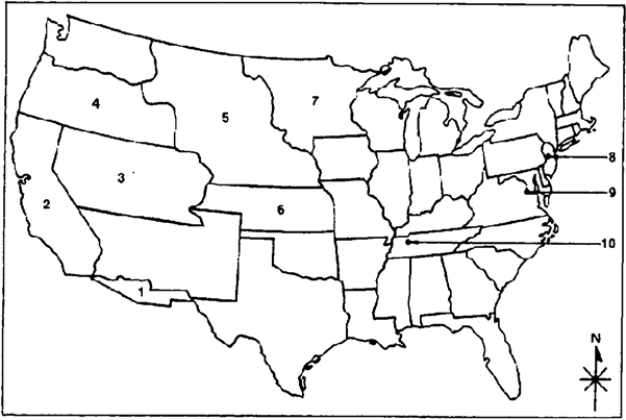 -____ Nashville
To what extent was the Kansas-Nebraska Act of 1854 a serious mistake for southern interests?
(Essay)
4.7/5 (94)
(94) The issue of runaway slaves was important to most southerners because
(Multiple Choice)
4.7/5 (81)
(81) Identify and state the historical significance of the following:
-William H. Seward
(Short Answer)
4.8/5 (80)
(80) The American military leader whose strategic military and diplomatic mission opened Japan up to the United States in 1853-1854 was
(Multiple Choice)
4.8/5 (73)
(73) 
Filters
- Essay(0)
- Multiple Choice(0)
- Short Answer(0)
- True False(0)
- Matching(0)