



 Chat with AI
Exam 4: Chemical Quantities and Chemical Reactions

Exam 1: Measuring Matter and Energy99 Questions
Exam 2: Atomic Structure and Nuclear Radiation135 Questions
Exam 3: Compounds and Molecules164 Questions
Exam 4: Chemical Quantities and Chemical Reactions135 Questions
Exam 5: Changes of State and the Gas Laws85 Questions
Exam 6: Organic Chemistry: Hydrocarbons95 Questions
Exam 7: Organic Chemistry and Biomolecules101 Questions
Exam 8: Solutions, Colloids and Membranes93 Questions
Exam 9: Acids and Bases112 Questions
Exam 10: The Reactions of Organic Functional Groups in Biochemistry87 Questions
Exam 11: Carbohydrates: Structure and Function78 Questions
Exam 12: Lipids: Structure and Function108 Questions
Exam 13: Proteins: Structure and Function122 Questions
Exam 14: Nucleotides and Nucleic Acids107 Questions
Exam 15: Energy and Metabolism117 Questions
Select questions type


In order for a reaction to occur, reactant molecules must collide with sufficient energy to overcome an energy barrier. What is this energy barrier called?

Free
(Multiple Choice)
4.8/5  (76)
(76) Correct Answer: Verified
D
The ionic compound CaCO3 has a formula mass of
Free
(Multiple Choice)
4.8/5 (76)
(76) Correct Answer:Verified
VerifiedD
Jane Doe has a cholesterol (C27H46O) count of 178 mg/dL. How many cholesterol molecules does Jane Doe have in each deciliter of blood?
Free
(Multiple Choice)
4.9/5 (75)
(75) Correct Answer:Verified
VerifiedC
How is the reaction that occurs in a calorimeter different from human metabolism?
(Multiple Choice)
4.8/5 (69)
(69) Combustion reactions are ___________ because products of the reaction are _________ in potential energy than the reactants.
(Multiple Choice)
4.9/5 (74)
(74) How many moles of the antibiotic tetracycline (C22H24N2O8) are in a 50-mg dose?
(Multiple Choice)
4.9/5 (80)
(80) The steps for performing stoichiometry calculations are diagramed below: 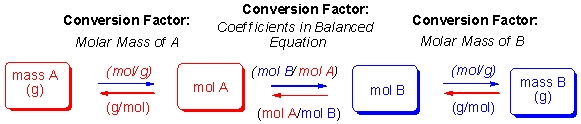 According to these steps, which of the following equations would allow you to calculate the yield of monosaccharides when 28 g of sucrose is broken down as shown in the following equation?
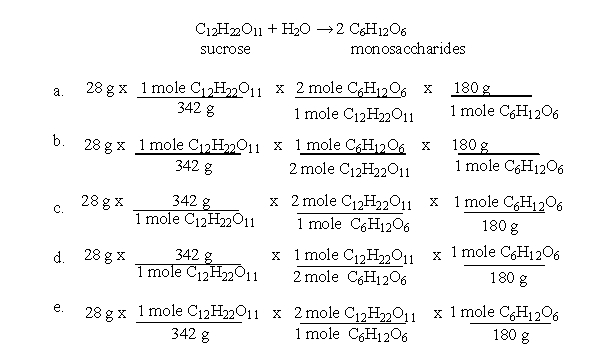
According to these steps, which of the following equations would allow you to calculate the yield of monosaccharides when 28 g of sucrose is broken down as shown in the following equation? (Multiple Choice)
4.9/5 (81)
(81) Which of the following equations is used to convert 91.0 milligrams of urea (CH4N2O) to moles of urea?
(Multiple Choice)
4.8/5 (75)
(75) Which of the following statements describes how molecular mass and molar mass differ?
(Multiple Choice)
4.9/5 (88)
(88) Which of the following diagrams illustrates an endothermic reaction? 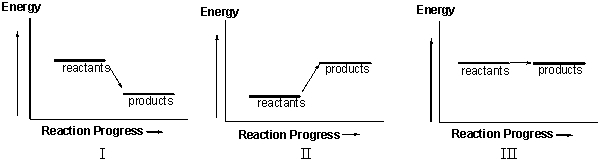
(Multiple Choice)
4.8/5 (81)
(81) Which statement best describes why we use moles when measuring quantities of atoms and molecules?
(Multiple Choice)
5.0/5 (76)
(76) Which of the following statements best describe catabolic pathways? I. Catabolic pathways build larger molecules from smaller ones.
II) Overall, catabolic pathways release energy.
III) An example of catabolism is when starch is broken down into smaller units of glucose during digestion.
(Multiple Choice)
4.9/5 (77)
(77) The balanced equation for nitrogen fixing is given below. What do the numbers in front of the molecules (the coefficients) mean? N2 + 3 H2 → 2 NH3
(Multiple Choice)
4.8/5 (82)
(82) Hydrogen fuel cells are a promising alternative to gasoline engines in part because they release water instead of carbon dioxide. In a hydrogen fuel cell, hydrogen gas (H2) and oxygen gas (O2) react to make water as shown below. Which of the following statements is a true statement about how this reaction occurs? 2 H2(g) + O2(g) → 2 H2O(g)
(Multiple Choice)
4.7/5 (99)
(99) An overview of metabolism is shown in the following figure. What does this figure tell us about the energy of catabolism and anabolism? 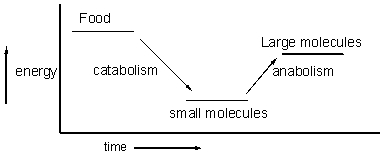
(Multiple Choice)
4.9/5 (87)
(87) An endothermic reaction absorbs heat when it occurs. How can the equilibrium of an endothermic reaction be shifted toward the products?
(Multiple Choice)
4.9/5 (82)
(82) 
Filters
- Essay(0)
- Multiple Choice(0)
- Short Answer(0)
- True False(0)
- Matching(0)