



 Chat with AI
Exam 21: Benzene and the Concept of Aromaticity

Exam 1: Covalent Bonding and Shapes of Molecules95 Questions
Exam 2: Alkanes and Cycloalkanes77 Questions
Exam 3: Stereoisomerism and Chirality75 Questions
Exam 4: Acids and Bases75 Questions
Exam 5: Alkenes: Bonding, Nomenclature, and Properties70 Questions
Exam 6: Reactions of Alkenes79 Questions
Exam 7: Alkynes80 Questions
Exam 8: Haloalkanes, Halogenation, and Radical Reactions58 Questions
Exam 9: Nucleophilic Substitution and Beta-Elimination89 Questions
Exam 10: Alcohols78 Questions
Exam 11: Ethers, Epoxides, and Sulfides71 Questions
Exam 12: Infrared Spectroscopy44 Questions
Exam 13: Nuclear Magnetic Resonance Spectroscopy73 Questions
Exam 14: Mass Spectrometry39 Questions
Exam 15: An Introduction to Organometallic Compounds45 Questions
Exam 16: Aldehydes and Ketones94 Questions
Exam 17: Carboxylic Acids51 Questions
Exam 18: Functional Derivatives of Carboxylic Acids88 Questions
Exam 19: Enolate Anions and Enamines70 Questions
Exam 20: Dienes, Conjugated Systems, and Pericyclic Reactions44 Questions
Exam 21: Benzene and the Concept of Aromaticity59 Questions
Exam 22: Reactions of Benzene and Its Derivatives83 Questions
Select questions type


What are the relative positions of the substituents in the following structure? 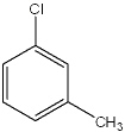

Free
(Multiple Choice)
4.9/5  (76)
(76) Correct Answer: Verified
B
What is the IUPAC name of the following compound? 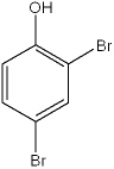
Free
(Multiple Choice)
4.7/5 (88)
(88) Correct Answer:Verified
VerifiedB
What are the relative positions of the substituents in the following structure? 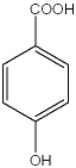
Free
(Multiple Choice)
4.9/5 (84)
(84) Correct Answer:Verified
VerifiedD
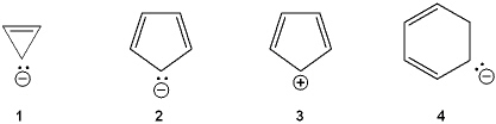
What are the two major organic products obtained from the following reaction?
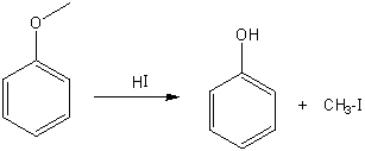
(Essay)
4.8/5 (83)
(83) 
What is the correct assignment of the names of the following substituted benzenes? 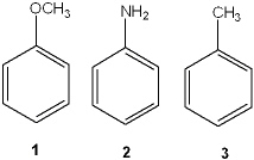
(Multiple Choice)
4.9/5 (87)
(87) 
What is the major organic product obtained from the following reaction? 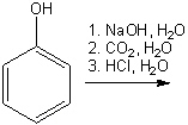
(Essay)
4.8/5 (73)
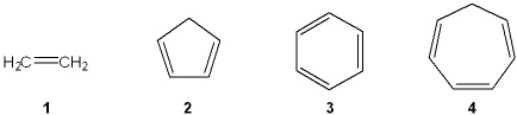
(73) Which of the following is not one of Hückel's criteria for aromaticity?
(Multiple Choice)
4.8/5 (81)
(81) Which of the following compounds undergoes heterolytic carbon-halogen bond cleavage to form a stable organic cation? 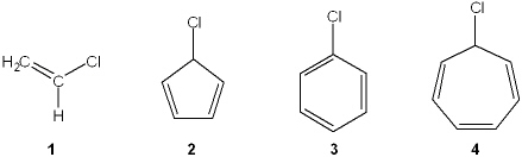
(Multiple Choice)
4.8/5 (72)
(72) Which of the following does not undergo oxidation in the presence of H2CrO4? 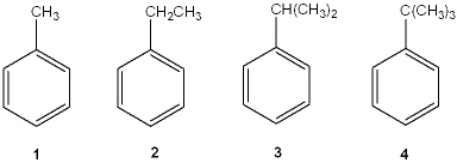
(Multiple Choice)
4.7/5 (75)
(75) Which of the following has the compounds shown in the correct order of decreasing acidity (i.e., more acidic > less acidic)? 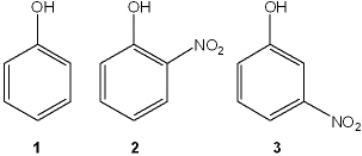
(Multiple Choice)
4.8/5 (82)
(82) What is the major organic product obtained from the following reaction? 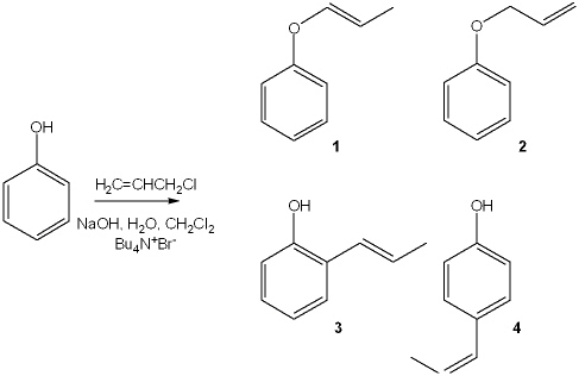
(Multiple Choice)
4.9/5 (81)
(81) What is the approximate length of the carbon-carbon bonds in benzene?
(Multiple Choice)
4.9/5 (83)
(83) Which of the following has the compounds shown in the correct order of decreasing acidity (i.e., more acidic > less acidic)? 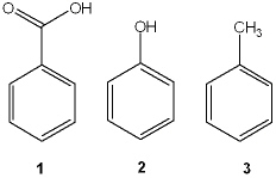
(Multiple Choice)
4.7/5 (69)
(69) Which of the following has the compounds shown in the correct order of decreasing acidity (i.e., more acidic > less acidic)? 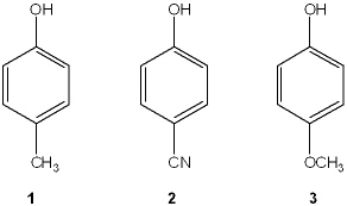
(Multiple Choice)
4.8/5 (83)
(83) What is the major organic product obtained from the following reaction? 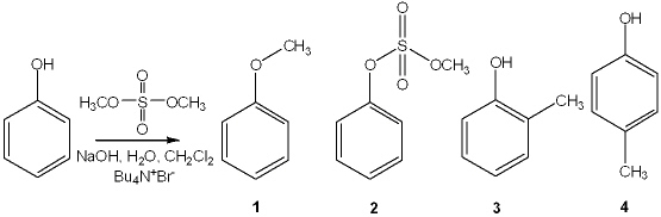
(Multiple Choice)
4.8/5 (83)
(83) Which of the following represents the energy levels of the molecular orbitals of benzene? 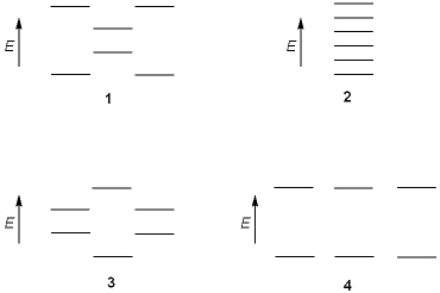
(Multiple Choice)
4.8/5 (76)
(76) 
Filters
- Essay(0)
- Multiple Choice(0)
- Short Answer(0)
- True False(0)
- Matching(0)