



 Chat with AI
Exam 2: Earths Physical Systems: Matter, Energy, and Geology

Exam 1: Science and Sustainability: an Introduction to Environmental Science45 Questions
Exam 2: Earths Physical Systems: Matter, Energy, and Geology49 Questions
Exam 3: Evolution, Biodiversity, and Population Ecology46 Questions
Exam 4: Species Interactions and Community Ecology53 Questions
Exam 5: Environmental Systems and Ecosystem Ecology47 Questions
Exam 6: Ethics, Economics, and Sustainable Development47 Questions
Exam 7: Environmental Policy: Making Decisions and Solving Problems48 Questions
Exam 8: Human Population55 Questions
Exam 9: Soil and Agriculture50 Questions
Exam 10: Agriculture, Biotechnology, and the Future of Food49 Questions
Exam 11: Biodiversity and Conservation Biology45 Questions
Exam 12: Forests, Forest Management, and Protected Areas45 Questions
Exam 13: The Urban Environment: Creating Sustainable Cities50 Questions
Exam 14: Environmental Health and Toxicology53 Questions
Exam 15: Freshwater Systems and Resources48 Questions
Exam 16: Marine and Coastal Systems and Resources54 Questions
Exam 17: Atmospheric Science, Air Quality, and Pollution Control45 Questions
Exam 18: Global Climate Change49 Questions
Exam 19: Fossil Fuels, Their Impacts, and Energy Conservation46 Questions
Exam 20: Conventional Energy Alternatives55 Questions
Exam 21: New Renewable Energy Alternatives48 Questions
Exam 22: Managing Our Waste48 Questions
Exam 23: Minerals and Mining35 Questions
Exam 24: Sustainable Solutions47 Questions
Select questions type


Read the following scenario and answer the question below.
Many geologists have proposed naming the current time period of Earth's history the Anthropocene epoch. The rationale for doing so includes the fact that erosion rates and greenhouse gas levels in the atmosphere have increased rapidly over the past 300 years. Almost all environmental scientists agree that increases in greenhouse gases contribute to global climate change. Carbon dioxide, methane, nitrous oxide, ozone, hydrochlorofluorocarbons, and water vapor are the main culprits. Human activities, chief among them the tapping and burning of fossil fuels for energy, have significantly increased these "greenhouse gases" in our atmosphere in the last 300 years. With rising standards of living in developing countries, emissions of carbon dioxide and other greenhouse gases are expected to continue to rise. If unchecked, carbon dioxide levels will reach twice preindustrial levels by midcentury and double again by the end of the century. Computer models have shown that this rise alone could raise Earth's temperatures by 3 to 10 degrees Fahrenheit by 2100.
-Besides contributing to global warming, nitrous oxide contributes indirectly to acid precipitation because of ________________

Free
(Multiple Choice)
4.8/5  (82)
(82) Correct Answer: Verified
B
Read the following scenario and answer the question below.
Many geologists have proposed naming the current time period of Earth's history the Anthropocene epoch. The rationale for doing so includes the fact that erosion rates and greenhouse gas levels in the atmosphere have increased rapidly over the past 300 years. Almost all environmental scientists agree that increases in greenhouse gases contribute to global climate change. Carbon dioxide, methane, nitrous oxide, ozone, hydrochlorofluorocarbons, and water vapor are the main culprits. Human activities, chief among them the tapping and burning of fossil fuels for energy, have significantly increased these "greenhouse gases" in our atmosphere in the last 300 years. With rising standards of living in developing countries, emissions of carbon dioxide and other greenhouse gases are expected to continue to rise. If unchecked, carbon dioxide levels will reach twice preindustrial levels by midcentury and double again by the end of the century. Computer models have shown that this rise alone could raise Earth's temperatures by 3 to 10 degrees Fahrenheit by 2100.
-The primary source of increased levels of greenhouse gases on Earth is __________.
Free
(Multiple Choice)
4.9/5 (88)
(88) Correct Answer:Verified
VerifiedB
__________ are the primary water-insoluble components of cell membranes.
Free
(Multiple Choice)
4.8/5 (90)
(90) Correct Answer:Verified
VerifiedB
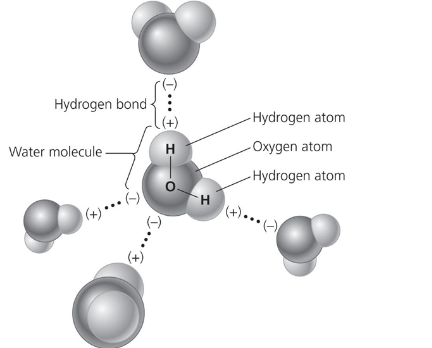 What property of water is due to hydrogen bonds?
When you burn a log in your fireplace you are converting __________.
(Multiple Choice)
4.8/5 (72)
(72) Rock that has undergone heat or pressure that causes it to change form is called __________
(Multiple Choice)
4.8/5 (75)
(75) Read the following scenario and answer the question below.
Many geologists have proposed naming the current time period of Earth's history the Anthropocene epoch. The rationale for doing so includes the fact that erosion rates and greenhouse gas levels in the atmosphere have increased rapidly over the past 300 years. Almost all environmental scientists agree that increases in greenhouse gases contribute to global climate change. Carbon dioxide, methane, nitrous oxide, ozone, hydrochlorofluorocarbons, and water vapor are the main culprits. Human activities, chief among them the tapping and burning of fossil fuels for energy, have significantly increased these "greenhouse gases" in our atmosphere in the last 300 years. With rising standards of living in developing countries, emissions of carbon dioxide and other greenhouse gases are expected to continue to rise. If unchecked, carbon dioxide levels will reach twice preindustrial levels by midcentury and double again by the end of the century. Computer models have shown that this rise alone could raise Earth's temperatures by 3 to 10 degrees Fahrenheit by 2100.
-Undersea earthquakes and volcanic eruptions may produce __________.
(Multiple Choice)
4.9/5 (81)
(81) __________ is defined as the number of protons plus the number of neutrons.
(Multiple Choice)
4.8/5 (78)
(78) Forming the cell walls of stems, leaves, and roots, what compound is the primary structural constituent of plant tissues?
(Multiple Choice)
4.9/5 (83)
(83) Consider the following processes: respiration, chemosynthesis, combustion of firewood, and photosynthesis. How many of these result in the release of oxygen into the atmosphere?
(Multiple Choice)
4.8/5 (78)
(78) A solution with a pH of 3 is __________ a solution with a pH of 5.
(Multiple Choice)
4.9/5 (78)
(78) Skin, hair, muscles, and enzymes are all made up of __________
(Multiple Choice)
5.0/5 (74)
(74) We use __________ to catalyze the chemical reactions of digestion.
(Multiple Choice)
4.9/5 (85)
(85) Elements with the same atomic number but with different atomic masses
(Multiple Choice)
4.8/5 (72)
(72) 
Filters
- Essay(0)
- Multiple Choice(0)
- Short Answer(0)
- True False(0)
- Matching(0)