



 Chat with AI
Exam 6: Energy Changes,reaction Rates,and Equilibrium

Exam 1: Matter and Measurement87 Questions
Exam 2: Atoms and the Periodic Table95 Questions
Exam 3: Ionic Compounds100 Questions
Exam 4: Covalent Compounds101 Questions
Exam 5: Chemical Reactions98 Questions
Exam 6: Energy Changes,reaction Rates,and Equilibrium102 Questions
Exam 7: Gases,liquids,and Solids98 Questions
Exam 8: Solutions98 Questions
Exam 9: Acids and Bases108 Questions
Exam 10: Nuclear Chemistry93 Questions
Exam 11: Introduction to Organic Molecules and Functional Groups123 Questions
Exam 12: Alkanes104 Questions
Exam 13: Unsaturated Hydrocarbons104 Questions
Exam 14: Organic Compounds That Contain Oxygen,halogen,or Sulfur112 Questions
Exam 15: The Three-Dimensional Shape of Molecules101 Questions
Exam 16: Aldehydes and Ketones114 Questions
Exam 17: Carboxylic Acids,esters,and Amides107 Questions
Exam 18: Amines and Neurotransmitters115 Questions
Exam 19: Lipids115 Questions
Exam 20: Carbohydrates100 Questions
Exam 21: Amino Acids,proteins,and Enzymes98 Questions
Exam 22: Nucleic Acids and Protein Synthesis98 Questions
Exam 23: Metabolism and Energy Production102 Questions
Exam 24: Carbohydrate,lipid,and Protein Metabolism99 Questions
Select questions type


Biological catalysts held together in a very specific three-dimensional shape are called ________.
(Short Answer)
4.9/5  (75)
(75) Which of the following will increase the rate of a reaction?
(Multiple Choice)
4.9/5 (89)
(89) When heat is added to an exothermic equilibrium reaction,the reaction shifts to form more ________.
(Short Answer)
4.7/5 (71)
(71) Consider the reaction: 2 C2H6(g)+ 7 O2(g)→ 4 CO2(g)+ 6 H2O(g). Increasing the concentration of C2H6(g)will decrease the activation energy.
(True/False)
4.7/5 (74)
(74) Consider the reaction: N2(g)+ O2(g)  2 NO(g). If [N2] = 0.520 M,[O2] = 0.0662 M,and [NO] = 0.00956 at equilibrium,what is the value of K?
 (Multiple Choice)
4.9/5 (81)
(81) What is the expression for the equilibrium constant for the reaction: 2 C2H6(g)+ 7 O2(g)  4 CO2(g)+ 6 H2O(g)?
 (Multiple Choice)
4.9/5 (64)
(64) The difference in energy between the reactants and the transition state is called the energy of activation,symbolized by Ea.
(True/False)
5.0/5 (79)
(79) A manufacturing company requires 157 kJ of energy to power one of its machines for a day. The reaction shown below would be able to provide a sufficient amount of energy for this purpose.
2 HgO(s)→ 2 Hg(l)+ O2(g)ΔH = 182 kJ
(True/False)
4.8/5 (86)
(86) The hydrolysis of sucrose depicted below has K = 1.4 × 10⁵. Which of the following is a reasonable assumption about this reaction once equilibrium is established? sucrose + H2O  glucose + fructose
 (Multiple Choice)
4.9/5 (75)
(75) The energy of the reacting molecules affects whether a particular collision will lead to a chemical reaction.
(True/False)
4.9/5 (86)
(86) Consider the reaction: 2 C2H6(g)+ 7 O2(g)→ 4 CO2(g)+ 6 H2O(g). Decreasing the concentration of C2H6(g)will decrease the reaction rate.
(True/False)
4.7/5 (85)
(85) Which value (if any)in each pair corresponds to a slower reaction?
(Multiple Choice)
4.9/5 (65)
(65) Consider the following reversible reaction at equilibrium: 2 NO(g)+ O2(g)  2 NO2(g). If the pressure inside the reaction vessel is increased,the equilibrium will shift to the right.
 (True/False)
4.8/5 (94)
(94) A catalytic converter uses a catalyst to catalyze three reactions that clean up the exhaust from an auto engine. Which element is not used as a catalyst in catalytic converters?
(Multiple Choice)
4.9/5 (79)
(79) 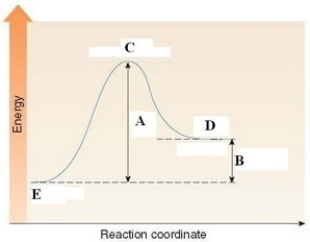
Ammonia (NH3)is synthesized by the reaction of nitrogen and hydrogen in the presence of an iron catalyst according to the equation below. Removing the iron catalyst would decrease the reaction rate. 
(True/False)
4.8/5 (79)
(79) Which of the following energy quantities is equivalent to 258 Cal?
(Multiple Choice)
4.9/5 (81)
(81) An equilibrium constant with a value of 1.5 × 10⁻⁹ indicates that at equilibrium ________.
(Multiple Choice)
4.8/5 (85)
(85) Consider the reversible reaction: CO(g)+ Cl2(g)  COCl2(g). The reverse reaction is COCl2(g)→ CO(g)+ Cl2(g).
 (True/False)
4.7/5 (75)
(75) 
Filters
- Essay(0)
- Multiple Choice(0)
- Short Answer(0)
- True False(0)
- Matching(0)