



 Chat with AI
Exam 3: Evolution, Biodiversity, and Population Ecology

Exam 1: Science and Sustainability: an Introduction to Environmental Science61 Questions
Exam 2: Environmental Systems: Matter, Energy, and Ecosystems58 Questions
Exam 3: Evolution, Biodiversity, and Population Ecology52 Questions
Exam 4: Species Interactions and Community Ecology55 Questions
Exam 5: Economics, Policy, and Sustainable Development54 Questions
Exam 6: Human Population62 Questions
Exam 7: Soil, Agriculture, and the Future of Food64 Questions
Exam 8: Biodiversity and Conservation Biology49 Questions
Exam 9: Forests, Forest Management, and Protected Areas51 Questions
Exam 10: Environmental Health and Toxicology62 Questions
Exam 11: Geology, Minerals, and Mining52 Questions
Exam 12: Fresh Water, Oceans, and Coasts70 Questions
Exam 13: Atmospheric Science, Air Quality, and Pollution Control53 Questions
Exam 14: Global Climate Change53 Questions
Exam 15: Nonrenewable Energy Sources, Their Impacts, and Energy Conservation64 Questions
Exam 16: Renewable Energy Alternatives61 Questions
Exam 17: Managing Our Waste56 Questions
Exam 18: The Urban Environment: Creating Sustainable Cities60 Questions
Exam 19: Epilogue45 Questions
Select questions type


Most extinction is ______________

Free
(Multiple Choice)
4.9/5  (82)
(82) Correct Answer: Verified
D
The carrying capacity is the ______________
Free
(Multiple Choice)
4.9/5 (79)
(79) Correct Answer:Verified
VerifiedA
The two processes that determine the worldʹs current biodiversity are ______________
Free
(Multiple Choice)
4.8/5 (80)
(80) Correct Answer:Verified
VerifiedB
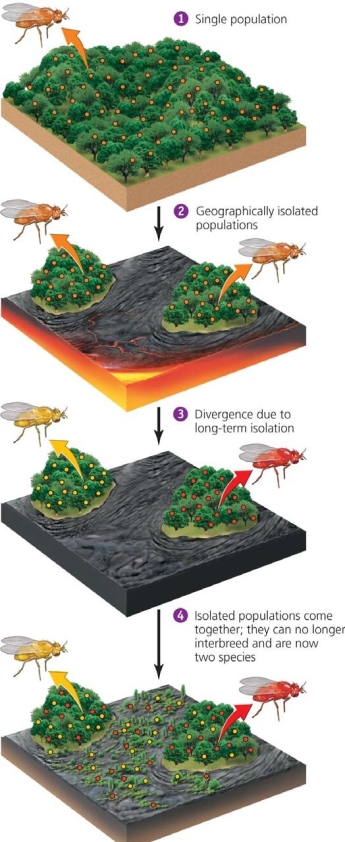 -In the initial squirrel population prior to the isolation, it is safe to assume that _____________
 (Multiple Choice)
4.9/5 (70)
(70) Read the following scenario and answer the question below.
Between 1907 and 1923, cattle grazing in the Kaibab National forest in Arizona was greatly reduced, deer hunting was eliminated, and predators were killed. Over 600 cougars, 11 wolves (most had already been killed in the 1800s), and 3000 coyotes were trapped or shot. In response, the deer herd began to increase. By 1915, the deer were estimated at 25,000; by 1920 at 50,000; and by 1923 at approximately 100,000.
-Mule deer such as the Kaibab population can live 10 to 25 years. In 1920, an age structure diagram of the Kaibab deer population that places the number of young individuals at the base of a pyramid and the oldest age categories at the top, would look like a(n) .
(Multiple Choice)
4.9/5 (90)
(90) Read the following scenario and answer the question below.
Between 1907 and 1923, cattle grazing in the Kaibab National forest in Arizona was greatly reduced, deer hunting was eliminated, and predators were killed. Over 600 cougars, 11 wolves (most had already been killed in the 1800s), and 3000 coyotes were trapped or shot. In response, the deer herd began to increase. By 1915, the deer were estimated at 25,000; by 1920 at 50,000; and by 1923 at approximately 100,000.
-Which of these graphs shows the Kaibab deer population between 1900 and 1923?
(Multiple Choice)
5.0/5 (79)
(79) Choose the item that best matches each item in the following:
-Many interacting species that live in the same area
(Multiple Choice)
4.9/5 (91)
(91) Of the following, ______________ would represent a clumped population dispersion pattern.
(Multiple Choice)
4.9/5 (88)
(88) An example of a density-independent factor would be ______________
(Multiple Choice)
4.7/5 (81)
(81) Describe the sixth mass extinction event, when it occurred, and its specific causes.
(Essay)
4.8/5 (92)
(92)
-The barrier between the squirrel populations _____________
-The barrier between the squirrel populations _____________ (Multiple Choice)
4.8/5 (98)
(98) In a population of field mice, an example of an adaptive trait that could help with reproduction and/or survival would be ______________
(Multiple Choice)
4.9/5 (75)
(75) Choose the item that best matches each item in the following:
-Communities and the abiotic material with which their members interact
(Multiple Choice)
4.9/5 (78)
(78) Choose the item that best matches each item in the following:
-Stabilizes a population at its carrying capacity
(Multiple Choice)
4.9/5 (70)
(70)
-The major force(s) causing the genetic divergence of the two isolated squirrel populations is/are _____________
-The major force(s) causing the genetic divergence of the two isolated squirrel populations is/are _____________ (Multiple Choice)
4.8/5 (80)
(80) 
Filters
- Essay(0)
- Multiple Choice(0)
- Short Answer(0)
- True False(0)
- Matching(0)