



 Chat with AI
Exam 38: Nervous and Sensory Systems

Exam 1: Introduction: Evolution and the Foundations of Biology36 Questions
Exam 2: The Chemical Context of Life135 Questions
Exam 3: Carbon and the Molecular Diversity of Life136 Questions
Exam 4: A Tour of the Cell75 Questions
Exam 5: Membrane Transport and Cell Signaling86 Questions
Exam 6: An Introduction to Metabolism79 Questions
Exam 7: Cellular Respiration and Fermentation99 Questions
Exam 8: Photosynthesis68 Questions
Exam 9: The Cell Cycle57 Questions
Exam 10: Meiosis and Sexual Life Cycles59 Questions
Exam 11: Mendel and the Gene Idea57 Questions
Exam 12: The Chromosomal Basis of Inheritance43 Questions
Exam 13: The Molecular Basis of Inheritance62 Questions
Exam 14: Gene Expression: From Gene to Protein77 Questions
Exam 15: Regulation of Gene Expression48 Questions
Exam 16: Development,stem Cells,and Cancer34 Questions
Exam 17: Viruses35 Questions
Exam 18: Genomes and Their Evolution31 Questions
Exam 19: Descent With Modification61 Questions
Exam 20: Phylogeny72 Questions
Exam 21: The Evolution of Populations81 Questions
Exam 22: The Origin of Species75 Questions
Exam 23: Broad Patterns of Evolution60 Questions
Exam 24: Early Life and the Diversification of Prokaryotes99 Questions
Exam 25: The Origin and Diversification of Eukaryotes80 Questions
Exam 26: The Colonization of Land by Plants and Fungi128 Questions
Exam 27: The Rise of Animal Diversity93 Questions
Exam 28: Plant Structure and Growth67 Questions
Exam 29: Resource Acquisition,nutrition,and Transport in Vascular Plants115 Questions
Exam 30: Reproduction and Domestication of Flowering Plants72 Questions
Exam 31: Plant Responses to Internal and External Signals74 Questions
Exam 32: Homeostasis and Endocrine Signaling116 Questions
Exam 33: Animal Nutrition75 Questions
Exam 34: Circulation and Gas Exchange94 Questions
Exam 35: The Immune System96 Questions
Exam 36: Reproduction and Development123 Questions
Exam 37: Neurons,synapses,and Signaling77 Questions
Exam 38: Nervous and Sensory Systems105 Questions
Exam 39: Motor Mechanisms and Behavior83 Questions
Exam 40: Population Ecology and the Distribution of Organisms93 Questions
Exam 41: Ecological Communities59 Questions
Exam 42: Ecosystems and Energy86 Questions
Exam 43: Conservation Biology and Global Change71 Questions
Select questions type


Choose the correct sequence of the following events leading to the sensory processing of a stimulus.
1)adaptation
2)perception
3)transduction
4)transmission
(Multiple Choice)
4.9/5  (77)
(77) The bottlenose dolphin breathes air but can sleep in the ocean because it
(Multiple Choice)
4.8/5 (72)
(72) The pathway leading to the perception of sound by mammals begins with the
(Multiple Choice)
4.8/5 (78)
(78) A researcher is interested in determining whether mice can remember the location of a piece of cheese in a maze.Which of the following would be the best experiment to perform to test the hypothesis that the limbic system is involved?
(Multiple Choice)
4.8/5 (72)
(72) 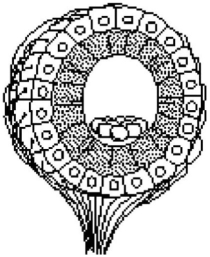 Figure 38.2
-The structure diagrammed in Figure 38.2 is a(n)
Figure 38.2
-The structure diagrammed in Figure 38.2 is a(n) (Multiple Choice)
4.8/5 (74)
(74) After earning an A in your biology course,your instructor gives you a firm handshake.You can feel the deep pressure of the handshake,and it is so strong it even starts to hurt a little.What type(s)of receptor was (were)activated by the handshake?
(Multiple Choice)
4.7/5 (77)
(77)  Figure 38.1
-A man suffered a brain injury such that his body temperature was poorly regulated to the extent that he would sweat even in the frigid cold.Which structure labeled in Figure 38.1 may be affected?
Figure 38.1
-A man suffered a brain injury such that his body temperature was poorly regulated to the extent that he would sweat even in the frigid cold.Which structure labeled in Figure 38.1 may be affected? (Multiple Choice)
4.9/5 (75)
(75) Hormones that are secreted by the posterior pituitary gland are made in the
(Multiple Choice)
4.8/5 (74)
(74) Sensory transduction of light/dark information in the vertebrate retina is accomplished by
(Multiple Choice)
4.9/5 (70)
(70) Which description of a glial cell and its function is correct?
(Multiple Choice)
4.8/5 (80)
(80) Raccoons are most active from dusk until dawn.What kinds of cells would you expect to find in the retina of a raccoon?
(Multiple Choice)
4.8/5 (84)
(84) A football player suffered a hard hit to the back of his head,and he "saw stars." What region of his brain was affected?
(Multiple Choice)
4.8/5 (76)
(76)  Figure 38.3
-The sense of head motion begins with sensory transduction by the structure(s)in Figure 38.3 at which number(s)?
Figure 38.3
-The sense of head motion begins with sensory transduction by the structure(s)in Figure 38.3 at which number(s)? (Multiple Choice)
4.9/5 (81)
(81) Sheila is a 29-year-old female who suffered a brain injury in a car accident.After the accident she had trouble with calculation,contemplation,and cognition.What part of the brain did Sheila likely injure?
(Multiple Choice)
4.8/5 (75)
(75) 
Filters
- Essay(0)
- Multiple Choice(0)
- Short Answer(0)
- True False(0)
- Matching(0)