



 Chat with AI
Exam 20: Enzymes and Vitamins

Exam 1: Chemistry and Measurements77 Questions
Exam 2: Energy and Matter100 Questions
Exam 3: Atoms and Elements125 Questions
Exam 4: Nuclear Chemistry92 Questions
Exam 5: Compounds and Their Bonds115 Questions
Exam 6: Chemical Reactions and Quantities115 Questions
Exam 7: Gases100 Questions
Exam 8: Solutions99 Questions
Exam 9: Reaction Rates and Chemical Equilibrium71 Questions
Exam 10: Acids and Bases84 Questions
Exam 11: Introduction to Organic Chemistry: Alkanes117 Questions
Exam 12: Alkenes, Alkynes, and Aromatic Compounds81 Questions
Exam 13: Alcohols, Phenols, Thiols, and Ethers74 Questions
Exam 14: Aldehydes, Ketones, and Chiral Molecules83 Questions
Exam 15: Carbohydrates67 Questions
Exam 16: Carboxylic Acids and Esters85 Questions
Exam 17: Lipids83 Questions
Exam 18: Amines and Amides87 Questions
Exam 19: Amino Acids and Proteins103 Questions
Exam 20: Enzymes and Vitamins100 Questions
Exam 21: Nucleic Acids and Protein Synthesis89 Questions
Exam 22: Metabolic Pathways for Carbohydrates83 Questions
Exam 23: Metabolism and Energy Production86 Questions
Exam 24: Metabolic Pathways for Lipids and Amino Acids83 Questions
Select questions type


An enzyme that converts a cis double bond to a trans double bond is classified as a(n) __________.

Free
(Multiple Choice)
4.8/5  (87)
(87) Correct Answer: Verified
E
Indicate whether each of the following is fat soluble or water soluble.
-folic acid
Free
(Short Answer)
4.8/5 (85)
(85) Correct Answer:Verified
Verifiedwater soluble
Match the vitamin name with its corresponding chemical name.
-vitamin B3
Free
(Multiple Choice)
4.7/5 (91)
(91) Correct Answer:Verified
VerifiedB
Enzymes that catalyze the same reactions but have slightly different structures are called __________.
(Multiple Choice)
4.8/5 (78)
(78) Match the vitamin name with its corresponding chemical name.
-vitamin C
(Multiple Choice)
4.8/5 (74)
(74) Match the correct term in enzyme action with each description.
-an organic compound that is sometimes needed to complete an enzyme
(Multiple Choice)
4.8/5 (88)
(88) A compound that binds to the surface of an enzyme, and changes its shape so that a substrate cannot enter the active site, is called a(n)
(Multiple Choice)
4.9/5 (86)
(86) Identify the effect of the following on the activity of maltase, an enzyme that hydrolyzes maltose.
-one theory that accounts for the unusual specificity of an enzyme
(Multiple Choice)
4.9/5 (72)
(72) "Physiological conditions" for reactions within the body are approximately
(Multiple Choice)
4.9/5 (87)
(87) Urea is converted to ammonia and carbon dioxide by the action of urease. What will be the effect on the rate if the temperature of the reaction is lowered from 37 °C (the optimum temperature) to 27 °C? 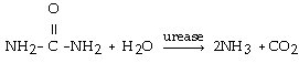
(Multiple Choice)
5.0/5 (84)
(84) Indicate whether each of the following is fat soluble or water soluble.
-niacin
(Short Answer)
4.8/5 (80)
(80) In any reaction catalyzed by an enzyme, the reacting molecule is called the
(Multiple Choice)
4.8/5 (78)
(78) Identify each of the designated regions on the energy diagram for the conversion of a substrate to product with and without an enzyme.  -energy of the product
 (Short Answer)
4.8/5 (70)
(70) Identify the effect of the following on the activity of maltase, an enzyme that hydrolyzes maltose.
-increasing the concentration of maltase (enzyme) when the enzyme is saturated with substrate
(Multiple Choice)
4.7/5 (80)
(80) To what main class of enzymes does the enzyme that catalyzes the following reaction belong? 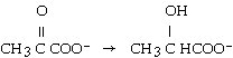
(Multiple Choice)
4.8/5 (70)
(70) Indicate whether each of the following is fat soluble or water soluble.
-vitamin B6
(Short Answer)
4.8/5 (66)
(66) 
Filters
- Essay(0)
- Multiple Choice(0)
- Short Answer(0)
- True False(0)
- Matching(0)