



 Chat with AI
Exam 22: Metabolic Pathways for Carbohydrates

Exam 1: Chemistry and Measurements77 Questions
Exam 2: Energy and Matter100 Questions
Exam 3: Atoms and Elements125 Questions
Exam 4: Nuclear Chemistry92 Questions
Exam 5: Compounds and Their Bonds115 Questions
Exam 6: Chemical Reactions and Quantities115 Questions
Exam 7: Gases100 Questions
Exam 8: Solutions99 Questions
Exam 9: Reaction Rates and Chemical Equilibrium71 Questions
Exam 10: Acids and Bases84 Questions
Exam 11: Introduction to Organic Chemistry: Alkanes117 Questions
Exam 12: Alkenes, Alkynes, and Aromatic Compounds81 Questions
Exam 13: Alcohols, Phenols, Thiols, and Ethers74 Questions
Exam 14: Aldehydes, Ketones, and Chiral Molecules83 Questions
Exam 15: Carbohydrates67 Questions
Exam 16: Carboxylic Acids and Esters85 Questions
Exam 17: Lipids83 Questions
Exam 18: Amines and Amides87 Questions
Exam 19: Amino Acids and Proteins103 Questions
Exam 20: Enzymes and Vitamins100 Questions
Exam 21: Nucleic Acids and Protein Synthesis89 Questions
Exam 22: Metabolic Pathways for Carbohydrates83 Questions
Exam 23: Metabolism and Energy Production86 Questions
Exam 24: Metabolic Pathways for Lipids and Amino Acids83 Questions
Select questions type


An enzyme that can facilitate the breakdown of starch into smaller units is
(Multiple Choice)
4.9/5  (87)
(87) Which coenzyme is the electron acceptor in the following reaction? 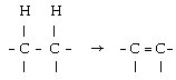
(Multiple Choice)
4.8/5 (80)
(80) In gluconeogenesis, glucose is synthesized from noncarbohydrate material.
(True/False)
4.8/5 (89)
(89) When glycogen is broken down into glucose, the process is called
(Multiple Choice)
4.9/5 (84)
(84) Under aerobic conditions, pyruvate produced in glycolysis can be converted to
(Multiple Choice)
4.8/5 (80)
(80) The process by which complex molecules are broken down into simpler ones for the body's use is called
(Multiple Choice)
4.9/5 (80)
(80) Reactions in the mitochondria produce most of the cell's energy.
(True/False)
4.7/5 (76)
(76) 
Filters
- Essay(0)
- Multiple Choice(0)
- Short Answer(0)
- True False(0)
- Matching(0)