



 Chat with AI
Exam 28: Chemistry of the Living State

Exam 1: Matter - Its Properties and Measurement94 Questions
Exam 2: Atoms and the Atomic Theory100 Questions
Exam 3: Chemical Compounds100 Questions
Exam 4: Chemical Reactions100 Questions
Exam 5: Introduction to Reactions in Aqueous Solutions97 Questions
Exam 6: Gases100 Questions
Exam 7: Thermochemistry101 Questions
Exam 8: Electrons in Atoms100 Questions
Exam 9: The Periodic Table and Some Atomic Properties96 Questions
Exam 10: Chemical Bonding I: Basic Concepts97 Questions
Exam 11: Chemical Bonding II: Additional Aspects97 Questions
Exam 12: Intermolecular Forces: Liquids and Solids102 Questions
Exam 13: Solutions and Their Physical Properties100 Questions
Exam 14: Chemical Kinetics92 Questions
Exam 15: Principles of Chemical Equilibrium99 Questions
Exam 16: Acids and Bases100 Questions
Exam 17: Additional Aspects of Acid-Base Equilibria99 Questions
Exam 18: Solubility and Complex-Ion Equilibria95 Questions
Exam 19: Spontaneous Change: Entropy and Free Energy101 Questions
Exam 20: Electrochemistry103 Questions
Exam 21: Main Group Elements I: Groups 1, 2, 13, and 14116 Questions
Exam 22: Main Group Elements II: Groups 18, 17, 16, 15, and Hydrogen100 Questions
Exam 23: The Transition Elements102 Questions
Exam 24: Complex Ions and Coordination Compounds100 Questions
Exam 25: Nuclear Chemistry 1-41100 Questions
Exam 26: Structures of Organic Compounds96 Questions
Exam 27: Reactions of Organic Compounds94 Questions
Exam 28: Chemistry of the Living State99 Questions
Select questions type


By definition, exergonic reaction has:

Free
(Multiple Choice)
4.9/5  (82)
(82) Correct Answer: Verified
B
Which of the following represents an INCORRECT breakdown sequence for that food?
Free
(Multiple Choice)
4.8/5 (75)
(75) Correct Answer:Verified
VerifiedA
A typical E. coli bacterium is a cylindrical cell about 2 μm long and 1 μm in diameter, weighing about 1.8 × 10⁻¹² g and containing 80% water by volume. Calculate the number of lipid molecules present, assuming their average molecular weight is 688 and the lipid content is 1.9%.
Free
(Multiple Choice)
4.8/5 (99)
(99) Correct Answer:Verified
VerifiedE
The artificial sweetener Nutrasweet® (aspartame) is not a derivative of sugar, but is actually a small dipeptide. What two amino acids make up the basic structure of Nutrasweet®? 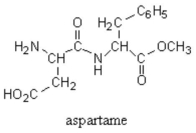
(Multiple Choice)
5.0/5 (84)
(84) Which of the following is unimportant for tertiary structure of the proteins?
(Multiple Choice)
4.9/5 (71)
(71) Compounds which are optical isomers of one another but differ in physical and chemical properties are known as what?
(Multiple Choice)
4.8/5 (79)
(79) The molecule on which an enzyme acts is commonly referred to as:
(Multiple Choice)
4.8/5 (96)
(96) What is the direction of migration of the amino acid phenylalanine in a gel that is 0.25 M in NaH2PO4 and 0.50 M in Na2HPO4? For phenylalanine, pI = 5.74.
(Short Answer)
4.7/5 (62)
(62) ΔG° = -2880 kJ/mole for the oxidation of glucose (C6H12O6). What is ΔG° for the oxidation of 3.45 grams of glucose?
(Multiple Choice)
4.9/5 (84)
(84) Below is a single stranded DNA sequence from an unwound chromosome that is in the process of replication. What would be the sequence of the complementary DNA strand produced during the replication of this strand? ATTGCGCTTATTCGCGTTAAAGGCCTCTGATG
(Multiple Choice)
4.9/5 (86)
(86) Cellulose and starch are both polymers of glucose units, but most animals can only use starch as a source of carbohydrate in their diets. Why are most animals incapable of digesting cellulose?
(Multiple Choice)
4.9/5 (75)
(75) 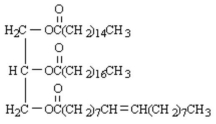
Saponification of 1 mole of glyceryl dibutyrooleate with excess potassium hydroxide would yield which of the following products?
(Multiple Choice)
4.9/5 (89)
(89) 
Filters
- Essay(0)
- Multiple Choice(0)
- Short Answer(0)
- True False(0)
- Matching(0)