



 Chat with AI
Exam 23: Introduction to Organometallic Compounds

Exam 1: A Review of General Chemistry: Electrons, Bonds, and Molecular Properties191 Questions
Exam 2: Molecular Representations168 Questions
Exam 3: Acids and Bases127 Questions
Exam 4: Alkanes and Cycloalkanes116 Questions
Exam 5: Stereoisomerism141 Questions
Exam 6: Chemical Reactivity and Mechanisms96 Questions
Exam 7: Alkyl Halides: Nucleophilic Substitution and Elimination Reactions224 Questions
Exam 8: Addition Reactions of Alkenes153 Questions
Exam 9: Alkynes177 Questions
Exam 10: Radical Reactions102 Questions
Exam 11: Synthesis106 Questions
Exam 12: Alcohols and Phenols147 Questions
Exam 13: Ethers and Epoxides; Thiols and Sulfides139 Questions
Exam 14: Infrared Spectroscopy and Mass Spectrometry135 Questions
Exam 15: Nuclear Magnetic Resonance Spectroscopy140 Questions
Exam 16: Conjugated Pi Systems and Pericyclic Reactions140 Questions
Exam 17: Aromatic Compounds118 Questions
Exam 18: Aromatic Substitution Reactions122 Questions
Exam 19: Aldehydes and Ketones169 Questions
Exam 20: Carboxylic Acids and Their Derivatives144 Questions
Exam 21: Alpha Carbon Chemistry: Enols and Enolates147 Questions
Exam 22: Amines112 Questions
Exam 23: Introduction to Organometallic Compounds118 Questions
Exam 24: Carbohydrates144 Questions
Exam 25: Amino Acids, Peptides, and Proteins133 Questions
Exam 26: Lipids123 Questions
Exam 27: Synthetic Polymers119 Questions
Select questions type


Heck reactions with allylic alcohols have a tendency to form carbonyl products. Using the mechanism for the Heck reaction as a guide, explain how the following ketone would form? 
(Essay)
4.8/5  (82)
(82) 
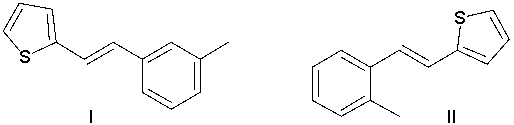

Identify the product when carbon dioxide reacts with one equivalent of a Grignard reagent.
(Multiple Choice)
5.0/5 (78)
(78) Each intermediate in alkene metathesis is formed by _____ cycloaddition
(Short Answer)
4.8/5 (86)
(86) Starting from bromobenzene and any other reagents with two carbons or fewer, propose a synthesis of the compound shown. 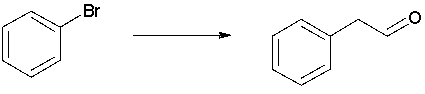
(Essay)
4.8/5 (76)
(76) Why is ethanol not a viable solvent in the synthesis of Grignard reagents?
(Short Answer)
4.9/5 (77)
(77) Which two reagents can be coupled in a Suzuki reaction to form the product listed below. 


(Short Answer)
4.7/5 (79)
(79) Elaboration of an advanced intermediate toward the synthesis of the pulmoside aglycon is shown below. Give the structures of the intermediates A-C. (J. Am. Chem. Soc. 2013, 135, 2501.) 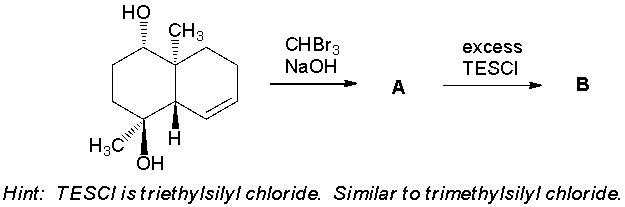
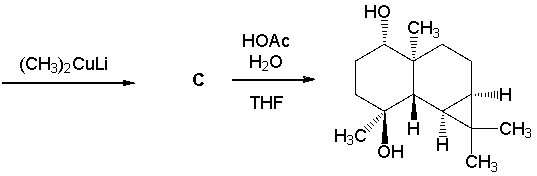
(Essay)
4.9/5 (83)
(83) What product(s) result in the following reaction? Select all that apply. 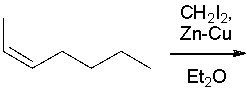
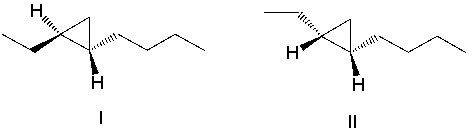
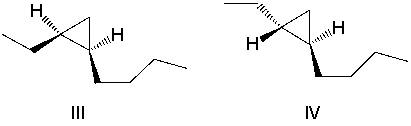
(Multiple Choice)
4.7/5 (73)
(73) Which of the following metathesis reactions would not form ethylene gas? 


(Multiple Choice)
4.9/5 (85)
(85) Which of the following dienes could not be formed as the major organic product in a Heck reaction with methyl vinyl ketone as the reactant alkene? 

(Multiple Choice)
4.9/5 (78)
(78) 
Which of the following alkenes is most reactive in the Heck reaction? 
(Multiple Choice)
4.7/5 (76)
(76) Which of the following compounds has the most nucleophilic carbon atom?
(Multiple Choice)
4.8/5 (80)
(80) Which reactant would afford the product shown as the major isomeric product? 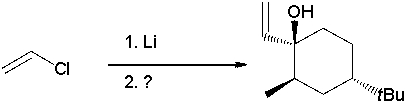
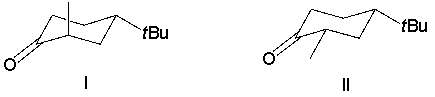
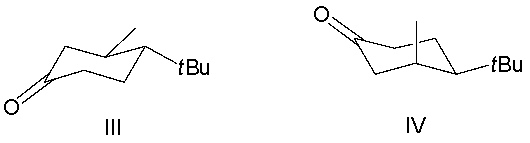
(Multiple Choice)
4.9/5 (86)
(86) 

Which of the following reagents cannot be used in the synthesis of a Gilman reagent?
(Multiple Choice)
4.8/5 (78)
(78) 
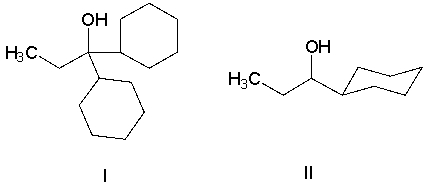
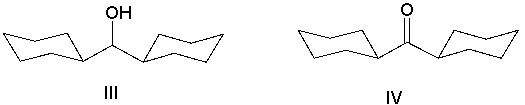

Filters
- Essay(0)
- Multiple Choice(0)
- Short Answer(0)
- True False(0)
- Matching(0)