



 Chat with AI
Exam 13: Monopolistic Competition: the Competitive Model in a More Realistic Setting

Exam 1: Economics: Foundations and Models444 Questions
Exam 2: Trade-Offs, Comparative Advantage, and the Market System498 Questions
Exam 3: Where Prices Come From: the Interaction of Demand and Supply475 Questions
Exam 4: Economic Efficiency, Government Price Setting, and Taxes419 Questions
Exam 5: Externalities, Environmental Policy, and Public Goods266 Questions
Exam 6: Elasticity: the Responsiveness of Demand and Supply295 Questions
Exam 7: The Economics of Health Care334 Questions
Exam 8: Firms, the Stock Market, and Corporate Governance278 Questions
Exam 9: Comparative Advantage and the Gains From International Trade379 Questions
Exam 10: Consumer Choice and Behavioral Economics302 Questions
Exam 11: Technology, Production, and Costs330 Questions
Exam 12: Firms in Perfectly Competitive Markets298 Questions
Exam 13: Monopolistic Competition: the Competitive Model in a More Realistic Setting276 Questions
Exam 14: Oligopoly: Firms in Less Competitive Markets262 Questions
Exam 15: Monopoly and Antitrust Policy271 Questions
Exam 16: Pricing Strategy263 Questions
Exam 17: The Markets for Labor and Other Factors of Production286 Questions
Exam 18: Public Choice, Taxes, and the Distribution of Income258 Questions
Exam 19: GDP: Measuring Total Production and Income266 Questions
Exam 20: Unemployment and Inflation292 Questions
Exam 21: Economic Growth, the Financial System, and Business Cycles257 Questions
Exam 22: Long-Run Economic Growth: Sources and Policies268 Questions
Exam 23: Aggregate Expenditure and Output in the Short Run306 Questions
Exam 24: Aggregate Demand and Aggregate Supply Analysis284 Questions
Exam 25: Money, Banks, and the Federal Reserve System280 Questions
Exam 26: Monetary Policy277 Questions
Exam 27: Fiscal Policy303 Questions
Exam 28: Inflation, Unemployment, and Federal Reserve Policy257 Questions
Exam 29: Macroeconomics in an Open Economy278 Questions
Exam 30: The International Financial System262 Questions
Select questions type


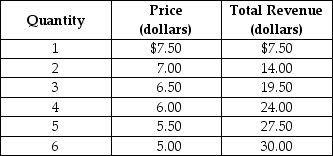 -Refer to Table 13-1. The Table shows

Recent research has shown that the first firm to enter a market often does not have a long-term advantage over later entrants into the market. An example that has been used to illustrate this is
(Multiple Choice)
4.8/5  (69)
(69) What is the difference between zero accounting profit and zero economic profit?
(Essay)
4.8/5 (93)
(93) In the highly competitive fast-food restaurant market, brand name restaurants have a strong profit incentive to maintain high sanitary conditions and avoid any negative consequences.
(True/False)
4.7/5 (76)
(76) A monopolistically competitive firm maximizes profit in the short run by producing where
(Multiple Choice)
4.9/5 (79)
(79) If firms in a monopolistically competitive market are earning economic profits, which of the following scenarios best reflects the change a representative firm experiences as the market adjusts to its long-run equilibrium?
(Multiple Choice)
4.9/5 (73)
(73) Why would an organization as large as the National Football League (NFL) incur large legal expenses to try to prevent bars and restaurants from using their trademarked term "Super Bowl" in their advertising?
(Essay)
4.8/5 (85)
(85) What is the trade-off that consumers face when buying the product of a monopolistically competitive firm?
(Multiple Choice)
4.7/5 (90)
(90) The reason that the coffeehouse market is monopolistically competitive rather than perfectly competitive is because
(Multiple Choice)
4.7/5 (80)
(80) Only one of the following statements is correct. The statements compare perfectly competitive (PC) markets and monopolistically competitive (MC) markets. Which statement is correct?
(Multiple Choice)
4.9/5 (71)
(71) Both monopolistically competitive firms and perfectly competitive firms maximize profits
(Multiple Choice)
4.9/5 (71)
(71) One of your classmates asserts that advertising, marketing research, and brand management are redundant expenditures because a firm can obtain the same information by simply looking at what customers are already buying. Which of the following is not a response you might offer her?
(Multiple Choice)
4.8/5 (75)
(75) Despite being in a market with ________, from the mid-1990s to the mid-2000s Starbucks was able to significantly differentiate its products from the products of its competitors.
(Multiple Choice)
4.8/5 (77)
(77) Figure 13-12 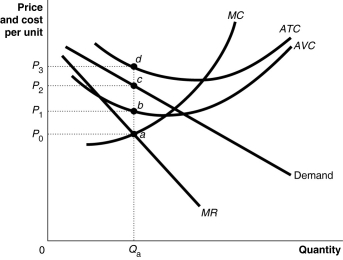 Figure 13-12 shows short-run cost and demand curves for a monopolistically competitive firm in the market for designer watches.
-Refer to Figure 13-12. If the diagram represents a typical firm in the designer watch market, what is likely to happen in the long run?
Figure 13-12 shows short-run cost and demand curves for a monopolistically competitive firm in the market for designer watches.
-Refer to Figure 13-12. If the diagram represents a typical firm in the designer watch market, what is likely to happen in the long run? (Multiple Choice)
4.9/5 (81)
(81) Figure 13-17 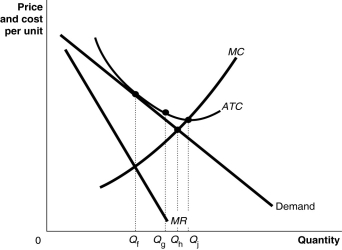 -Refer to Figure 13-17. In the long run, why will the firm produce Qf units and not Qg units, which has a lower its average cost of production?
 (Multiple Choice)
4.8/5 (80)
(80) 
Filters
- Essay(0)
- Multiple Choice(0)
- Short Answer(0)
- True False(0)
- Matching(0)