



 Chat with AI
Exam 22: Carbohydrate Metabolism

Exam 1: Structure and Bonding30 Questions
Exam 2: Polar Covalent Bonds: Acids and Bases35 Questions
Exam 3: Organic Compounds: Alkanes and Their Stereochemistry32 Questions
Exam 4: Organic Compounds: Cycloalkanes and Their Stereochemistry18 Questions
Exam 5: Stereochemistry at Tetrahedral Centers33 Questions
Exam 6: An Overview of Organic Reactions32 Questions
Exam 7: Alkenes and Alkynes34 Questions
Exam 8: Reactions of Alkenes and Alkynes37 Questions
Exam 9: Aromatic Compounds36 Questions
Exam 10: Structure Determination: Mass Spectrometry,infrared Spectroscopy,and Ultraviolet Spectroscopy41 Questions
Exam 11: Structure Determination: Nuclear Magnetic Resonance Spectroscopy37 Questions
Exam 12: Organohalides: Nucleophilic Substitutions and Eliminations37 Questions
Exam 13: Alcohols,phenols,and Thiols: Ethers and Sulfides19 Questions
Exam 14: Aldehydes and Ketones: Nucleophilic Addition Reactions30 Questions
Exam 15: Carboxylic Acids and Nitriles23 Questions
Exam 16: Carboxylic Acid Derivatives: Nucleophilic Acyl Substitution Reactions42 Questions
Exam 17: Carbonyl Alpha-Substitution and Condensation Reactions84 Questions
Exam 18: Amines and Heterocycles28 Questions
Exam 19: Biomolecules: Amino Acids,peptides,and Proteins36 Questions
Exam 20: Amino Acid Metabolism34 Questions
Exam 21: Biomolecules: Carbohydrates42 Questions
Exam 22: Carbohydrate Metabolism41 Questions
Exam 23: Biomolecules: Lipids and Their Metabolism31 Questions
Exam 24: Biomolecules: Nucleic Acids and Their Metabolism23 Questions
Select questions type


Gluconeogenesis differs from glycolysis because

Free
(Multiple Choice)
4.8/5  (77)
(77) Correct Answer: Verified
D
Glyceraldehyde-3-phosphate reacts with the SH group of a cysteine residue (abbreviated (Enz-SH))of a dehydrogenase to produce a hemithioaectal intermediate.Draw its structure.
Free
(Essay)
4.8/5 (81)
(81) Correct Answer:Verified
Verified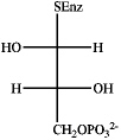
Which of the reactions of the citric acid cycle requires FAD as a coenzyme?
Free
(Multiple Choice)
4.7/5 (80)
(80) Correct Answer:Verified
VerifiedC
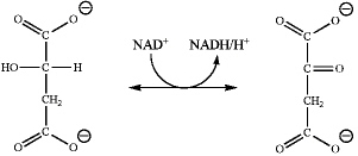
Which enzyme is used in gluconeogenesis,but NOT in glycolysis?
(Multiple Choice)
4.9/5 (81)
(81) 
In humans,what aspect(s)are the mechanism of glycosidase hydrolysis of starch by inversion and retention of stereochemistry similar?
(Multiple Choice)
4.8/5 (87)
(87)  This reaction:
Instructions: Match a term or structure from the list below to each of the following definitions or names.
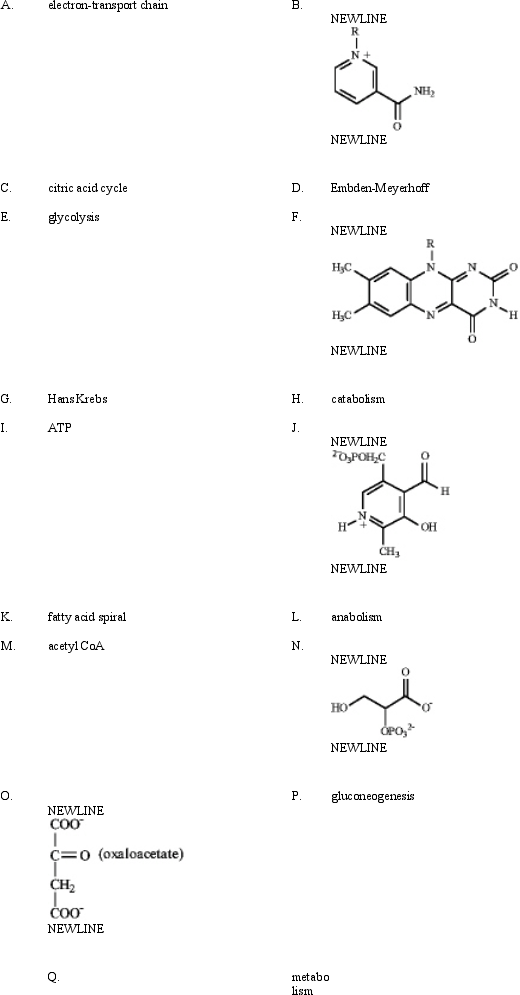
(Essay)
4.9/5 (93)
(93) The reaction of fructose 1,6-bisphosphate to give glyceraldehyde-3-phosphate and dihydroxyacetone phosphate is an example of
(Multiple Choice)
4.9/5 (87)
(87) Which of the following are not involved in both glycolysis and gluconeogenesis?
(Multiple Choice)
4.7/5 (72)
(72) Instructions: Consider the reaction below to answer the following question(s). 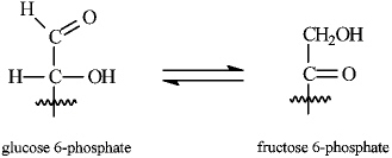 Refer to instructions.This reaction:
 (Multiple Choice)
4.9/5 (79)
(79) Consider the following reaction. 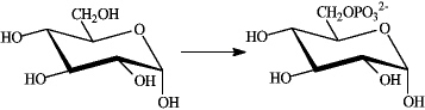 Which of the following describes this reaction?
 (Multiple Choice)
4.7/5 (80)
(80) Draw and name the major product of the reaction of a-glucose with ATP.
(Essay)
4.8/5 (82)
(82) Consider the glycolytic intermediate below to answer the following questions.
a) What is the name of the glycolytic intermediate?”
a.1-phosphoglycerate
b. glyceraldehyde-3-phosphate
c. dibydraryacetone phosphate
d. 1,3-bisphosphoglycerate
b) Draw the sucture of the product of the reaction of this intermediate with ADP
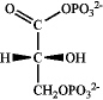
(Essay)
5.0/5 (69)
(69) In the course of the conversion of glyceraldehyde 3-phosphate to 1,3-bisphosphoglycerate
(Multiple Choice)
5.0/5 (78)
(78) The order of compounds in the conversion of glucose to pyruvic acid is as follows: (PEP = phosphoenolpyruvate)
(Multiple Choice)
4.9/5 (89)
(89) The order of compounds and intermediates found in the citric acid cycle is as follows:
(Multiple Choice)
4.8/5 (82)
(82) Which enzyme catalyzes a reaction that is a major control point for glycolysis?
(Multiple Choice)
4.8/5 (81)
(81) Which group of small molecules best fit the boxes associated with the reaction shown? 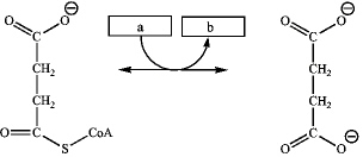 A b
A b (Multiple Choice)
4.9/5 (77)
(77) 
Filters
- Essay(0)
- Multiple Choice(0)
- Short Answer(0)
- True False(0)
- Matching(0)