



 Chat with AI
Exam 23: Biomolecules: Lipids and Their Metabolism

Exam 1: Structure and Bonding30 Questions
Exam 2: Polar Covalent Bonds: Acids and Bases35 Questions
Exam 3: Organic Compounds: Alkanes and Their Stereochemistry32 Questions
Exam 4: Organic Compounds: Cycloalkanes and Their Stereochemistry18 Questions
Exam 5: Stereochemistry at Tetrahedral Centers33 Questions
Exam 6: An Overview of Organic Reactions32 Questions
Exam 7: Alkenes and Alkynes34 Questions
Exam 8: Reactions of Alkenes and Alkynes37 Questions
Exam 9: Aromatic Compounds36 Questions
Exam 10: Structure Determination: Mass Spectrometry,infrared Spectroscopy,and Ultraviolet Spectroscopy41 Questions
Exam 11: Structure Determination: Nuclear Magnetic Resonance Spectroscopy37 Questions
Exam 12: Organohalides: Nucleophilic Substitutions and Eliminations37 Questions
Exam 13: Alcohols,phenols,and Thiols: Ethers and Sulfides19 Questions
Exam 14: Aldehydes and Ketones: Nucleophilic Addition Reactions30 Questions
Exam 15: Carboxylic Acids and Nitriles23 Questions
Exam 16: Carboxylic Acid Derivatives: Nucleophilic Acyl Substitution Reactions42 Questions
Exam 17: Carbonyl Alpha-Substitution and Condensation Reactions84 Questions
Exam 18: Amines and Heterocycles28 Questions
Exam 19: Biomolecules: Amino Acids,peptides,and Proteins36 Questions
Exam 20: Amino Acid Metabolism34 Questions
Exam 21: Biomolecules: Carbohydrates42 Questions
Exam 22: Carbohydrate Metabolism41 Questions
Exam 23: Biomolecules: Lipids and Their Metabolism31 Questions
Exam 24: Biomolecules: Nucleic Acids and Their Metabolism23 Questions
Select questions type


Which of the following fatty acids has the highest melting point?

Free
(Multiple Choice)
4.8/5  (69)
(69) Correct Answer: Verified
A
Instructions: Indicate by asterisks the stereogenic centers present in each of the indicated terpenes in the following question(s).
Place asterisks:
lineatin 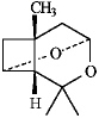
Free
(Essay)
4.9/5 (77)
(77) Correct Answer:Verified
Verified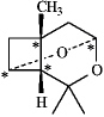
In the sequence of steps shown below for fatty acid biosynthesis,how many cycles must be completed to produce the following species?

Free
(Essay)
4.8/5 (79)
(79) Correct Answer:Verified
Verified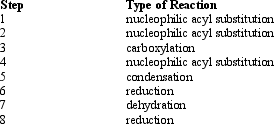 6
How many passages through the b-oxidation pathway are required to completely degrade the following fatty acid?
CH3(CH2)12CO2H
(Short Answer)
4.9/5 (84)
(84) Instructions: Indicate by asterisks the stereogenic centers present in each of the indicated terpenes in the following question(s).
Place asterisks:
abietic acid 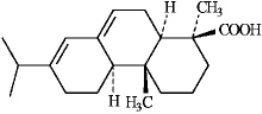
(Essay)
4.9/5 (87)
(87) How many molecules of acetyl CoA are produced in the catabolism of stearic acid?
(Short Answer)
4.9/5 (93)
(93) Instructions: Indicate by asterisks the stereogenic centers present in each of the indicated terpenes in the following question(s).
Place asterisks:
linalool 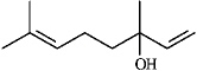
(Essay)
4.9/5 (76)
(76) Which of the following fatty acids has the highest melting point?
(Multiple Choice)
4.8/5 (83)
(83) Instructions: Draw the structures of the major organic product(s)you would expect to obtain from reaction of androsterone with the reagents listed below. 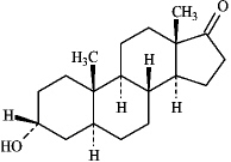 androsterone
Draw major product(s):
NaBH4,ethanol
androsterone
Draw major product(s):
NaBH4,ethanol (Essay)
4.8/5 (66)
(66) Instructions: Draw the structures of the major organic product(s)you would expect to obtain from reaction of androsterone with the reagents listed below. 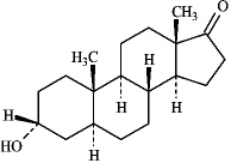 androsterone
Draw major product(s):
CH3COCl,pyridine
androsterone
Draw major product(s):
CH3COCl,pyridine (Essay)
4.8/5 (75)
(75) Cell membranes,which form an effective barrier to the passage of ions and other components into and out of the cell,are:
(Multiple Choice)
4.9/5 (76)
(76) Draw the structure of the carbocation intermediate that results from the following step in terpene synthesis.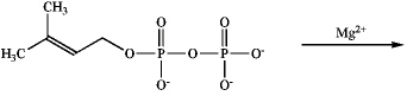
(Essay)
4.7/5 (84)
(84) Chemically,these are triacylglycerols,triesters of glycerol with three long-chain carboxylic acids.
(Multiple Choice)
4.9/5 (79)
(79) The following sequence represents the steps in the biosynthesis of fatty acids.
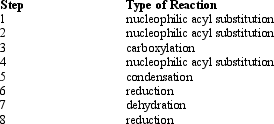
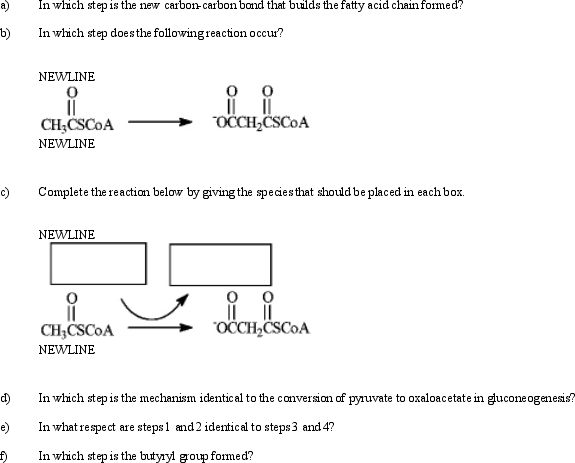
(Essay)
4.9/5 (72)
(72) Instructions: Indicate by asterisks the stereogenic centers present in each of the indicated terpenes in the following question(s).
Place asterisks:
a-santonin 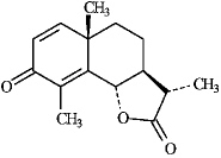
(Essay)
4.8/5 (80)
(80) When soaps disperse in water,the long hydrocarbon tails cluster together in a hydrophobic ball,while the ionic heads on the surface of the cluster stick out into the water.These spherical clusters are called:
(Multiple Choice)
4.9/5 (94)
(94) 
Filters
- Essay(0)
- Multiple Choice(0)
- Short Answer(0)
- True False(0)
- Matching(0)