



 Chat with AI
Exam 15: Biochemistry

Exam 1: Atoms and Elements50 Questions
Exam 2: Electrons and the Periodic Table107 Questions
Exam 3: Compounds and Chemical Bonds63 Questions
Exam 4: How Chemists Use Numbers43 Questions
Exam 5: The Mole and Chemical Formulas60 Questions
Exam 6: Molecular Shape71 Questions
Exam 7: Solids, Liquids, and Phase Changes58 Questions
Exam 8: Gases60 Questions
Exam 9: Physical Properties of Solutions62 Questions
Exam 10: Chemical Reactions and Chemical Equations65 Questions
Exam 11: Using Balanced Chemical Equations61 Questions
Exam 12: Acids and Bases65 Questions
Exam 13: Equilibrium30 Questions
Exam 14: Organic Chemistry46 Questions
Exam 15: Biochemistry20 Questions
Exam 16: Nuclear Chemistry38 Questions
Exam 17: Electrochemistry30 Questions
Select questions type


Which of the following describes a lipid?

Free
(Multiple Choice)
4.9/5  (74)
(74) Correct Answer: Verified
C
Which of these elements is not found in proteins?
Free
(Multiple Choice)
4.7/5 (72)
(72) Correct Answer:Verified
VerifiedB
Which of the following describes a fat?
Free
(Multiple Choice)
4.8/5 (80)
(80) Correct Answer:Verified
VerifiedE
Which of the structures below corresponds to the dipeptide serylalanine? Note the following structures: 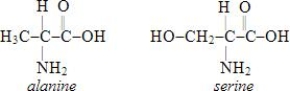
(Multiple Choice)
4.9/5 (67)
(67) A peptide bond (also called an amide bond) joins two amino acids together.What atoms are linked by this bond?
(Multiple Choice)
5.0/5 (82)
(82) Which of the structures below corresponds to the dipeptide alanylserine? 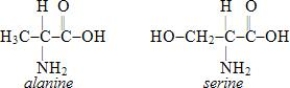
(Multiple Choice)
4.9/5 (75)
(75) The breaking apart of a dissacharide into its monosaccharide components involves the addition of a water molecule and is called _______.
(Multiple Choice)
5.0/5 (93)
(93) Phosphorus is an essential mineral element.It is an important atom in which one of the following?
(Multiple Choice)
4.8/5 (82)
(82) 
Filters
- Essay(0)
- Multiple Choice(0)
- Short Answer(0)
- True False(0)
- Matching(0)