



 Chat with AI
Exam 6: Molecular Shape

Exam 1: Atoms and Elements50 Questions
Exam 2: Electrons and the Periodic Table107 Questions
Exam 3: Compounds and Chemical Bonds63 Questions
Exam 4: How Chemists Use Numbers43 Questions
Exam 5: The Mole and Chemical Formulas60 Questions
Exam 6: Molecular Shape71 Questions
Exam 7: Solids, Liquids, and Phase Changes58 Questions
Exam 8: Gases60 Questions
Exam 9: Physical Properties of Solutions62 Questions
Exam 10: Chemical Reactions and Chemical Equations65 Questions
Exam 11: Using Balanced Chemical Equations61 Questions
Exam 12: Acids and Bases65 Questions
Exam 13: Equilibrium30 Questions
Exam 14: Organic Chemistry46 Questions
Exam 15: Biochemistry20 Questions
Exam 16: Nuclear Chemistry38 Questions
Exam 17: Electrochemistry30 Questions
Select questions type


Which one of the following pure substance has both dispersion forces and dipole-dipole forces?

Free
(Multiple Choice)
4.9/5  (78)
(78) Correct Answer: Verified
A
Using the VSEPR model, what is the predicted molecular geometry of the PCl3 molecule?
Free
(Multiple Choice)
4.8/5 (64)
(64) Correct Answer:Verified
VerifiedD
Which of the following is defined as the attractive forces between polar molecules? I.dispersion forces
II)dipole-dipole interactions
Ion-dipole interactions
Free
(Multiple Choice)
4.7/5 (67)
(67) Correct Answer:Verified
VerifiedB
Octane is a component of fuel used in internal combustion engines.The dominant intermolecular forces in octane are
(Multiple Choice)
4.9/5 (71)
(71) In which of the following compounds will the molecules not form hydrogen bonds with each other? 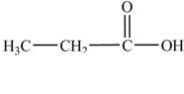
(Multiple Choice)
4.7/5 (82)
(82) What is the molecular geometry of N2O as predicted by the VSEPR model? 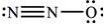
(Multiple Choice)
4.8/5 (77)
(77) Which kinds of intermolecular forces exist between propane molecules? I.dispersion forces
II)dipole-dipole interactions
Ion-dipole interactions
(Multiple Choice)
4.8/5 (82)
(82) Predict the molecular geometry and polarity of the SO2 molecule.
(Multiple Choice)
4.8/5 (84)
(84) According to the VSEPR model, the predicted molecular geometry of SiCl4 is
(Multiple Choice)
4.9/5 (72)
(72) The strongest intermolecular interactions between pentane (C5H12) molecules arise from
(Multiple Choice)
4.9/5 (63)
(63) Place the following in order of decreasing electronegativity. Mg Cl F
(Multiple Choice)
4.8/5 (79)
(79) What is the molecular geometry of ClF2− as predicted by the VSEPR model?
(Multiple Choice)
4.8/5 (89)
(89) According to the VSEPR model, the predicted molecular geometry of ammonia, NH3, is
(Multiple Choice)
4.9/5 (85)
(85) Which of the following pure substances has the strongest dispersion forces?
(Multiple Choice)
4.7/5 (72)
(72) Place the following in order of increasing electronegativity. Se K Cl
(Multiple Choice)
4.8/5 (73)
(73) How many lone pairs of electrons need to be added to complete this Lewis structure? 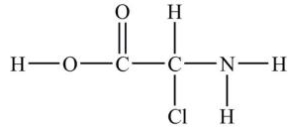
(Multiple Choice)
4.8/5 (75)
(75) Place the following in order of increasing electronegativity. Cs O S
(Multiple Choice)
4.9/5 (77)
(77) Which one of the following pure substances will exhibit hydrogen bonding?
(Multiple Choice)
4.8/5 (89)
(89) The number of resonance structures for the nitrate ion that satisfy the octet rule is
(Multiple Choice)
4.9/5 (91)
(91) 
Filters
- Essay(0)
- Multiple Choice(0)
- Short Answer(0)
- True False(0)
- Matching(0)