



 Chat with AI
Exam 16: Amino Acids, Proteins, and Enzymes

Exam 1: Chemistry in Our Lives42 Questions
Exam 2: Chemistry and Measurement83 Questions
Exam 3: Matter and Energy108 Questions
Exam 4: Atoms and Elements106 Questions
Exam 5: Nuclear Chemistry89 Questions
Exam 6: Ionic and Molecular Compounds103 Questions
Exam 7: Chemical Quantities and Reactions109 Questions
Exam 8: Gases73 Questions
Exam 9: Solutions78 Questions
Exam 10: Acids and Bases and Equilibrium65 Questions
Exam 11: Introduction to Organic Chemistry: Hydrocarbons132 Questions
Exam 12: Alcohols, Thiols, Ethers, Aldehydes, and Ketones83 Questions
Exam 13: Carbohydrates82 Questions
Exam 14: Carboxylic Acids, Esters, Amines, and Amides105 Questions
Exam 15: Lipids63 Questions
Exam 16: Amino Acids, Proteins, and Enzymes107 Questions
Exam 17: Nucleic Acids and Protein Synthesis59 Questions
Exam 18: Metabolic Pathways and Energy Production136 Questions
Select questions type


What type of interaction would you expect between the following R groups in the tertiary structure of a protein? 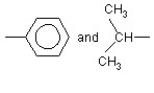
(Multiple Choice)
4.8/5  (70)
(70) Identify each of the designated regions on the energy diagram for the conversion of a substrate to product with and without an enzyme. 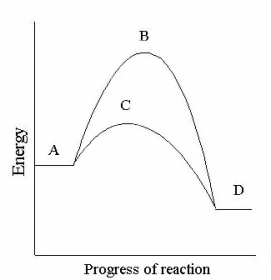
Correct Answer: Verified
Premises:
Responses:
(Matching)
4.9/5 (67)
(67) The optimum temperature for sucrase activity is 37 °C.The hydrolysis of sucrose is slowest at which temperature in the choices below?
(Multiple Choice)
4.8/5 (74)
(74) In the β-pleated sheet secondary structure of a protein,two or more amino acid sequences in separate parts of the protein are held together ________.
(Multiple Choice)
5.0/5 (76)
(76) How many generalized steps are there in the reaction of an enzyme (E)with a substrate (S)to form and release the product (P)?
(Multiple Choice)
4.8/5 (77)
(77) 
Filters
- Essay(0)
- Multiple Choice(0)
- Short Answer(0)
- True False(0)
- Matching(0)