



 Chat with AI
Exam 11: Introduction to Organic Chemistry: Hydrocarbons

Exam 1: Chemistry in Our Lives42 Questions
Exam 2: Chemistry and Measurement83 Questions
Exam 3: Matter and Energy108 Questions
Exam 4: Atoms and Elements106 Questions
Exam 5: Nuclear Chemistry89 Questions
Exam 6: Ionic and Molecular Compounds103 Questions
Exam 7: Chemical Quantities and Reactions109 Questions
Exam 8: Gases73 Questions
Exam 9: Solutions78 Questions
Exam 10: Acids and Bases and Equilibrium65 Questions
Exam 11: Introduction to Organic Chemistry: Hydrocarbons132 Questions
Exam 12: Alcohols, Thiols, Ethers, Aldehydes, and Ketones83 Questions
Exam 13: Carbohydrates82 Questions
Exam 14: Carboxylic Acids, Esters, Amines, and Amides105 Questions
Exam 15: Lipids63 Questions
Exam 16: Amino Acids, Proteins, and Enzymes107 Questions
Exam 17: Nucleic Acids and Protein Synthesis59 Questions
Exam 18: Metabolic Pathways and Energy Production136 Questions
Select questions type


What is the IUPAC name for a four-carbon continuous-chain alkane?
(Multiple Choice)
4.9/5  (70)
(70) 
 -
 ?
Organic compounds can only be made by living things because a "vital force" is needed for their production.
(True/False)
4.9/5 (75)
(75) Compounds that have the same molecular formula but different arrangements of atoms are called ________.
(Multiple Choice)
4.7/5 (87)
(87) 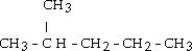 ?
What is the condensed structural formula of the compound propene?
(Multiple Choice)
4.8/5 (73)
(73) Hydrogenation of unsaturated vegetable oils raises the melting point.
(True/False)
4.9/5 (76)
(76) Organic compounds usually contain carbon,hydrogen and metal atoms.
(True/False)
4.9/5 (79)
(79) 
Filters
- Essay(0)
- Multiple Choice(0)
- Short Answer(0)
- True False(0)
- Matching(0)