



 Chat with AI
Exam 6: Consumer Choice and Behavioural Economics

Exam 1: Economics: Foundations and Models159 Questions
Exam 2: Choices and Trade-Offs in the Market192 Questions
Exam 3: Where Prices Come From: The Interaction of Demand and Supply202 Questions
Exam 4: Elasticity: The Responsiveness of Demand and Supply224 Questions
Exam 5: Economic Efficiency, Government Price Setting and Taxes187 Questions
Exam 6: Consumer Choice and Behavioural Economics254 Questions
Exam 7: Technology Production and Costs301 Questions
Exam 8: Firms in Perfectly Competitive Markets269 Questions
Exam 9: Monopoly Markets281 Questions
Exam 10: Monopolistic Competition: The Competitive Model in a More Realistic255 Questions
Exam 11: Oligopoly: Markets With Few Competitors186 Questions
Exam 12: The Markets for Labour and Other Factors of Production250 Questions
Exam 13: Comparative Advantage and the Gains From International Trade131 Questions
Exam 14: Government Intervention in the Market113 Questions
Exam 15: Externalities, Environmental Policy and Public Goods212 Questions
Exam 16: The Distribution of Income and Social Policy121 Questions
Select questions type


If Valerie purchases ankle socks at $5 and gets 25 units of marginal utility from the last unit, and bandanas at $3 and gets 12 units of marginal utility from the last bandana purchased, she
(Multiple Choice)
4.8/5  (76)
(76) Behavioural economics helps explain why customers ________ at Big W.
(Multiple Choice)
4.7/5 (82)
(82) Wilbur Rickhiser, a financial advisor, recently told one of his clients: 'The biggest mistake you can make is to hold onto a stock for too long in order to avoid a loss.Let's say you bought a stock for $50 per share but that six months later the price fell to $40 after a poor earnings report.Many of my clients in this situation will hold the stock, hoping the price will later rise above $50.In most cases like this the price does not rise and may even fall.You must know when to cut your losses.' Which of the following is the best explanation for Rickhiser's advice?
(Multiple Choice)
4.7/5 (79)
(79) Figure 6.2 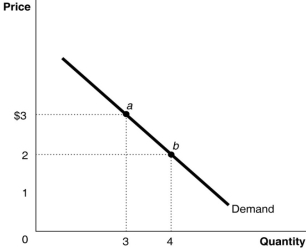 Figure 6.2 represents the demand for ice cream cones.
-Refer to Figure 6.2.When the price of ice cream cones increases from $2 to $3, quantity demanded decreases from 4 ice cream cones to 3 ice cream cones.This change in quantity demanded is due to
Figure 6.2 represents the demand for ice cream cones.
-Refer to Figure 6.2.When the price of ice cream cones increases from $2 to $3, quantity demanded decreases from 4 ice cream cones to 3 ice cream cones.This change in quantity demanded is due to (Multiple Choice)
4.8/5 (79)
(79) Behavioural economists examine choices that consumers make that are not economically rational.Economists generally assume that people are rational; that is, they weigh the benefits and costs of an action and choose an action only if the benefits outweigh the costs.Why do consumers not act rationally when the result is that they make themselves worse off?
__________________________________________________________________________________________________________________________________________________________________________________________
(Essay)
4.9/5 (86)
(86) Figure 6.7  -Refer to Figure 6.7.If the consumer has $240 to spend on DVDs and CDs, what is the price of a DVD if the budget constraint is BC1?
 (Multiple Choice)
4.8/5 (100)
(100) Consider a downward-sloping demand curve.When the price of a normal good decreases, the income and substitution effects
(Multiple Choice)
4.8/5 (77)
(77) One possible reason as to why consumers respond to sales is that by displaying a 'high' regular price and a 'low' sale price, sales provide consumers with a reference point to interpret the prices being offered.
(True/False)
4.8/5 (91)
(91) The marginal rate of substitution is determined by the slope of an indifference curve.
(True/False)
4.9/5 (81)
(81) For a demand curve to be upward sloping, the good would have to be an inferior good, and
(Multiple Choice)
4.8/5 (83)
(83) Why do consumers have to make trade-offs in deciding what to consume?
(Multiple Choice)
4.8/5 (87)
(87) The French Bakery ran a special which decreased the price of its croissants from $1.50 to $1.00.Although her money income had not changed, Toni decided to buy 2 croissants instead of her usual 1 bagel and 1 croissant.Toni's actions are explained by which of the following?
(Multiple Choice)
4.7/5 (71)
(71) Why might network externalities result in products that contain inferior technologies?
__________________________________________________________________________________________________________________________________________________________________________________________
(Essay)
4.8/5 (73)
(73) Figure 6.5  Manuri has $300 to spend on Pilates classes and Yoga classes.The price of a group Pilates class is $20 and the price of a group Yoga class is $10.Manuri's optimal bundle is given by 'A' in Figure 6-5.
-Refer to Figure 6.5.Suppose the price of Pilates sessions rises to $30 while income and the price of Yoga sessions remain unchanged.The substitution effect of this price change is represented by the movement from
Manuri has $300 to spend on Pilates classes and Yoga classes.The price of a group Pilates class is $20 and the price of a group Yoga class is $10.Manuri's optimal bundle is given by 'A' in Figure 6-5.
-Refer to Figure 6.5.Suppose the price of Pilates sessions rises to $30 while income and the price of Yoga sessions remain unchanged.The substitution effect of this price change is represented by the movement from (Multiple Choice)
5.0/5 (70)
(70) A Giffen good could be either a normal good or an inferior good.
(True/False)
4.8/5 (82)
(82) Behavioural economics is the study of situations in which people make rational choices.
(True/False)
4.9/5 (93)
(93) Arnold Kim began blogging about Apple products during his fourth year of medical school.Kim's website, MacRumors.com, became so successful that he decided to give up his medical career and work full time on his website, despite the nearly $200 000 he had invested in his education.In making his decision, the $200 000 he spent on his education
(Multiple Choice)
4.8/5 (71)
(71) When the price of summer tank tops falls and you buy more of them because they are relatively less expensive, this is called
(Multiple Choice)
4.8/5 (65)
(65) A consumer's utility-maximising combination of goods is given by the bundle that corresponds to the highest point on his indifference curve.
(True/False)
4.8/5 (73)
(73) 
Filters
- Essay(0)
- Multiple Choice(0)
- Short Answer(0)
- True False(0)
- Matching(0)