



 Chat with AI
Exam 13: Development Over the Life Span

Exam 1: What Is Psychology430 Questions
Exam 2: How Psychologists Do Research404 Questions
Exam 3: Genes, Evolution, and Environment318 Questions
Exam 4: The Brain: Source of Mind and Self537 Questions
Exam 5: Body Rhythms and Mental States360 Questions
Exam 6: Sensation and Perception464 Questions
Exam 7: Learning and Conditioning416 Questions
Exam 8: Behaviour in Social and Cultural Context314 Questions
Exam 9: Thinking and Intelligence279 Questions
Exam 10: Memory325 Questions
Exam 11: Emotion, Stress, and Health439 Questions
Exam 12: Motivation262 Questions
Exam 13: Development Over the Life Span287 Questions
Exam 14: Theories of Personality391 Questions
Exam 15: Psychological Disorders322 Questions
Exam 16: Approaches to Treatment and Therapy246 Questions
Select questions type


The placenta serves all of the following functions in pregnancy EXCEPT the:
(Multiple Choice)
4.8/5  (77)
(77) Adults respond to boys and girls in the same way as long as the children are behaving in the same way.
(True/False)
4.8/5 (73)
(73) Examine the importance of setting high expectations for children and teaching children how to meet these expectations.
(Essay)
5.0/5 (82)
(82) ________ is the capacity for deductive reasoning and the ability to use new information to solve problems.
(Multiple Choice)
4.8/5 (64)
(64) Ruth's parents use power assertion as their method of discipline. Ruth is most likely to:
(Multiple Choice)
4.8/5 (81)
(81) Describe, in detail, the process of language acquisition beginning in the first months of life and extending to the age of two years. In your essay, include the developmental changes in the baby's language as well as the characteristics of adult language addressed to the baby.
(Essay)
4.8/5 (80)
(80) Parentese is defined as the parental use of symbolic gestures as a tool of communication with an infant.
(True/False)
4.7/5 (80)
(80) Ruth's parents frequently slap and spank her when she misbehaves. When they want her to do something, instead of asking her nicely, they bully her into doing it. Ruth is most likely to:
(Multiple Choice)
5.0/5 (81)
(81) Match the accomplishments with the stage in which they occur.
-abstract reasoning
(Multiple Choice)
4.9/5 (81)
(81) The term gender is used to refer to the cultural and psychological attributes that children learn are appropriate for the sexes.
(True/False)
4.9/5 (81)
(81) Match the accomplishments with the stage in which they occur.
-object permanence
(Multiple Choice)
4.9/5 (76)
(76) Match the definitions with the appropriate terms.
-the process by which children learn the abilities, interests, and behaviours associated with being masculine or feminine in their culture
(Multiple Choice)
4.9/5 (88)
(88) Late one night George went to the drug store to pick up formula for his newborn child. He noticed that they were out of the brand his wife normally bought. When his wife tried to feed the new formula to the baby, she kept spitting out the nipple of the bottle, until she finally began to accept the new taste. The ability of the baby to adapt to the taste of the new brand of formula reflects:
(Multiple Choice)
4.9/5 (80)
(80) Which of the following is NOT more common in adolescence than in childhood or adulthood?
(Multiple Choice)
4.7/5 (86)
(86) Ali sees a butterfly and chases it saying, "Birdie!" Piaget would say that this is an example of:
(Multiple Choice)
4.8/5 (69)
(69) In an observational study designed to assess gender behaviour and gender socialization, 12- to 16-month-old boys and girls were found to be similar in their attempts to communicate and in their assertiveness (for example, their efforts to get a teacher's attention). How did the teachers tend to respond to these children? What did the researchers find when they observed the same children one year later?
(Essay)
4.8/5 (78)
(78) Babies who are ________ will turn their heads to watch a drawing of a face if it moves in front of them, but they will not turn if the "face" consists of scrambled features.
(Multiple Choice)
4.9/5 (93)
(93) Dr. Savory asks a three-year-old child whether one of these two rows of buttons has more:
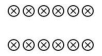 When she says that the two rows have the same number of buttons, Dr. Savory spreads out one row:
 Once again, he asks the child whether one of the rows has more. Then Dr. Savory repeats this task with her older sister, who is eight years of age. Given your knowledge of Piaget's theory, compare and contrast the likely responses of each child. Incorporate Piaget's terms in your essay.
When she says that the two rows have the same number of buttons, Dr. Savory spreads out one row:
Once again, he asks the child whether one of the rows has more. Then Dr. Savory repeats this task with her older sister, who is eight years of age. Given your knowledge of Piaget's theory, compare and contrast the likely responses of each child. Incorporate Piaget's terms in your essay. (Essay)
4.9/5 (66)
(66) 
Filters
- Essay(0)
- Multiple Choice(0)
- Short Answer(0)
- True False(0)
- Matching(0)