



 Chat with AI
Exam 25: The Endocrine System

Exam 1: The Scientific Study of Life41 Questions
Exam 2: The Chemistry of Life58 Questions
Exam 3: Cells56 Questions
Exam 4: The Energy of Life62 Questions
Exam 5: Photosynthesis59 Questions
Exam 6: Respiration and Fermentation51 Questions
Exam 7: DNA Structure and Gene Function95 Questions
Exam 8: DNA Replication,Binary Fission,and Mitosis66 Questions
Exam 9: Sexual Reproduction and Meiosis58 Questions
Exam 10: Patterns of Inheritance94 Questions
Exam 11: DNA Technology53 Questions
Exam 12: Forces of Evolutionary Change50 Questions
Exam 13: Evidence of Evolution50 Questions
Exam 14: Speciation and Extinction50 Questions
Exam 15: Evolution and Diversity of Microbial Life91 Questions
Exam 16: Evolution and Diversity of Plants50 Questions
Exam 17: Evolution and Diversity of Animals87 Questions
Exam 18: Populations50 Questions
Exam 19: Communities and Ecosystems100 Questions
Exam 20: Preserving Biodiversity50 Questions
Exam 21: Plant Form and Function85 Questions
Exam 22: Reproduction and Development of Flowering Plants61 Questions
Exam 23: Animal Tissues and Organ Systems55 Questions
Exam 24: The Nervous System and the Senses92 Questions
Exam 25: The Endocrine System57 Questions
Exam 26: The Skeletal and Muscular Systems66 Questions
Exam 27: The Circulatory and Respiratory Systems103 Questions
Exam 28: The Digestive and Urinary Systems93 Questions
Exam 29: The Immune System64 Questions
Exam 30: Animal Reproduction and Development70 Questions
Select questions type


An estimated 1% of the population has hyperthyroidism. Graves disease, also known as toxic diffuse goiter, is the most common cause of hyperthyroidism in the United States. Graves disease is an autoimmune disease in which the immune system makes an antibody that mimics TSH.
-Which would you expect in the blood of a patient with hyperthyroidism?

Free
(Multiple Choice)
4.8/5  (80)
(80) Correct Answer: Verified
E
All of the glands of the vertebrate endocrine system are regulated by the
Free
(Multiple Choice)
5.0/5 (72)
(72) Correct Answer:Verified
VerifiedB
Cushing's syndrome occurs when the body's tissues are exposed to high levels of cortisol for too long. Many people develop Cushing's syndrome because they take steroid glucocorticoids such as prednisone for asthma, rheumatoid arthritis, lupus, and other inflammatory diseases. Other people develop Cushing's syndrome because their bodies produce too much cortisol.
-Prednisone would be most similar to which compound?
Free
(Multiple Choice)
4.9/5 (77)
(77) Correct Answer:Verified
VerifiedA
The endocrine gland(s)that produces hormones that help regulate blood calcium is/are the
(Multiple Choice)
4.9/5 (74)
(74) A deficiency of iodine in the diet can cause the medical condition known as
(Multiple Choice)
4.8/5 (76)
(76) If a person requires insulin injections they most likely suffer from
(Multiple Choice)
4.7/5 (82)
(82) Since parathyroid hormone causes calcium to be liberated from bone,blocking that hormone could be a partial aid in dealing with loss of calcium from bone.
(True/False)
4.8/5 (78)
(78) The hormone that stimulates glycogen to be broken down to glucose is
(Multiple Choice)
4.7/5 (80)
(80) Some adult weight lifters dope with human growth hormone.What effect would this have on their bodies?
(Multiple Choice)
4.8/5 (79)
(79) Which option lists the primary endocrine product(s)of the ovaries?
(Multiple Choice)
5.0/5 (83)
(83) 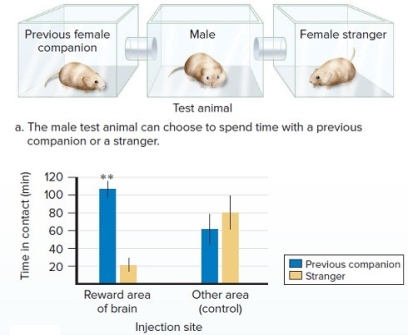 -How might the results of the experiment on ADH and prairie voles be used in research with autistic humans,who have social difficulties?
 (Multiple Choice)
4.8/5 (81)
(81) If you fed a radioactive tracer to the posterior pituitary gland,in which hormone might you expect to find the tracer?
(Multiple Choice)
4.9/5 (83)
(83) When needed,parathyroid hormone causes the removal of calcium from the bone.Insufficient calcium intake can lead to issues such as osteoporosis where severe calcium loss from bones weakens them.
(True/False)
4.9/5 (91)
(91) 
Filters
- Essay(0)
- Multiple Choice(0)
- Short Answer(0)
- True False(0)
- Matching(0)