



 Chat with AI
Exam 14: Sleep, Dreaming, and Circadian Rhythms

Exam 1: Biopsychology As a Neuroscience89 Questions
Exam 2: Evolution, Genetics, and Experience143 Questions
Exam 3: The Anatomy of the Nervous System153 Questions
Exam 4: Neural Conduction and Synaptic Transmission152 Questions
Exam 5: The Research Methods of Biopsychology161 Questions
Exam 6: The Visual System149 Questions
Exam 7: Mechanisms of Perception150 Questions
Exam 8: The Sensorimotor System119 Questions
Exam 9: Development of the Nervous System125 Questions
Exam 10: Brain Damage and Neuroplasticity185 Questions
Exam 11: Learning, Memory, and Amnesia147 Questions
Exam 12: Hunger, Eating, and Health145 Questions
Exam 13: Hormones and Sex157 Questions
Exam 14: Sleep, Dreaming, and Circadian Rhythms186 Questions
Exam 15: Drug Addiction and the Brains Reward Circuits153 Questions
Exam 16: Lateralization, Language, and the Split Brain170 Questions
Exam 17: Biopsychology of Emotion, Stress, and Health154 Questions
Exam 18: Biopsychology of Psychiatric Disorders137 Questions
Select questions type


Many people feel temporarily groggy when waking from a nap.This is called
(Multiple Choice)
4.9/5  (73)
(73) There is good evidence that the internal circadian clock is located in the
(Multiple Choice)
4.8/5 (93)
(93) In the neurotransplantation experiment by Ralph and his colleagues, the suprachiasmatic nuclei (SCN)were transplanted from the fetuses of mutant hamsters into normal adult hamsters whose sleep-wake cycles had been abolished by SCN lesions.The transplants initiated __________ sleep-wake cycles in the recipients.
(Multiple Choice)
4.8/5 (78)
(78) One neuropsychological patient had virtually no REM sleep following a brain injury, and he
(Multiple Choice)
4.8/5 (76)
(76) 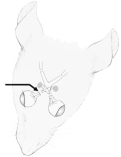 é
-There is more than one circadian clock.Early evidence for this was that bilateral lesions of the
é
-There is more than one circadian clock.Early evidence for this was that bilateral lesions of the (Multiple Choice)
4.9/5 (83)
(83) Studies of encephalitis lethargica suggested that the __________ promotes wakefulness
(Multiple Choice)
4.7/5 (74)
(74) Which of the following are commonly prescribed as hypnotics?
(Multiple Choice)
4.8/5 (80)
(80) How much sleep do we really need? According to the text, the evidence suggests that, if sleep is monophasic, the answer seems to be about __________ hours per night for most people.
(Multiple Choice)
4.8/5 (88)
(88) Which of the following is most likely to occur after the loss of a small amount of sleep?
(Multiple Choice)
4.9/5 (84)
(84) The fact that most birds and mammals sleep even if it puts them at risk suggests that
(Multiple Choice)
4.9/5 (85)
(85) A vivid dreamlike state during wakefulness, often just as one awakens or falls asleep, is
(Multiple Choice)
4.8/5 (77)
(77) During REM sleep, changes in autonomic nervous system activity suggest
(Multiple Choice)
4.9/5 (72)
(72) According to the text, which theory of sleep does the best job of explaining why there are such large differences in the amount of time that the members of various mammalian species spend sleeping?
(Multiple Choice)
4.8/5 (73)
(73) Volunteers who are allowed to sleep without interruption after several nights of REM deprivation tend to get
(Multiple Choice)
4.7/5 (74)
(74) The entrainment of circadian rhythms by visual zeitgebers is mediated by
(Multiple Choice)
4.8/5 (80)
(80) The performance of which of the following tasks is most likely to be disrupted by sleep deprivation?
(Multiple Choice)
4.7/5 (72)
(72) Our current understanding of the molecular mechanisms of narcolepsy is largely attributable to
(Multiple Choice)
5.0/5 (72)
(72) The __________ apparatus has been used to study the effects of sleep deprivation in rats.
(Short Answer)
4.8/5 (80)
(80) 
Filters
- Essay(0)
- Multiple Choice(0)
- Short Answer(0)
- True False(0)
- Matching(0)