



 Chat with AI
Exam 12: Moisture, Clouds, and Precipitation

Exam 1: Matter and Minerals60 Questions
Exam 2: Rocks: Materials of the Solid Earth63 Questions
Exam 3: Landscapes Fashioned by Water68 Questions
Exam 4: Glacial and Arid Landscapes64 Questions
Exam 5: Plate Tectonics: A Scientific Revolution Unfolds64 Questions
Exam 6: Restless Earth: Earthquakes, Geologic Structures, and Mountain Building67 Questions
Exam 7: Volcanoes and Other Igneous Activity64 Questions
Exam 8: Geologic Time70 Questions
Exam 9: Oceans: The Last Frontier65 Questions
Exam 10: The Restless Ocean65 Questions
Exam 11: Heating the Atmosphere66 Questions
Exam 12: Moisture, Clouds, and Precipitation66 Questions
Exam 13: The Atmosphere in Motion68 Questions
Exam 14: Weather Patterns and Severe Weather66 Questions
Exam 15: The Nature of the Solar System67 Questions
Exam 16: Beyond Our Solar System66 Questions
Select questions type


Match the items with the correct descriptions.
Correct Answer: Verified
Premises:
Responses:
(Matching)
4.9/5  (95)
(95) 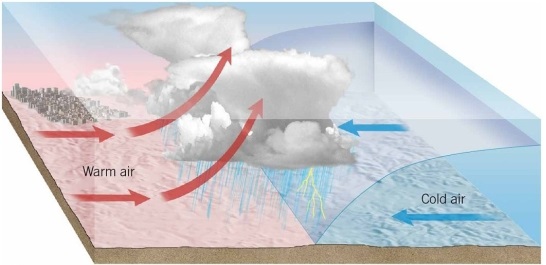 Examine the figure. Which process is illustrated?
How does the wet adiabatic cooling rate compare to the dry adiabatic cooling rate?
(Multiple Choice)
4.8/5 (83)
(83) 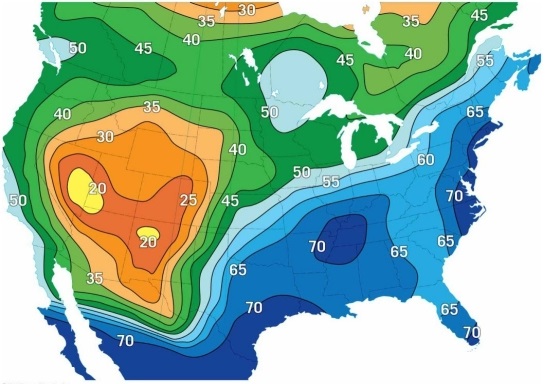 Examine the map. It shows dew-point temperatures on a typical September day. Where in the 48 contiguous United States would a psychrometer have the largest discrepancy between the dry bulb thermometer and the wet bulb thermometer?
 (Multiple Choice)
4.8/5 (80)
(80) The ________ is the temperature to which a parcel of air would need to be cooled in order to reach saturation.
(Short Answer)
4.9/5 (76)
(76) 
Filters
- Essay(0)
- Multiple Choice(0)
- Short Answer(0)
- True False(0)
- Matching(0)